
Hedgehog food insect mix can be a smart way to boost protein and enrichment, but “more insects” doesn’t automatically mean “more balanced.” If the mix leans too fatty, too low in fiber, or heavy on treats, your hedgehog may gain weight fast, or develop messy stools and picky eating.
The good news is you don’t need a complicated recipe to get this right. What matters is understanding what insects contribute, what they don’t, and how to build a routine that fits your hedgehog’s age, activity level, and health history.

Below is a practical way to think about a balanced insect mix, with a quick self-check, a simple portioning method, and red flags that tell you when it’s time to adjust or talk with a vet.
What “balanced” really means for an insect mix
In many homes, insects play two roles: a small nutrition boost and a big behavior win. They can encourage foraging, add variety, and help underweight or picky hedgehogs eat more consistently. But insects alone don’t cover the full nutrition picture.
A “balanced” approach usually means your hedgehog’s staple diet stays consistent, while insects stay measured. Many owners use a high-quality hedgehog or cat kibble as the base, then add insects as a controlled add-on.
- Insects add: protein, fat, moisture (if live), and enrichment.
- Insects often lack:
- Balance looks like:
According to the Association of American Feed Control Officials (AAFCO), “complete and balanced” is a defined standard for formulated pet foods. Most feeder insects are not “complete diets” by themselves, so it’s safer to treat them as supplements and enrichment rather than the main course.
Why hedgehogs can get off-balance with insect-heavy feeding
Most problems come from good intentions: hedgehogs love insects, so portions quietly creep up. Then your “mix” becomes a treat bowl with a little kibble on the side.
Common real-world causes
- Too much fat from certain insects:
- “Treat rotation” that stacks:
- Not adjusting for age and activity:
- Sudden changes:
- Hidden additives:
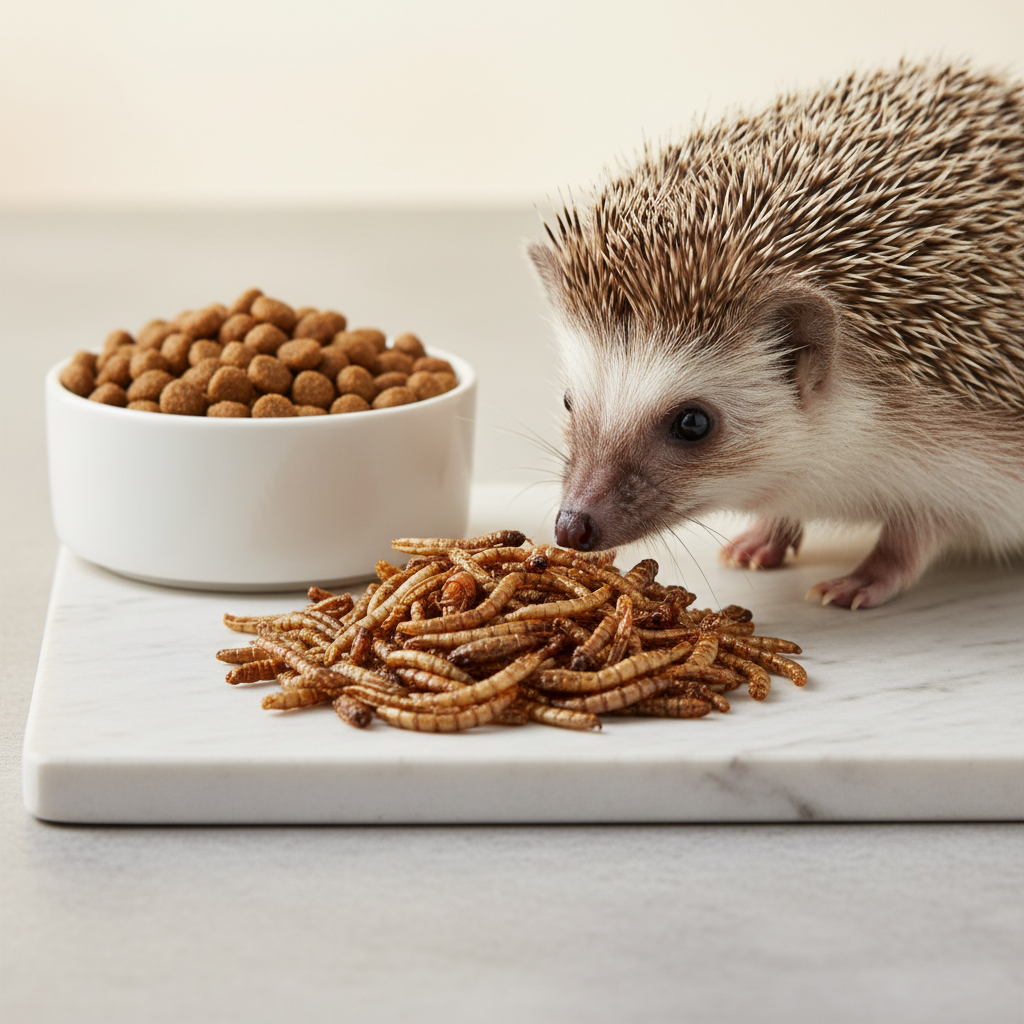
Also, many people underestimate how fast a hedgehog can become “insect selective.” Once they learn the good stuff comes first, they may start ignoring the staple food, which makes it harder to keep nutrition steady week to week.
Quick self-check: is your insect mix helping or hurting?
If you’re unsure where you land, use this checklist for a quick read on whether your current hedgehog food insect mix feels balanced in practice.
- Weight trend:
- Stool quality:
- Appetite pattern:
- Skin and coat:
- Energy and movement:
If two or more items look off, don’t panic, just treat it as a signal to tighten portions, slow down changes, and simplify the menu for a couple weeks.
How to build a balanced hedgehog food insect mix (by scenario)
There isn’t one perfect ratio that fits every hedgehog, but a reliable pattern is: staple food first, insects second. Think of insects as a measured topper or a training reward.
Scenario A: “Normal adult, healthy weight”
- Keep a consistent staple food as the main calorie source.
- Offer insects 2–4 nights per week as a small portion rather than daily free-feeding.
- Favor a mix of insect types instead of relying on one fatty option.
Scenario B: “Overweight or food-motivated”
- Use insects more like training treats: tiny portions, high control.
- Choose leaner options more often, and reduce fatty larvae/worms.
- Measure portions with a spoon or scale for a week, it resets your “eyeballing.”
Scenario C: “Underweight, recovering, or picky eater”
- Use insects to encourage eating, but avoid turning them into the only accepted food.
- Offer insects after the first bites of staple food, not before.
- Consider live insects for stimulation, but keep sanitation tight.
According to the American Veterinary Medical Association (AVMA), veterinarians emphasize that diet changes and weight concerns should be discussed with a veterinarian, especially when a pet shows persistent digestive issues or unexplained weight change. If your hedgehog is losing or gaining quickly, it’s worth asking a clinic that sees exotic pets.
Insect options: what they’re good for (and what to watch)
Owners often ask which insects “count” as healthier. The honest answer is that it depends on the species, how they’re raised, and how often you feed them. Still, some patterns show up consistently in husbandry.
| Insect type | What it’s good for | What to watch | Best use |
|---|---|---|---|
| Crickets | Foraging enrichment, variety | Can carry parasites if sourced poorly | Occasional rotation, reputable supplier |
| Dubia roaches | Often a solid protein option | Size matters; too large may be hard to chew | Regular rotation in controlled portions |
| Mealworms | High palatability, easy to find | Can be calorie-dense | Small add-on, not the whole mix |
| Waxworms | Appetite stimulant | Very rich, easy to overdo | Rare treat, short-term support |
| Black soldier fly larvae | Commonly used as a “better balanced” feeder | Still a supplement, not a complete diet | Frequent rotation option |
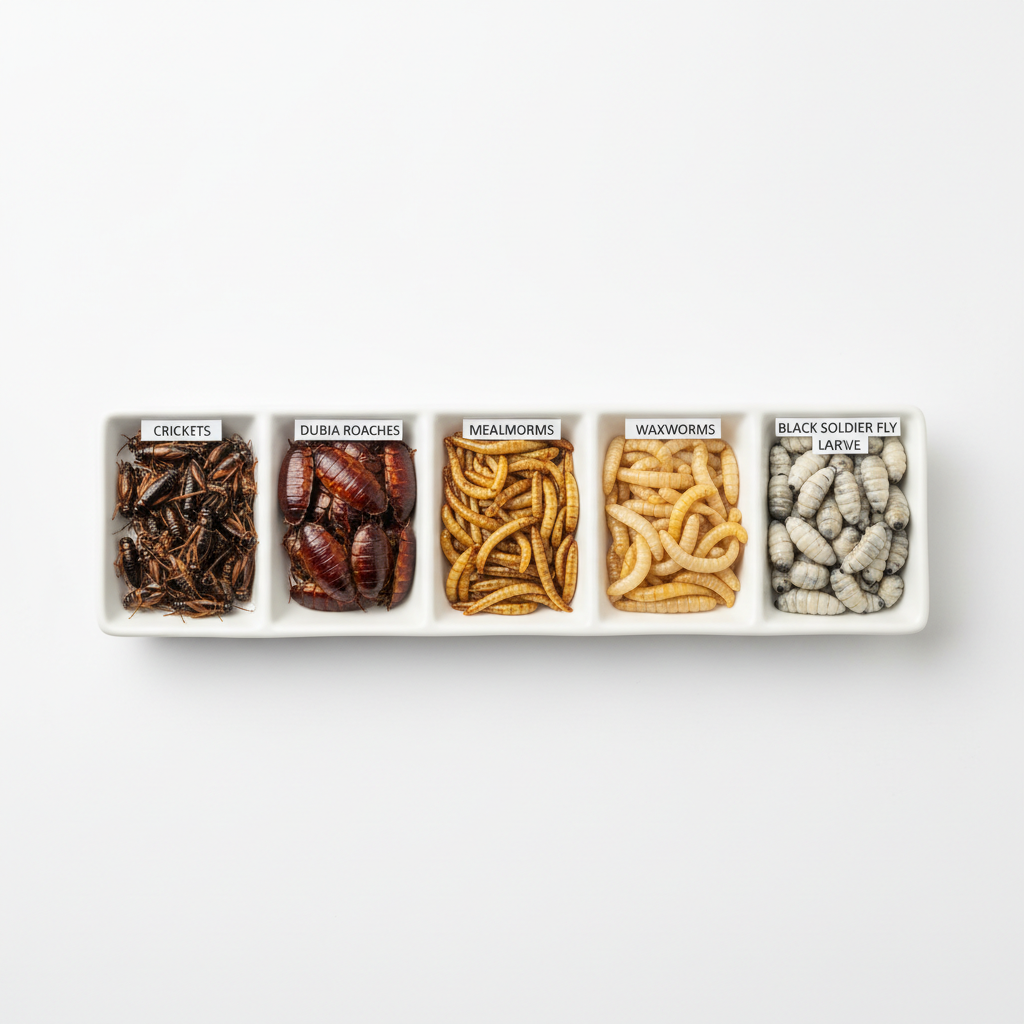
If you use dried insects, keep expectations realistic: they’re convenient, but hedgehogs sometimes drink less when their diet becomes very dry. Watch hydration and stool quality, and consider adding a bit of moisture through appropriate wet food or fresh water access, depending on your vet’s guidance.
Practical feeding steps: a simple routine that stays consistent
If you want a routine that holds up on busy nights, keep it boring in the best way. Consistency protects your hedgehog’s gut, and it makes weight changes easier to spot.
A workable routine
- Pick one staple food that your hedgehog tolerates well and stick with it for a few weeks.
- Set “insect nights” on a schedule so treats don’t become daily drift.
- Pre-portion insects into small containers or bags for the week.
- Offer insects after staple food if your hedgehog tends to hold out for bugs.
- Track weight weekly with a kitchen scale, same time of day.
Key takeaways (save this)
- Balanced usually means insects supplement a stable base diet, not replace it.
- Variety helps, but only if portions stay controlled.
- Stool and weight are your fastest feedback signals.
Mistakes that look harmless (but often derail balance)
These are the ones that tend to sneak in, especially with a friendly, food-driven hedgehog.
- “He’s hungry, so I add more insects”:
- Changing three things at once:
- Relying on fatty worms as the default:
- Ignoring sourcing:
- No cleanup plan:
When to talk to an exotic vet (don’t wait too long)
Feeding tweaks are fine for minor issues, but some signs deserve professional input, especially because small pets can shift fast.
- Persistent diarrhea beyond 24–48 hours, or stool with blood
- Refusal to eat the staple diet for multiple nights
- Fast weight gain or loss over 1–2 weeks
- Repeated vomiting, severe lethargy, or dehydration signs
According to the American Animal Hospital Association (AAHA), routine preventive care and early evaluation help catch issues before they escalate. For hedgehogs, that often means finding a clinic comfortable with exotic companion mammals.
Conclusion: keep insects fun, not foundational
A balanced hedgehog food insect mix is less about chasing the “perfect” insect and more about keeping insects in their lane: measured, rotated, and paired with a stable staple diet. If your hedgehog’s weight and stool stay steady, you’re probably close.
If you want a simple next step, pick two insect types for rotation, set specific insect nights, and weigh your hedgehog weekly for a month. Small structure tends to beat big guesswork.
FAQ
How often should I feed insects as part of a hedgehog food insect mix?
Many owners land on a few times per week rather than unlimited daily feeding. The “right” frequency depends on weight, age, and activity, so watch trends and adjust gradually.
Are dried insects okay, or do I need live insects?
Dried insects can work for convenience, but live insects often add more enrichment. If you use dried, keep an eye on hydration and stool consistency, since very dry diets may change bowel habits.
What’s the biggest sign my insect mix is too rich?
Steady weight gain is a common early clue, even before you see obvious changes. Loose stools after insect-heavy nights can also be a hint that portions or insect type need adjusting.
Can insects replace kibble for a “more natural” diet?
In most cases, insects alone won’t provide consistent, complete nutrition. If you want a more whole-prey style plan, it’s worth discussing with an exotic vet or qualified nutrition professional to avoid gaps.
Which insects are best for overweight hedgehogs?
Rather than chasing one “perfect” feeder, focus on reducing calorie-dense options and tightening portions. Many people reserve very rich worms for rare treats and use other insects for rotation.
My hedgehog only eats insects and ignores the staple food, what should I do?
That pattern usually means insects are being offered too early or too generously. Try offering the staple first, limiting insect portions, and making changes slowly so you don’t trigger stress or refusal.
Do I need to gut-load feeder insects for hedgehogs?
Gut-loading can improve the nutrient value of feeder insects in many setups, but the details vary by insect and product. If you rely heavily on live feeders, ask a vet or reputable exotic care resource what’s appropriate for your specific plan.
How do I introduce a new insect mix without stomach upset?
Go slow: add a small amount on an insect night, then wait a day or two before increasing. If stool changes show up, pause and return to the previous routine before trying again.
If you’re trying to dial in a hedgehog food insect mix and want a more “set-and-forget” routine, it can help to write out a simple weekly plan with pre-portioned insects and a consistent staple food, then review weight and stool notes every week or two to confirm the mix still fits your pet.