
fish tank net fine mesh clean is one of those phrases you only search after you’ve had the same annoying problem three times: debris drifts right through your net, fish get spooked, and you still end up vacuuming the whole tank anyway.
A fine-mesh aquarium net can genuinely make cleaning easier, but only if you pick the right mesh size and use it in a way that doesn’t turn “maintenance day” into a full-on chase scene.
This guide breaks down when fine mesh helps most, how to use it for different cleanup jobs, how to clean the net itself so you don’t spread disease, and what to avoid so you don’t damage fins or stress fish.
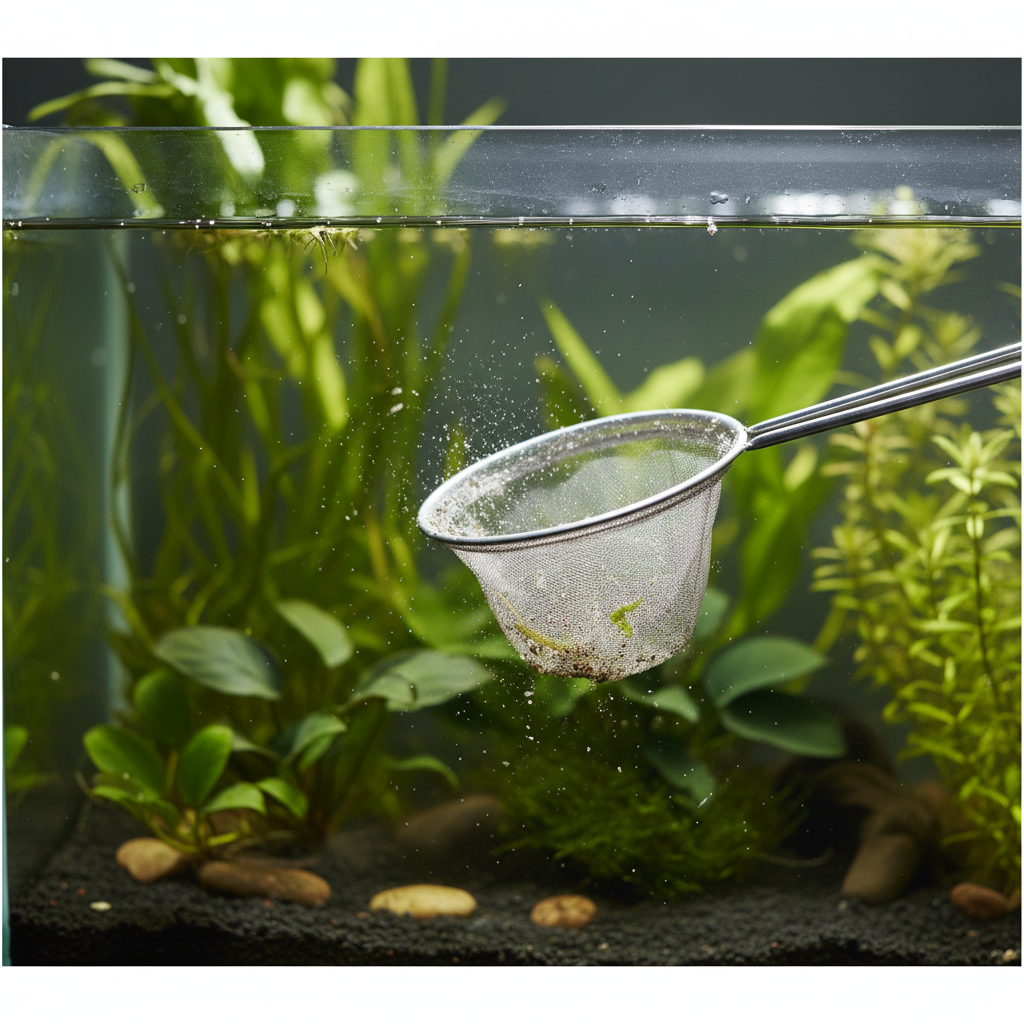
Why a fine-mesh aquarium net matters during cleaning
Most standard aquarium nets are built for “catching fish,” not “catching tiny mess.” A fine mesh changes the game because it traps smaller particles instead of letting them slip through and resettle.
Where it tends to shine:
- Floating bits after feeding, plant trimming, or stirring substrate
- Loose algae strands you dislodge with a scraper or toothbrush
- Shrimp or fry-friendly handling where coarse mesh can snag
- Quarantine and hospital tanks where you want more controlled, gentle movement
But fine mesh isn’t “better for everything.” It can clog fast, create more drag in water, and if you use it like a scoop shovel in gravel, you’ll tear it sooner than you expect.
Choosing the right fine mesh net (size, shape, handle)
If your goal is fish tank net fine mesh clean work, picking a net based on your tank size and cleaning routine usually matters more than brand names.
Mesh density: “fine” can mean different things
Many listings say “fine mesh,” but the actual weave varies. In practice, you’re aiming for a net that holds mulm and micro-debris without acting like a solid wall in the water.
- Very fine mesh: best for shrimp, fry, tiny debris; clogs quickly during heavy cleaning
- Medium-fine mesh: more versatile for routine maintenance, less clogging
Net size and shape
- Small square/rectangle: detail work around plants, hardscape, corners
- Medium oval: general cleanup and guiding fish without pinning them
- Large nets: helpful in big tanks, but can feel clumsy in tight aquascapes
Handle length and build
Long handles help you reach the back of a 29–75 gallon tank without dunking your whole arm, but flimsy joints are a common failure point. If you often do deep maintenance, a sturdier handle (or metal core with coating) usually lasts longer.
Quick self-check: do you actually need fine mesh for cleaning?
Before buying yet another tool, check which of these match your situation. If you’re nodding along to several, a fine mesh net is likely worth it.
- You see dusty debris clouds after trimming plants or moving décor
- Your current net lets tiny food crumbs pass straight through
- You keep shrimp, fry, or long-finned fish and want a gentler net
- You do frequent spot cleaning (not just weekly gravel vac)
- You run a quarantine tank and prefer dedicated tools
If your main issue is dirty substrate, though, a gravel vacuum usually does more than any net. A net is great for quick grabs, not for replacing core maintenance.
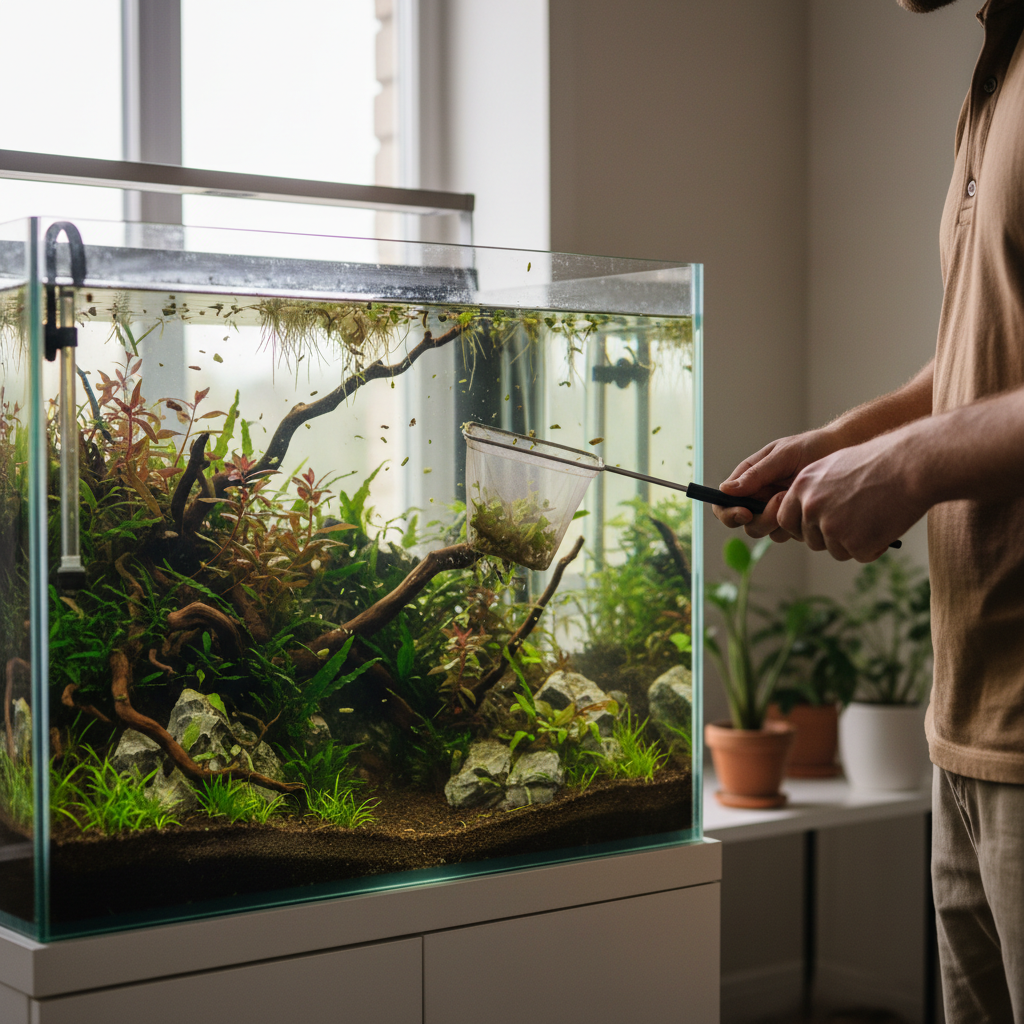
How to use a fine mesh net to clean without stressing fish
The biggest mistake is moving the net too fast. Fine mesh creates more resistance, so quick motions push a pressure wave that spooks fish and kicks debris away from where you want it.
Technique that works in real tanks
- Go slow, then pause: let debris drift into the net instead of chasing it
- Use the glass as a “backboard”: guide debris against the front pane, then lift
- Skim in layers: surface first, midwater next, bottom last (otherwise you re-cloud the top)
- Lift straight up: tilting can dump captured debris back out
For loose algae and plant debris
Scrape or twist algae first, then net it immediately. If you wait, filtration and circulation spread it everywhere. For hair algae, a fine net works best when you “herd” strands together instead of trying to snag single threads.
For uneaten food
When you’re trying to fish tank net fine mesh clean after overfeeding, don’t stir the substrate. Scoop from the water column first, then remove what’s sitting on leaves or hardscape. If it already sank into gravel, a siphon is usually faster and cleaner.
Sanitizing the net safely (and when you should)
A net becomes a problem when it moves pathogens between tanks, or when residue builds up and starts smelling “pondy.” Cleaning it is simple, but you want methods that don’t leave harmful chemicals behind.
According to U.S. Environmental Protection Agency (EPA) guidance, bleach solutions can disinfect surfaces when used properly; for aquarium tools, many hobbyists use a mild bleach dip followed by thorough dechlorination, but you should be cautious and follow product labels.
Practical cleaning options
- Routine rinse: hot tap water rinse, then air-dry fully (good after regular debris)
- Dedicated net per tank: easiest way to reduce cross-contamination risk
- Disinfection (situational): after disease, quarantine use, or moving between systems
If you choose to disinfect
Many aquarists use unscented household bleach diluted in water, then rinse extremely well and soak in a dechlorinator (sodium thiosulfate-based products are common). If you’re unsure about ratios or materials, check the net manufacturer notes and consider asking a local fish store or aquatic vet, especially when you’re dealing with recurring illness.
Important: avoid scented bleach, “splashless” formulas, and cleaners with surfactants. Those residues can be harder to rinse and may irritate fish gills.
Fine mesh vs other cleaning tools (quick comparison table)
To keep expectations realistic, here’s where a fine mesh net fits in a normal maintenance setup.
| Tool | Best for | Where it struggles | Tip |
|---|---|---|---|
| Fine mesh net | Floating debris, algae strands, fry/shrimp-safe scoops | Deep substrate waste, heavy mulm clouds | Move slowly; use glass to corral debris |
| Standard net | Catching larger fish, quick transfers | Tiny particles pass through | Keep one as a “backup” net |
| Gravel vacuum/siphon | Substrate waste removal, water changes | Delicate aquascapes; can uproot plants | Pinch flow with fingers for control |
| Filter floss/polishing pad | Clearing fine haze after maintenance | Doesn’t remove large debris | Use temporarily, then remove |
Common mistakes that make fine mesh nets frustrating
Most “this net is useless” complaints come down to technique, mismatch, or care. A few patterns show up a lot.
- Using it like a shovel: grinding into gravel tears mesh and stirs waste
- One net for multiple tanks: convenient, but risky if one system gets sick
- Not letting it dry: damp storage invites odor and gunk buildup
- Buying too large: big net, small tank, and suddenly every move is chaos
- Over-sanitizing: harsh chemicals or poor rinsing can create its own problems
Also, if you’re constantly netting debris every day, it might be worth asking why so much waste is accumulating. Overfeeding, weak filtration, or dying plant matter usually sits underneath.
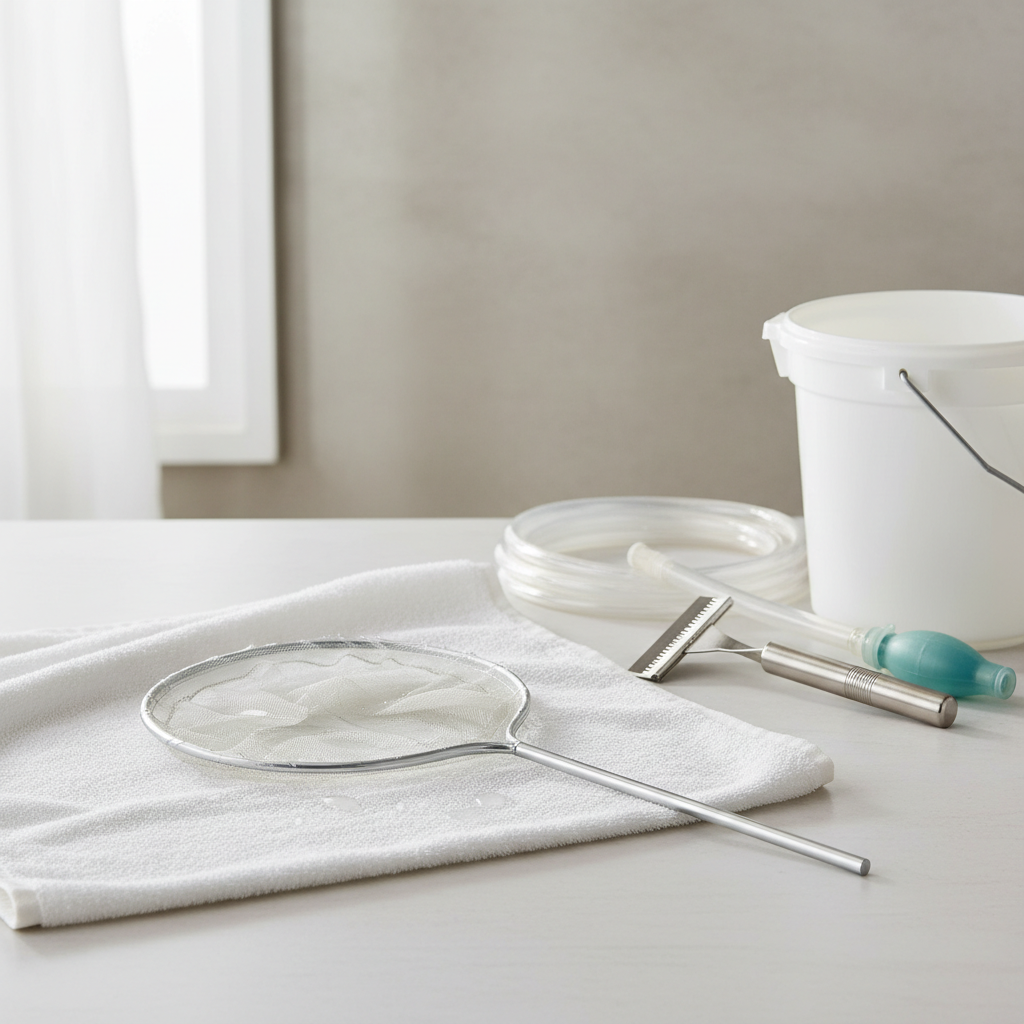
Practical cleaning routine: where the net fits (step-by-step)
Here’s a simple routine that uses a fine net for what it does best, without turning it into the only tool you rely on.
- Before water change: skim surface film bits and floating leaves
- During trimming: net plant fragments as you go so they don’t circulate
- After you disturb anything: wait 30–60 seconds, then scoop drifting debris
- Then siphon: remove what settled into substrate
- Finish with a quick rinse: hot water rinse and air-dry the net
If the goal is fish tank net fine mesh clean results that actually stick, pairing the net with filtration “polishing” can help too. A small amount of filter floss for a few hours after maintenance often clears leftover haze, but you’ll want to watch flow so the filter doesn’t clog.
Conclusion: a fine mesh net is a small tool that saves big hassle
A fine mesh aquarium net won’t replace siphoning or good filtration, but it’s one of the most satisfying tools for quick, visible wins: skimming floating debris, grabbing algae you just loosened, and doing gentle spot cleanups without wrecking your aquascape.
If you want one action step, choose a medium-fine mesh net in a size that matches your tank, then practice the slow “corral and lift” motion for a week. You’ll usually notice the difference fast, and your fish will too.
FAQ
What is the best mesh size for a fish tank cleaning net?
“Best” depends on what you’re catching. Very fine mesh helps with tiny debris, shrimp, and fry, while medium-fine mesh tends to clog less for everyday cleanup. If you mainly scoop plant bits and food crumbs, medium-fine is often the easiest to live with.
Can a fine mesh net hurt fish fins?
It’s usually gentler than coarse mesh, especially for long-finned fish, but problems happen when fish thrash against the rim or you pin them against glass. Slower movements and guiding (not chasing) reduce fin damage risk.
How do I clean and disinfect a fish net between tanks?
Rinse and fully air-dry for routine use, and consider true disinfection when moving between tanks or after illness. Many hobbyists use diluted unscented bleach followed by thorough rinsing and dechlorination, but labels and manufacturer guidance matter, and if you’re dealing with ongoing disease, it’s smart to consult a professional.
Why does debris slip out of my fine mesh net when I lift it?
This is usually a lifting angle issue. Lift straight up, keep the net mouth slightly above the debris cloud before you scoop, and avoid “flicking” the net at the end. Fine particles move with water, so smooth motions win.
Is a fine mesh net good for shrimp tanks?
Often, yes. Fine mesh reduces the chance of shrimp legs getting caught compared to rougher nets, and it’s better for scooping tiny molts or leftover food. Still, shrimp stress easily, so slow movements help.
Can I use soap to wash my aquarium net?
It’s generally not recommended because soap residue can be hard to remove and may irritate fish. Hot water rinse and air-drying covers most needs, and if disinfection is required, aquarium-safe approaches are usually better than dish soap.
Do I need separate nets for quarantine and display tanks?
If you can, yes. Dedicated tools are a simple way to reduce cross-contamination. If you only keep one net, build a consistent disinfection routine and don’t shortcut the rinse and dechlorination steps.
If you’re trying to keep maintenance simple, a good approach is building a small “cleanup kit” around a fine mesh net, a reliable siphon, and one polishing media option, it’s less about buying more gear and more about using the right tool at the right moment.