
Reptile thermometer digital accuracy matters more than most new keepers expect, because a 2–5°F swing can be the difference between solid digestion and a reptile that stops eating or hides all day. If your numbers look “fine” but your animal acts off, the thermometer setup is often the real issue.
Digital models are popular for a reason, they’re easy to read, often faster than analog dials, and many include probe sensors you can place right where your reptile actually lives. But in real enclosures, accuracy depends on placement, air flow, surface temps, and even how you route the probe wire.
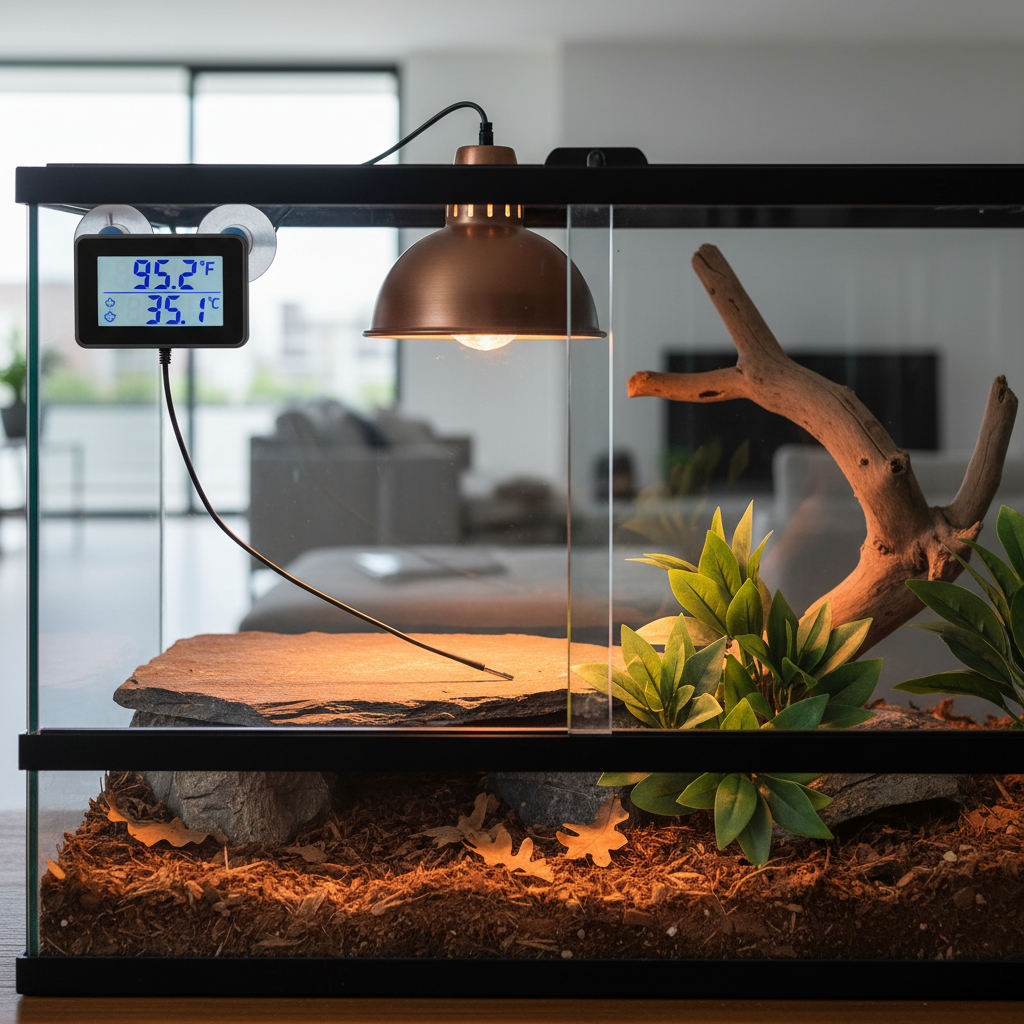
This guide focuses on the practical stuff people Google at midnight: what “accurate” means for a reptile thermometer digital device, where to put probes, how to sanity-check readings, and when you should upgrade your gear instead of endlessly tweaking.
What “accurate” really means in a reptile enclosure
Accuracy sounds straightforward, but a reptile habitat has multiple “truths” at the same time: warm-side ambient air, cool-side ambient air, basking surface temperature, and nighttime drops. One sensor can’t describe all of that.
Most keepers get misled by measuring the wrong thing well. For example, a digital unit may read air temperature accurately while your basking rock surface runs much hotter.
- Ambient temperature: the air temp where the reptile breathes and rests.
- Surface temperature: what the belly feels on basking spots, hides, branches, slate, etc.
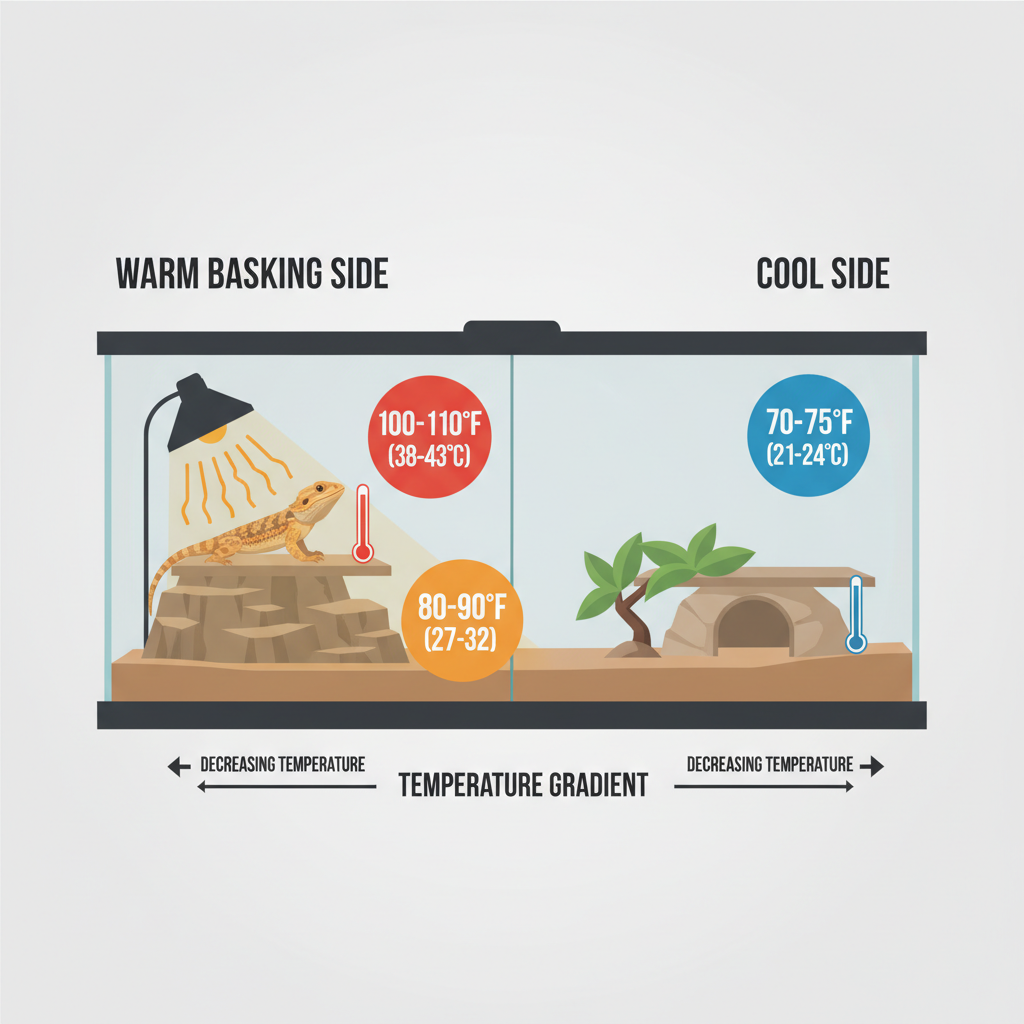
- Gradient: the difference between warm and cool zones; this is usually the real goal.
According to the American Veterinary Medical Association (AVMA), reptiles are ectothermic and depend on external heat sources to regulate body temperature, which is why measuring the enclosure correctly is not optional, it’s basic care.
Common causes of “wrong” digital readings (it’s usually not the battery)
When someone says their reptile thermometer digital setup is inaccurate, the cause is often environmental rather than a defective unit. A few patterns show up again and again.
1) Probe is measuring a microclimate, not the zone
If the probe sits directly in the heat lamp beam, on the glass, or pressed against a hot surface, it can read higher than the ambient air by a lot. The opposite happens when the probe sits near a vent or fan path.
2) “Top of tank” numbers don’t match where the reptile sits
Heat stratifies. Especially in taller enclosures, warm air pools up high, while the lower third can be meaningfully cooler.
3) You’re comparing air-temp tools to surface-temp tools
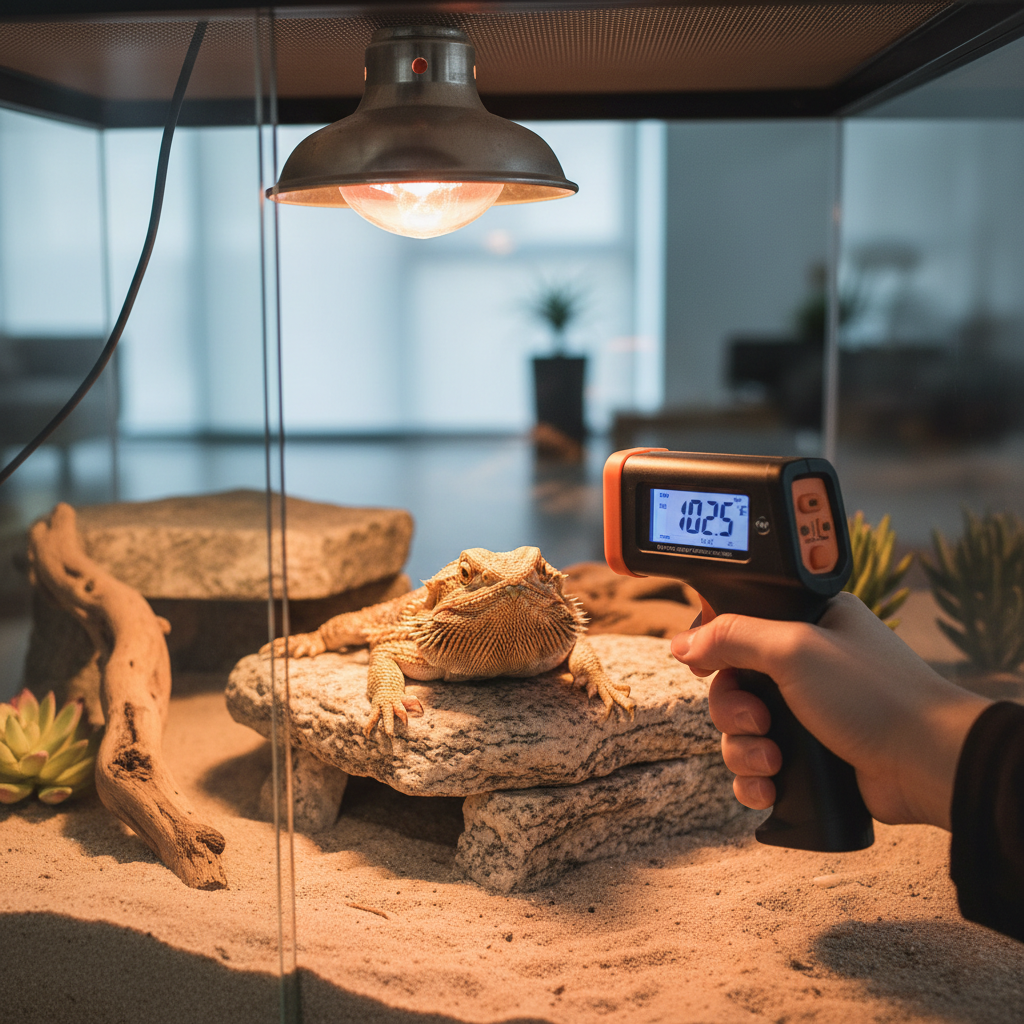
A probe thermometer reads the temperature of its immediate surroundings, while an infrared temp gun reads surface temperature. They should not match perfectly, and that mismatch can be normal.
4) One sensor trying to do two jobs
Many keepers place a single sensor in the “middle” and call it done, then wonder why the animal can’t thermoregulate well. A gradient needs at least warm-side and cool-side data.
Quick self-check: is your thermometer setup good enough?
Use this list to spot the most common setup problems in under two minutes. If you check three or more, expect your readings to be misleading.
- Probe touches glass, a heat mat, a basking rock, or sits in direct lamp beam.
- Only one temperature reading for the whole enclosure.
- Sensor sits near a screen top or vent where drafts are strongest.
- Reading looks stable, but your reptile avoids the warm side or constantly glass-surfs.
- You never confirmed basking surface temperature with an IR temp gun.
- The probe wire runs under a lid gap and the sensor gets tugged or shifted often.
If this sounds familiar, don’t panic. Most fixes are about moving sensors a few inches and measuring the right thing, not buying a whole new setup.
Placement that usually works (by measurement goal)
There isn’t one perfect spot, but there are placements that tend to reflect what your reptile experiences. Think in “zones,” not “the tank.”
Warm-side ambient (probe)
- Place the probe at the reptile’s typical resting height on the warm side.
- Keep it out of direct radiant heat from the lamp.
- Aim for a location a few inches away from the basking spot, not on it.
Cool-side ambient (second probe or second unit)
- Place at similar height as warm-side probe, but on the cool end.
- Don’t tuck it deep inside a hide unless your goal is “hide temp.”
Basking surface (IR temp gun)
- Measure the exact rock/branch/slate where the animal basks.
- Take several readings across the surface, hot spots happen.
Many situations work best with a combo: a reptile thermometer digital probe for ambient zones, plus an IR temp gun for basking surfaces. That pairing clears up most confusion fast.
Choosing an accurate digital reptile thermometer: what to look for
Specs matter, but usability matters too. A super-precise sensor that you can’t place correctly will still give you bad decisions.
- Probe-based sensor: usually more flexible than stick-on face units.
- Readable range and resolution: look for 0.1° resolution if available, but don’t obsess over the last digit.
- Fast refresh: helpful when you’re adjusting lamps or thermostats.
- Min/Max memory: reveals nighttime drops or midday spikes you never see.
- Humidity add-on: convenient, but treat humidity sensors as “directional,” not lab-grade.
According to the U.S. Food & Drug Administration (FDA), even clinical thermometers can be influenced by environment and use conditions, and while reptile products are a different category, the same idea applies: accuracy depends on how you use the device, not just what’s printed on the box.
Comparison table: common thermometer types for reptile keeping
This is the reality check many people wish they had before buying three gadgets that all measure slightly different things.
| Tool type | Best for | Typical pitfalls | Good to pair with |
|---|---|---|---|
| Digital probe thermometer | Ambient temp in a specific zone | Bad placement creates false highs/lows | IR temp gun, thermostat |
| Infrared temp gun | Surface temps (basking spot, floor, hide roof) | Not for ambient air; technique matters | Digital probe thermometer |
| Analog dial (stick-on) | Rough trend, quick glance | Often inaccurate; slow response; placement-sensitive | Use only as a backup indicator |
| Smart sensor (app-based) | Logging trends, alerts | Connectivity issues; still needs correct placement | IR temp gun for validation |
Practical setup steps (so the numbers match the animal)
If you want a setup you can trust day-to-day, do this once, then only fine-tune. It’s less work than constantly guessing.
- Step 1: Map the zones you actually use: basking spot, warm hide, cool hide, mid area.
- Step 2: Place probes at animal height on warm and cool sides, secure them so they don’t drift.
- Step 3: Measure basking surface with an IR temp gun at the hottest point and the edges.
- Step 4: Run a full day/night cycle, check Min/Max readings, then adjust heat source height or thermostat settings.
- Step 5: Re-check after changes like new substrate depth, new hides, seasonal room temp shifts.
Key takeaway: your reptile cares about the gradient and surface contact temps, so your measuring plan should match that reality, not just “the tank temp.”
Common mistakes that waste time (and what to do instead)
- Chasing perfect decimals: focus on stable zones and safe ranges rather than 0.2°F differences.
- Measuring only the warm side: a too-warm cool side can be just as stressful, because there’s nowhere to recover.
- Trusting suction cups forever: they slip, probes move, readings drift. Use clips, zip ties, or enclosure-safe mounting.
- Ignoring room temperature: HVAC cycles and window sun can swing enclosure temps more than you think.
- Using a heat mat without verifying surface temps: hot spots can happen; consider a thermostat and confirm with an IR gun.
According to the ASPCA, reptiles have specific environmental needs, including proper temperature ranges, and inadequate heating and monitoring can contribute to illness. If you’re seeing repeated appetite issues, lethargy, or abnormal behavior, treat temperature as a likely factor, but also consider other husbandry variables.
When to get professional help (or at least a second set of eyes)
If your reptile shows persistent red flags, it’s smart to involve a qualified reptile veterinarian or experienced keeper community, because “temperature problem” and “health problem” can overlap. You don’t need to wait for a crisis.
- No eating for an unusual length of time for your species, especially with weight loss
- Repeated regurgitation, weak grip, or inability to bask normally
- Burn marks or suspiciously hot surfaces you can’t stabilize
- Thermometer readings that swing wildly despite stable room conditions
Bring your readings (warm/cool ambient, basking surface, nighttime lows), photos of probe placement, and your heat source details. That usually speeds up troubleshooting.
Conclusion: a trustworthy setup beats a “fancy” gadget
A reliable reptile thermometer digital setup comes down to measuring the right locations consistently, validating basking surfaces with an IR temp gun, and watching Min/Max trends instead of obsessing over a single number. If you fix probe placement and confirm the gradient, most “my thermometer is wrong” situations calm down fast.
If you want a simple next step, pick one action today: secure your warm-side probe at animal height, then take three basking surface readings and write them down. The enclosure will tell you what to adjust next.
FAQ
Why does my digital probe read different from my infrared temp gun?
They measure different things. A probe typically reflects local air or contact at the probe tip, while an IR gun reads surface temperature. In many setups, a basking surface should read higher than warm-side ambient air.
Where should I put a digital thermometer probe for a bearded dragon?
Many keepers place one probe on the warm side at basking height but out of the direct beam, and a second probe on the cool side at similar height. Then confirm basking surface temperature with an IR gun.
Can a stick-on analog thermometer be “good enough” for reptiles?
It can show trends, but it’s often not the tool you want for decision-making. If you’re dialing in heat sources, a digital probe unit tends to be more useful, especially when paired with surface checks.
How do I know if my reptile thermometer is accurate?
A practical approach is cross-checking: compare two digital probes placed side-by-side for a few hours, and validate basking surfaces with an IR gun. If readings are consistently far apart, consider calibration notes or replacement.
How many thermometers do I need in one enclosure?
In many cases, two ambient readings help: warm side and cool side. If you use a strong basking lamp, adding an IR temp gun for surface checks makes the whole system more reliable.
Do I need a thermostat if I already have a digital thermometer?
They do different jobs. A thermometer tells you what happened; a thermostat controls heat output. For heat mats, radiant heat panels, or high-output bulbs, a thermostat is often a safer way to prevent overheating, though setup varies by product and enclosure.
Why are my enclosure temps fine but my reptile still seems stressed?
Temperature may still be off in the microclimates your reptile uses, like inside a hide or directly on the basking surface. Stress can also come from lighting, humidity, handling, diet, or illness, so consider a broader husbandry check and consult a reptile vet if symptoms persist.
If you’re trying to simplify all this, a good path is combining a dependable probe thermometer for warm/cool ambient zones with an IR temp gun for basking surfaces, then using Min/Max tracking for a week before you change anything major. It’s less guesswork, more repeatable results.