
cat flea comb extra fine teeth can be a surprisingly effective way to pull adult fleas and flea dirt off your cat, but only if the comb, technique, and timing line up. If you have ever combed and still watched your cat scratch an hour later, you already know the frustrating part: a flea comb can remove what it physically catches, but it cannot solve the whole infestation by itself.
This topic matters because fleas are rarely “just on the cat.” Many cases involve eggs and larvae in bedding, carpets, and furniture, and that is why people feel like they are doing everything “right” while nothing changes. A good comb can still be a key tool though, especially for kittens, seniors, or cats that need gentler approaches.
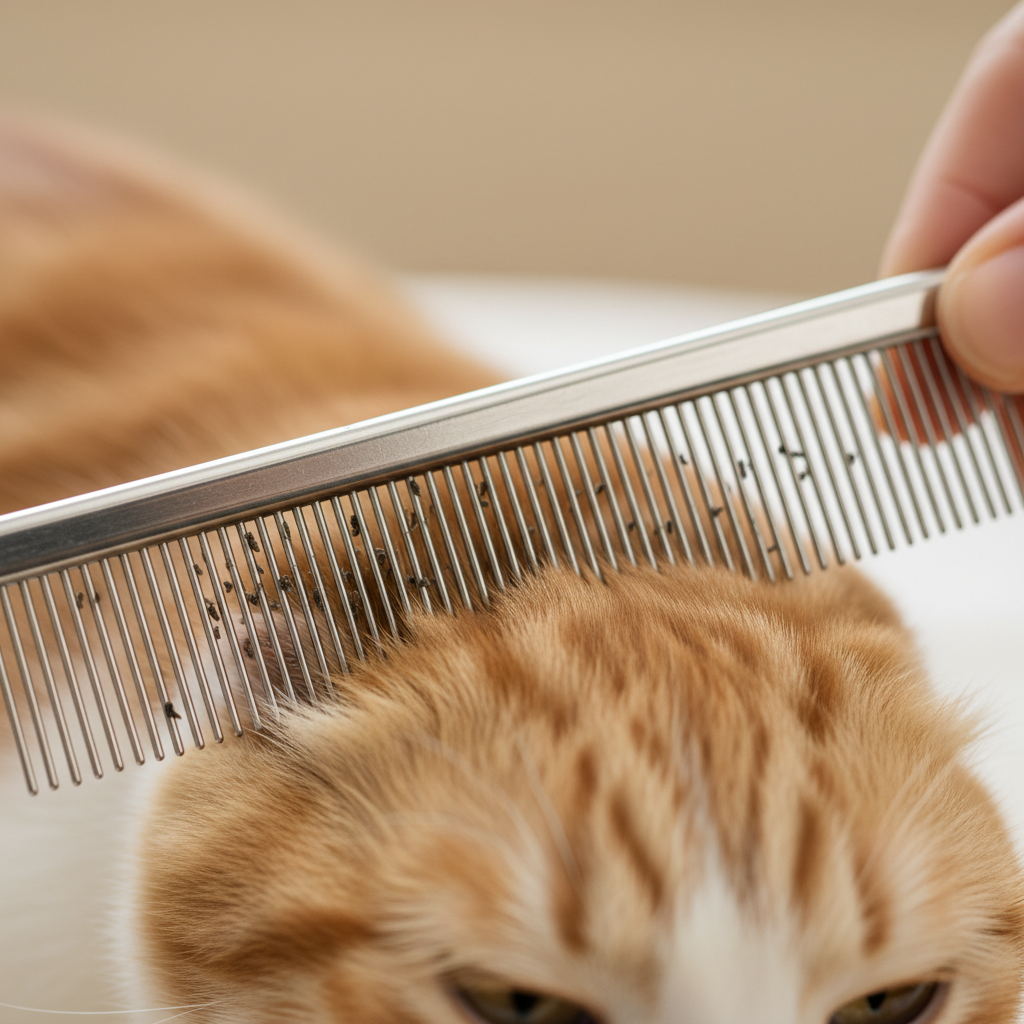
In this guide, you will learn what “extra fine teeth” really means in practice, how to tell whether you are seeing flea dirt or just skin debris, and how to build a realistic plan that includes your home environment. I will also point out the common mistakes that waste time, like combing at the wrong times or skipping the areas fleas prefer.
Why extra fine teeth matter (and what they don’t do)
An extra-fine flea comb works because tooth spacing is tight enough to snag fleas and trap flea dirt in the metal teeth instead of sliding over it. In plain terms, the closer the teeth are, the more likely you catch tiny debris and small fleas, especially on cats with dense coats.
But there is a ceiling to what a comb can accomplish. A comb does not kill eggs hidden in fabrics, and it cannot stop new fleas from jumping on after you finish. According to the CDC, pets can pick up fleas from other animals and from environments where fleas live, so control usually needs to include the home plus the pet.
When extra fine teeth is especially helpful
- Early detection: you catch flea dirt before you see many adults.
- Spot relief: removing a few adults can reduce biting pressure short-term.
- Checking effectiveness: you can monitor whether a treatment plan is working.
- Gentler option: for cats that cannot tolerate frequent bathing.
Quick self-check: is it fleas, flea dirt, or something else?
Before you buy a new tool, confirm what you are seeing. Many people assume dandruff equals fleas, then comb harder, irritate the skin, and create a second problem.
- Flea dirt looks like black pepper. When placed on a damp white paper towel, it often turns reddish-brown because it contains digested blood.
- Dandruff tends to be white or pale and does not “bleed” onto damp tissue.
- Scabs can feel gritty and may signal allergy, dermatitis, or over-grooming.
- Live fleas are fast, dark, and often disappear into the coat near the tail base.
If your cat has hair loss, open sores, ear debris, or intense itch with little flea evidence, it is worth asking a veterinarian about allergies, mites, or skin infection. Combing is still useful, but it may not be the main issue.

Choosing a cat flea comb extra fine teeth: what to look for
Not all “fine” combs perform the same. Some bend, snag hair, or have teeth that are too short to reach skin on thicker coats. When you shop, focus less on marketing labels and more on build details.
| Feature | What to choose | Why it helps |
|---|---|---|
| Teeth material | Stainless steel | Stays rigid, cleans easily, less likely to warp |
| Tooth length | Medium to longer teeth | Reaches the undercoat where fleas hide |
| Tooth spacing | Extra-fine, consistent spacing | Catches small fleas and flea dirt more reliably |
| Handle grip | Non-slip, comfortable | You comb slower and more precisely, less pulling |
| Rounded tooth tips | Smooth ends | Lower chance of scratching inflamed skin |
If your cat has a very plush coat, some people keep two tools: an extra-fine comb for the final pass, plus a wider grooming comb to detangle first. That small change prevents the flea comb from turning into a tug-of-war.
How to use the comb so it actually works (step-by-step)
The main reason people think a flea comb “does nothing” is speed. Fleas react fast, and cats rarely sit still, so slow, targeted strokes matter more than doing the whole body quickly.
- Set up first: bright light, a damp paper towel, and a cup of warm water with a drop of dish soap to trap anything you catch.
- Start where fleas cluster: tail base, lower back, behind ears, neck, and belly edge.
- Comb to the skin: part the fur and keep the teeth close to skin, but do not scrape.
- Short strokes: 1–2 inch passes, then check the comb every few strokes.
- Dip and wipe: dunk the comb to release fleas, then wipe on the paper towel to spot flea dirt.
- End with a calm reset: a treat, brushing the cat’s favorite spot, then stop before your cat panics.
With cat flea comb extra fine teeth, you usually get better results by combing for 5–10 minutes daily for a week than doing one long session once. The goal is consistent removal while other control methods reduce the overall population.
Building a practical flea plan: cat + home, not just combing
If you only comb, you may feel busy without getting traction. A realistic plan often combines mechanical removal (combing) with environmental cleanup and, in many households, a veterinarian-recommended preventive.
At-home steps that pair well with combing
- Wash soft items: bedding, throw blankets, and your cat’s favorite sleep spots on hot settings when fabric allows.
- Vacuum like you mean it: focus on baseboards, couch seams, rugs, and under furniture, then empty the canister outside.
- Limit access temporarily: if your cat sleeps in one room, clean that room thoroughly first to reduce reinfestation.
According to the EPA, integrated pest management emphasizes cleaning and targeted control rather than relying on one tactic alone. For fleas, that typically means reducing habitat indoors while treating pets appropriately.
About preventives and treatments (a careful note)
Many cats need a veterinary flea preventive to break the cycle, especially if you see fleas repeatedly despite daily combing. The safest choice depends on your cat’s age, weight, health conditions, and what other pets live in the home, so it is smart to ask your veterinarian before starting or switching products.
Important: never use dog-only flea products on cats. Some ingredients that are common in canine products can be dangerous to felines, and mistakes here can become an emergency quickly.

Common mistakes that make an extra-fine comb feel useless
This is the part people do not love hearing: a comb is simple, but the workflow is easy to mess up. If your results are inconsistent, it is usually one of these.
- Combing only the back: fleas often concentrate near the tail base, groin area, and neck.
- Skipping detangling: mats block the comb from reaching skin where fleas live.
- No “catch cup”: if you flick fleas off the comb, they can jump right back on.
- Too much pressure: irritated skin makes the cat avoid future sessions, and you lose consistency.
- Assuming one session equals solved: you can remove adults today and still see new fleas tomorrow.
If you are doing everything above and still catching many fleas daily, that usually points to environmental reinfestation, outdoor exposure, or missing preventive coverage.
When to involve a veterinarian (and what to ask)
Combing is a home tool, but it is not a full medical plan. If your cat shows signs beyond mild itch, you will save time by getting professional guidance earlier.
- Kittens, seniors, or chronically ill cats: they may become anemic or dehydrated more easily.
- Skin looks angry: oozing sores, widespread scabbing, or strong odor can mean infection.
- Possible flea allergy dermatitis: one bite can trigger intense itch in sensitive cats.
- You see tapeworm segments: fleas can transmit tapeworms, treatment may be needed.
Questions worth asking: which preventive fits your cat’s profile, how quickly it should reduce adult fleas, and how to treat the home safely if infestation seems established. According to the American Veterinary Medical Association (AVMA), veterinary guidance helps ensure parasite control products are used appropriately for the animal and situation.
Conclusion: a comb is a tool, not the whole answer
cat flea comb extra fine teeth is still one of the most straightforward ways to confirm fleas, remove adult insects, and track whether your broader plan works. If you pair consistent combing with home cleanup, and add veterinarian-approved prevention when appropriate, most households see the situation become manageable instead of endless.
If you want one next step, do this: comb the tail base and neck daily for a week, document what you catch, then adjust based on results. If you keep finding live fleas or your cat’s skin looks worse, contact a veterinarian and bring your notes, it makes the visit more useful.
FAQ
How often should I use an extra fine flea comb on my cat?
For active flea problems, daily short sessions often work better than occasional long ones. Once things calm down, many people switch to 1–2 times per week as a check-in.
Does an extra-fine comb work on long-haired cats?
It can, but long coats usually need detangling first. If the comb cannot reach skin, it will miss fleas hiding in the undercoat, so pairing with a regular grooming comb helps.
What is the fastest way to kill fleas I catch in the comb?
A cup of warm water with a small amount of dish soap often prevents fleas from escaping. Avoid crushing fleas with your fingers, it is messy and easy to miss.
Why do I still see flea dirt after combing every day?
Flea dirt can keep appearing if new fleas are still biting, which often means eggs in the home are still maturing. It can also happen if your cat is exposed outdoors or through other pets.
Can I rely on combing instead of flea medication?
In mild cases, combing plus environmental cleaning may help reduce adults, but it often fails to fully break the life cycle. If infestation persists, ask a veterinarian about safe options for your cat.
Is it normal for my cat’s skin to look red after combing?
A little redness can happen if skin is already inflamed, but persistent redness or scratching after sessions suggests too much pressure or an underlying skin issue. Stop and consult a professional if irritation escalates.
What areas should I focus on when using a flea comb?
Tail base and lower back usually pay off, then move to the neck, behind the ears, and belly edge. Those spots tend to show evidence sooner than mid-back.
Can fleas live in my house even if my cat is indoors?
Yes, fleas can hitchhike on people or other pets, and some indoor cats still get exposed via other animals. If you keep catching fleas, treating the environment becomes part of the fix.
If you are dealing with repeat flea flare-ups and want a more predictable routine, it may help to build a simple “comb + cleanup + prevention” checklist and review it with your veterinarian so you are not guessing week to week.