
Rabbit grass mat for cage flooring is usually chosen for one simple reason: you want a surface your rabbit can stand on comfortably, while still feeling okay if they decide to chew it.
But cage flooring is one of those things that looks straightforward until you live with it for a week, then you notice the problems fast, slipping, sore hocks risk, odors, and the “why is my bunny eating the floor” moment.
This guide breaks down what “chew safe” realistically means, how to tell whether a grass mat fits your rabbit’s habits, and how to set it up so it stays cleaner and lasts longer.
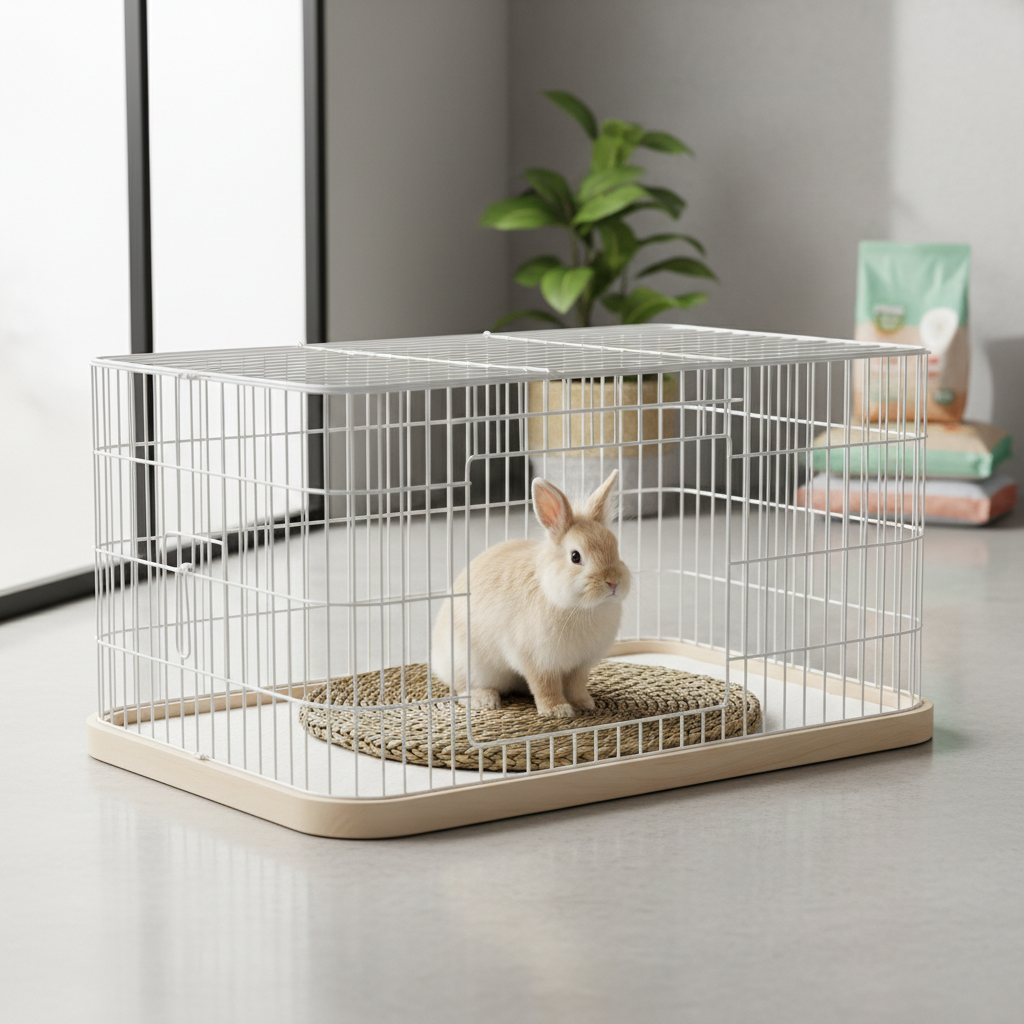
Why rabbits chew cage mats (and when it becomes a problem)
Chewing is normal rabbit behavior, and for many rabbits it’s also a way to manage boredom, stress, or just curiosity. A rabbit grass mat for cage flooring can work well because it offers a “legal” chew that feels more natural than plastic.
That said, there’s a line between casual nibbling and destructive eating. If your rabbit is stripping large chunks quickly, the mat may not be the right choice, or the setup needs adjustment.
- Instinct + enrichment: Rabbits explore with their mouth, especially in new setups.
- Dental wear: Chewing supports tooth wear, though hay remains the main tool.
- Texture preference: Some rabbits fixate on certain fibers and seams.
- Stress signals: Sudden intense chewing can show frustration, lack of space, or too little enrichment.
According to the AVMA (American Veterinary Medical Association), rabbits have continuously growing teeth and need appropriate chewing opportunities as part of basic care, so offering safe chew materials is part of good husbandry, not a “nice to have.”
Chew-safe, what it actually means for grass mats
In real life, “chew safe” rarely means “eat unlimited amounts with zero risk.” It usually means the material is generally considered non-toxic and low-risk in small amounts, assuming it’s made without problematic additives.
When you’re shopping, you’re mostly screening for two things: the fiber itself and whatever might be added to hold it together.
Materials that are commonly used
- Seagrass / straw / timothy-hay weave: Often marketed as natural, typically the least concerning when plain.
- Water hyacinth / rush / reed: Also common, but quality varies by brand and drying process.
- Backing layers: This is where issues pop up, fabric mesh, rubbery coatings, or heavy glue lines.
What to avoid (or at least be cautious about)
- Strong chemical odor when you open the package.
- Visible glue clumps or thick, shiny adhesive lines.
- Dyed or heavily “treated” mats unless the brand clearly explains what’s used.
- Loose synthetic stitching your rabbit can pull out and swallow.
If your rabbit has a history of GI stasis, pica-like eating, or chronic soft stools, it’s smart to run any “edible-ish” flooring choice by a rabbit-savvy veterinarian, because individual risk varies a lot.
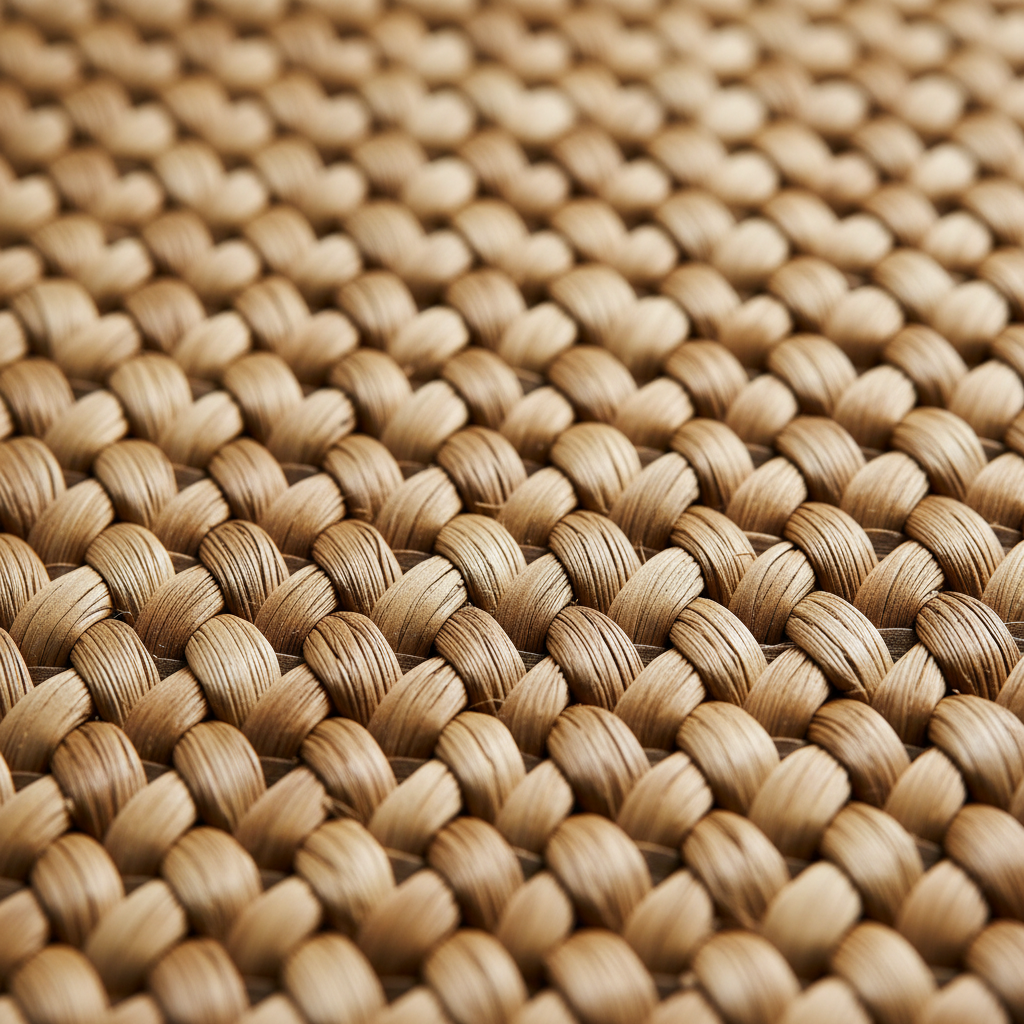
Quick self-check: is a grass mat right for your rabbit?
Before you commit to lining a whole enclosure, do a small trial. Many people skip this, then get stuck with a mat their rabbit destroys in two days.
- Your rabbit chews hay reliably: good sign they’re less likely to “eat the floor” out of hunger or habit.
- They nibble, not shred: a few bites here and there tends to be manageable.
- No history of eating fabric/plastic: chronic “non-food eating” needs extra caution.
- You can keep it dry: if your rabbit pees on mats often, odor control becomes the main battle.
- You’re okay replacing it: grass mats are consumables for many households.
Green light: occasional chewing + mostly dry litter habits.
Yellow light: heavy digger, frequent pee accidents, or obsessive chewing. You may need a hybrid setup.
Choosing the right rabbit grass mat for cage flooring
Not all mats behave the same in a cage. Thickness, weave density, and size matter more than the marketing copy.
What to look for in product details
- Dense weave: holds up longer and sheds fewer bits.
- Flat edges: curled edges become chew handles.
- Right size for your layout: fewer seams usually means less picking.
- Clear material labeling: “seagrass” alone is more useful than vague “natural fiber.”
Comparison table: grass mats vs other common cage flooring
| Flooring option | Traction / comfort | Chewing risk | Odor control | Best for |
|---|---|---|---|---|
| Grass mat | Good, softer feel | Low to medium (depends on rabbit) | Medium (needs dry zones) | Light chewers, enrichment, lounge areas |
| Fleece liner | Good if kept clean | Medium to high if rabbit eats fabric | Good with absorbent base | Rabbits that don’t chew textiles |
| Rubber/foam mat | Good traction | Higher concern if chewed | Easy wipe-down | Under supervision, non-chewers |
| Plastic tray only | Slippery for many | Low | Easy cleaning | Litter box area, short-term setups |
| Paper bedding layer | Soft but shifts | Usually low | Good if changed often | Diggers, full-base bedding systems |
How to set it up so it stays put and stays cleaner
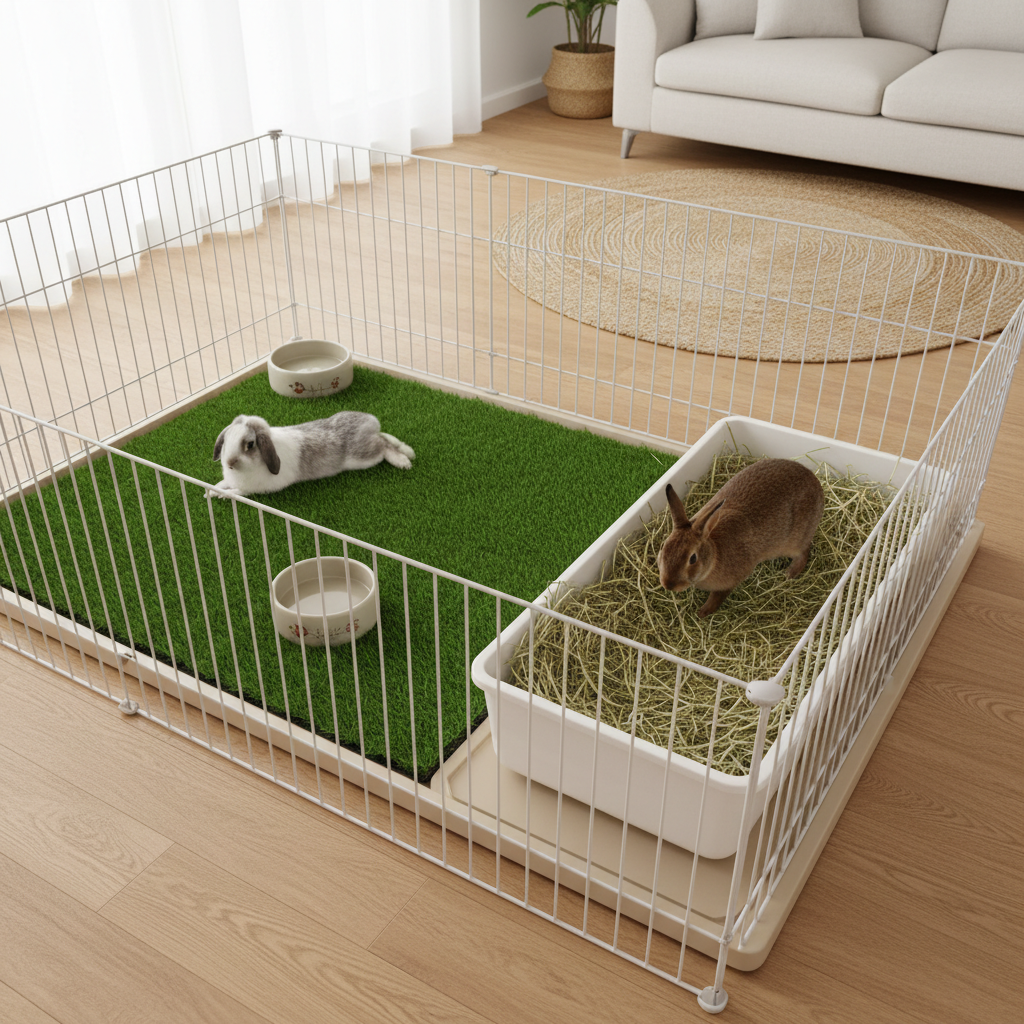
A rabbit grass mat for cage flooring works best when it’s part of a layout, not the entire plan. The goal is traction where your rabbit stands and lounges, while keeping potty zones easy to clean.
A practical setup that works for many cages
- Litter box first: large enough that your rabbit actually uses it, with safe litter and plenty of hay.
- Grass mat as a “living room”: place it outside the litter box area, where the rabbit relaxes.
- Absorbent layer under high-traffic zones: if your cage has a plastic base, consider a washable pad under part of the mat, but only if your rabbit won’t chew it.
- Anchor the edges: use heavy ceramic items, or tuck edges under a low platform to reduce edge chewing.
If you’re using clips or ties, keep it simple and inspect often. Loose plastic pieces can become an unwanted chew toy.
Cleaning and replacement: realistic expectations
Grass mats are not “wipe and forget.” They’re more like a natural rug: they can be shaken out and spot-cleaned, but once urine soaks in, the smell tends to stick.
- Daily: shake off droppings and hay dust, check for wet spots.
- Spot-clean: dab with a damp cloth, then dry fully before putting it back.
- Deep clean (limited): avoid soaking for long periods, because slow drying can lead to mildew smell.
- Replace: when it stays smelly after drying, starts fraying heavily, or your rabbit is ingesting too much fiber.
One small tip that helps: use two mats and rotate. It gives you time to dry one fully, which matters more than people expect.
Common mistakes that make “chew safe” turn into “chew risky”
Most issues come from setup details, not the mat category itself.
- Using the mat as the only floor: rabbits often pee where they lounge at least sometimes, then you’re stuck fighting odor.
- Ignoring edge chewing: edges unravel first, and long strands can be more concerning than small nibbles.
- Covering slick wire flooring without support: if there’s air gap underneath, feet can still strain, and the mat can sag.
- Assuming “natural” means “unlimited edible”: even hay mats can cause trouble if a rabbit gorges.
According to the House Rabbit Society, solid, supportive flooring with good traction helps reduce pressure on feet, which is one reason many owners try mats or liners instead of slick or wire surfaces.
When to talk to a rabbit-savvy vet
If chewing stays moderate, a grass mat is usually just enrichment plus comfort. If symptoms show up, don’t try to “wait it out,” rabbits can deteriorate quickly with GI issues.
- Reduced appetite or skipping hay
- Fewer or smaller droppings
- Bloating, discomfort, or hunched posture
- Repeated diarrhea or very soft stool
- Obsessive ingestion of the mat material
If any of these appear, it’s safer to remove the mat and consult a qualified professional. In many cases, the solution is a different flooring combo plus better enrichment, not forcing the same product to work.
Key takeaways + a simple action plan
Key points: a rabbit grass mat for cage flooring can be a comfortable, grippy surface and a reasonable chew outlet, but it’s not a forever floor, and it works best as a zone, not a whole-cage blanket.
- Do a 48-hour trial with a small mat before buying multiples.
- Designate potty vs lounge areas so the mat stays drier and lasts longer.
- Inspect daily for heavy fraying and wet spots, replace earlier if your rabbit eats large pieces.
If you want the simplest next step, start by improving the litter setup and then add the mat only where your rabbit likes to relax, it’s the easiest way to get the benefits without creating new cleaning headaches.
FAQ
Is a rabbit grass mat for cage flooring safe for baby rabbits?
Often it can be okay, but younger rabbits may chew more impulsively. If a baby starts shredding and swallowing fibers, it’s smarter to pause and switch to a less “edible” surface while you work on hay habits and enrichment.
Can rabbits get GI blockage from chewing grass mats?
It’s possible in some situations, especially if a rabbit eats large amounts quickly or already has GI sensitivity. If you see appetite changes or reduced droppings, remove the mat and contact a rabbit-savvy veterinarian.
How do I stop my rabbit from chewing the edges of the mat?
Edge chewing is usually the main failure point. Tuck edges under a heavy hideout or low platform, and add alternative chew options nearby, like hay, untreated apple sticks, or safe cardboard, then see if the behavior drops within a few days.
Should I put a grass mat over wire flooring?
Many owners try, but it depends on how the wire is built and whether the mat has solid support. If the mat sags into gaps, it can still stress feet. A solid base or platform is typically more reliable.
How long does a grass mat last in a rabbit cage?
It varies a lot by rabbit and by how wet the enclosure gets. Light chewers in a dry setup may get weeks out of a mat, while heavy chewers or messy litter habits can shorten it to days.
What’s better for odor control: grass mat or fleece?
Fleece systems often control odor better when paired with an absorbent layer and frequent washing, but they’re a poor fit for rabbits that eat fabric. Grass mats can smell faster if urine soaks in, so zoning and litter training matter more.
Can I wash a grass mat in the washing machine?
Usually not recommended, because it can break the weave and make drying difficult. Shaking, spot-cleaning, and full drying tend to be the safer approach for most natural fiber mats.
What size grass mat should I buy for my rabbit?
Choose a size that fits your enclosure with minimal curling and minimal seams. If you’re unsure, start smaller for a trial, then scale up once you know your rabbit’s chewing style.
If you’re trying to build a cleaner cage floor without constantly worrying about what your rabbit might chew, a grass mat can be a low-drama option when paired with a solid litter routine and a realistic replacement plan.