
cat litter sifting pan easy clean is the kind of product phrase people search after one too many slow scooping sessions, a dusty cloud to the face, or a trash bag that somehow smells bad even when it’s “tied tight.” If that sounds familiar, you’re not doing anything “wrong”, you may just be using a setup that fights you.
A sifting pan can make daily litter maintenance faster because you separate clean litter from clumps in one motion, instead of hunting around with a scoop. But not every pan works with every litter, and some designs look great online yet feel awkward on day two.
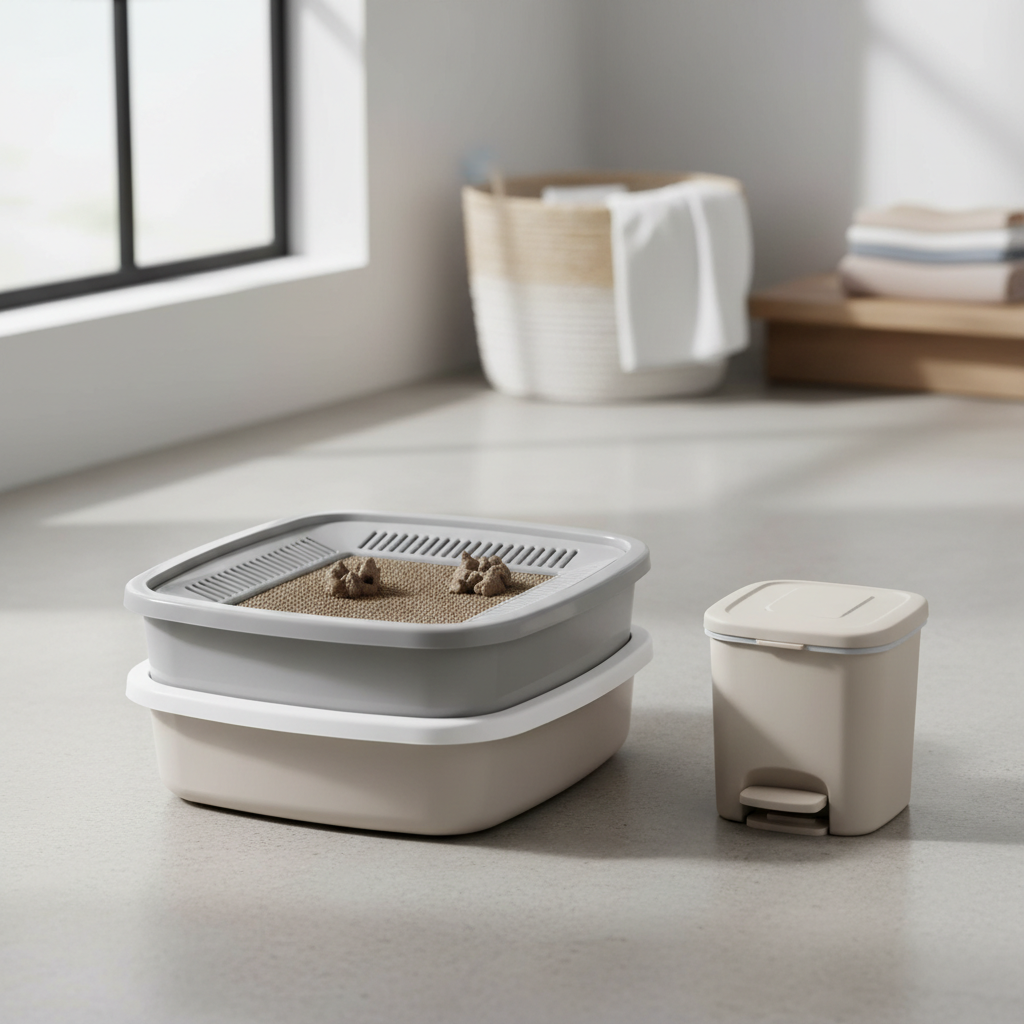
This guide breaks down why sifters feel “easy clean” for some households and frustrating for others, how to tell if it fits your cat and litter type, and a simple routine that keeps odors under control without overthinking it.
Why a sifting pan can feel “easy clean” (and when it doesn’t)
The best part is speed: you lift, shake gently, and the clean granules fall through while clumps stay behind. In many homes, that means less bending, fewer repetitive scoops, and fewer stray bits flung outside the box.
But the same design can backfire if the holes clog, if clumps break apart, or if your litter doesn’t “behave” when shaken. The sifter isn’t magic, it’s a separator, and separators depend on particle size and moisture.
- Works best with firm-clumping litter that forms solid clumps you can lift without crumbling.
- Feels slower with non-clumping litter, very fine litter that plugs the slots, or clumps that smear on plastic.
- Feels cleaner when the box has a rim/high sides and the pan nests tightly, so you don’t get gaps where litter leaks.
According to the American Veterinary Medical Association (AVMA), good litter box hygiene supports a cat’s comfort and can reduce avoidance behaviors, so “easy clean” isn’t only about you saving time, it can help consistency too.
Quick self-check: is a sifting pan right for your cat and litter?
If you’re on the fence, run through this quick reality check. It saves you from buying a setup that fights your routine.
- Your litter type: clumping clay and many clumping plant-based litters often work; pellets and crystal litters vary by size and may not sift well.
- Clump strength: if clumps break when you scoop today, sifting will usually break them even more.
- Cat’s habits: “high peeing” or very enthusiastic digging may need higher walls or a top-entry style, even if the sifter insert is great.
- Odor sensitivity: if odor is your main pain point, a sifter helps daily removal, but odor control still depends on litter depth, ventilation, and full changes.
- Mobility: if you want less wrist work, a lift-and-sift system can be easier than repetitive scooping.
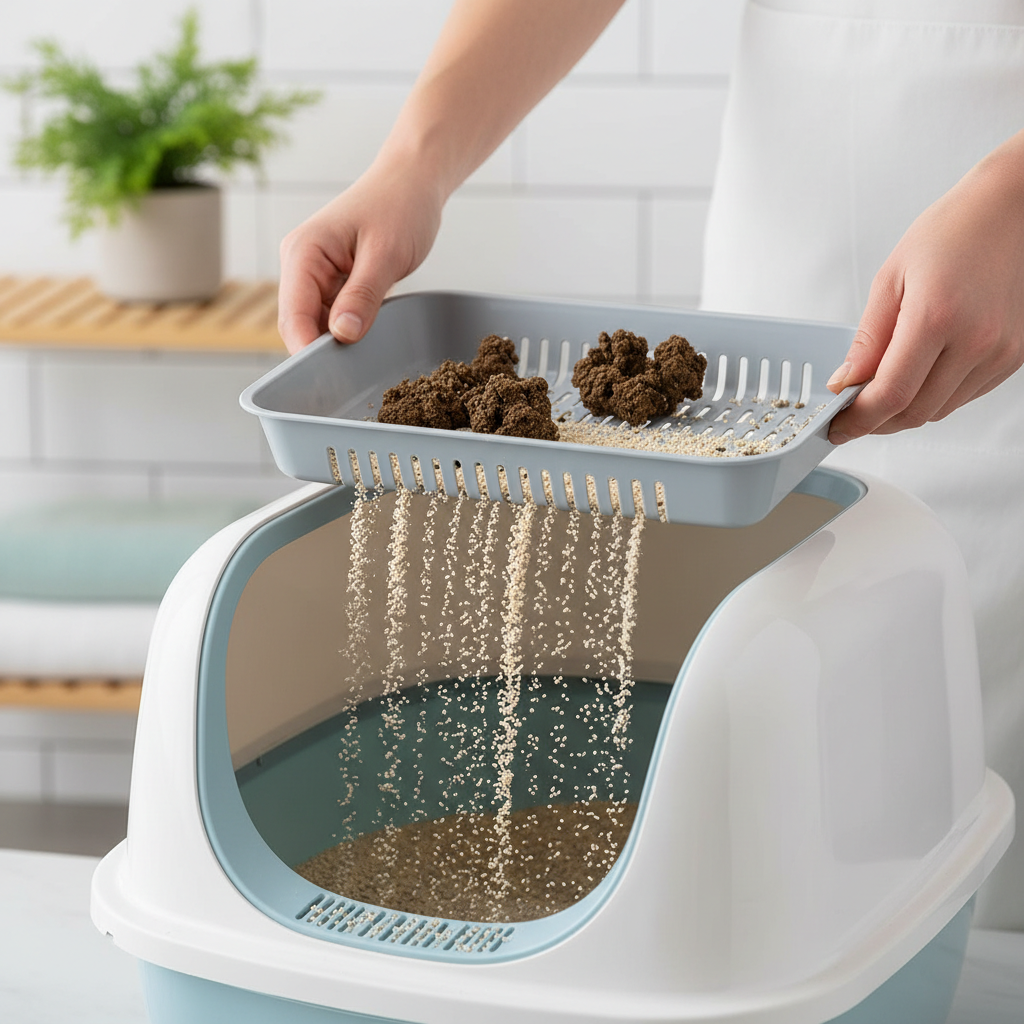
If you checked “non-clumping” or “crumbly clumps,” don’t force it. You can still speed up cleaning with a wide scoop and a better trash routine, but the sifting mechanism may not deliver that easy-clean feeling.
Choosing a cat litter sifting pan: what matters more than the marketing
Most sifting pans look similar in photos. In use, small design choices decide whether the setup feels fast or fiddly.
Hole/slot design and litter compatibility
Slots that are too narrow clog with fine litter, and holes that are too wide can drop small clumps back into the clean litter. If you already love your litter, shop for a pan that matches it, not the other way around.
Tray fit, stiffness, and flex
Cheap trays flex, and flex turns “shake gently” into “oops, litter wave.” A sturdier plastic and a snug nesting design usually mean less spill and less frustration.
Side height and rim
Low sides feel easy until your cat kicks litter like it’s training for the Olympics. Many households do better with a rimmed pan or a tall outer tray, even if the sifting insert stays standard.
Surface finish (yes, it matters)
Some plastics let clumps stick, especially when urine hits the bottom and dries. A smoother finish, or using liners (when your cat tolerates them), can reduce scraping and smell buildup.
Comparison table: which sifting setup fits your routine?
If you want a fast decision, use this table as a practical shortcut.
| Setup | Best for | Trade-offs | What to watch |
|---|---|---|---|
| Nested lift-and-sift trays | Daily quick cleaning, clumping litter | Needs compatible litter, can spill if trays flex | Slot size, tray rigidity, tight nesting |
| Sifting insert + standard pan | People who already like their current box | Fit can be awkward if insert slides | Insert stability, rim height |
| Top-entry box with sifting option | High scatter homes, curious dogs, small spaces | Not ideal for senior cats or mobility limits | Entry size, interior clearance, cat acceptance |
| Traditional box + wide scoop | Non-clumping litter users, pellet users | More repetitive scooping | Scoop size, daily consistency |
How to use a sifting pan for fast daily cleaning (step-by-step)
Most complaints about sifters are really routine issues: shaking too hard, not letting clumps set, or trying to sift when the litter is too shallow.
- Wait a few minutes if possible: fresh clumps break easily. Giving clumps time to firm up reduces crumble.
- Lift and hold level: keep the tray flat so clean litter falls evenly, not in one corner.
- Shake gently, short pulses: think “tap-tap,” not “maraca.” This reduces dust and keeps clumps intact.
- Dump clumps into a lined, covered bin: this helps odor more than people expect, especially in small apartments.
- Top off litter depth: many clumping litters perform better with adequate depth; too shallow makes clumps smear on the bottom.
If “easy clean” is the goal, aim for a routine you can repeat when you’re tired. A sifting pan shines when the steps feel automatic.
Mistakes that make sifting feel messy (and how to avoid them)
A few common habits can make a good sifter feel like a downgrade. The fixes are usually simple.
- Shaking too aggressively: it creates dust and breaks clumps. Slow down, use smaller motions.
- Using ultra-fine litter with narrow slots: clogging turns sifting into scraping. Either change litter texture or choose a different slot pattern.
- Letting the box go “too long”: when urine saturates the base layer, it can stick and smear. Daily removal matters more with sifters.
- Skipping a periodic wash: plastic holds odor over time. A wash schedule keeps the system feeling fresh.
According to the ASPCA, many cats prefer a clean litter box, and avoidance can show up as accidents outside the box. If your cat starts hesitating, it may be the cleanliness level, the litter type, or even a stress/health factor, not “attitude.”
When you should adjust the plan or ask a professional
If your cat suddenly stops using the box, urinates frequently, strains, or cries out, treat it as a health concern first. Those signs can be linked to urinary issues, and it’s safer to consult a veterinarian rather than assuming the box setup is the whole story.
Also consider switching away from sifting if you have a cat who consistently produces very soft stool, or if your home needs non-tracking pellets that won’t sift well. There’s no prize for forcing a system that doesn’t match your reality.
Conclusion: make “easy clean” realistic, not perfect
A cat litter sifting pan can be an easy clean upgrade when the litter clumps firmly, the tray design matches the grain size, and your daily routine stays simple. If you’re constantly scraping stuck clumps or dealing with slot clogs, it’s usually a compatibility issue, not a personal failure.
If you want a practical next step, do this: pick one sifting system that fits your current litter, then commit to a 7-day trial with gentle shaking, covered waste storage, and a quick top-off routine. You’ll know fast whether it’s a keeper.
Key takeaways
- Compatibility beats hype: slot size and litter texture decide whether sifting feels fast.
- Gentle technique matters: small motions reduce dust and keep clumps intact.
- Odor control is a system: daily removal plus sealed waste storage usually helps more than “extra fragrance.”
- Watch your cat: avoidance or urinary signs deserve a vet conversation, not just a new box.
FAQ
What litter works best with a sifting pan?
Usually, a firm-clumping litter works best because clumps stay intact during the lift-and-shake step. Very fine litter can clog some sifters, and large pellets may not pass through at all.
Does a sifting pan reduce smell?
It can, mostly because it makes daily removal easier, so you do it more consistently. Smell still depends on litter type, ventilation, how many cats share the box, and whether waste sits in an open trash can.
How often should I fully change the litter if I use a sifter?
It varies by litter and household. Many people do partial top-offs daily and a full dump and wash on a schedule that matches odor and buildup, if the box smells “clean but stale,” it’s often time for a deeper clean.
Why are my clumps breaking apart when I sift?
Common causes include sifting too soon after use, shaking too hard, or using litter that forms weaker clumps. Waiting a bit and switching to a stronger clumping formula often helps.
Is a sifting litter box good for older cats?
The sifting mechanism itself isn’t the issue, entry height is. Seniors often do better with low-entry sides and stable footing, so choose a design that’s easy to step into.
Can I use a liner with a sifting pan?
Sometimes, but liners can bunch up and block the sifting holes, and some cats dislike the feel. If you try liners, pick a snug fit and watch your cat’s comfort and willingness to use the box.
My cat tracks litter everywhere, will a sifter fix that?
Not by itself. Tracking is more about litter shape, static, and exit area. A large litter mat and a less-tracking litter often make a bigger difference than the tray style.
How do I clean a sifting pan without harsh fumes?
Warm water and mild soap works for routine washing, then dry fully before refilling. If you need stronger disinfection, choose pet-safe products and follow label instructions, and if you’re unsure, asking your vet is a safe move.
If you’re trying to make cleanup faster without turning your home into a “litter project,” a well-matched sifting pan and a simple routine usually get you most of the way there, and it’s often worth testing one setup for a week before buying add-ons.