
Best dog toys for mental stimulation are the ones that make your dog think, sniff, and problem-solve just enough to feel satisfied, not so much that they quit in frustration. If your dog seems “busy” but still restless, chews random stuff, or shadows you all day, it’s often a sign their brain needs a better outlet than another quick game of fetch.
Mental enrichment matters because it can change the whole tone of your home, a dog with a job tends to settle faster, bark less out of boredom, and look less for trouble. The tricky part is that “interactive” on a product label does not automatically mean it fits your dog’s style, chewing strength, or attention span.
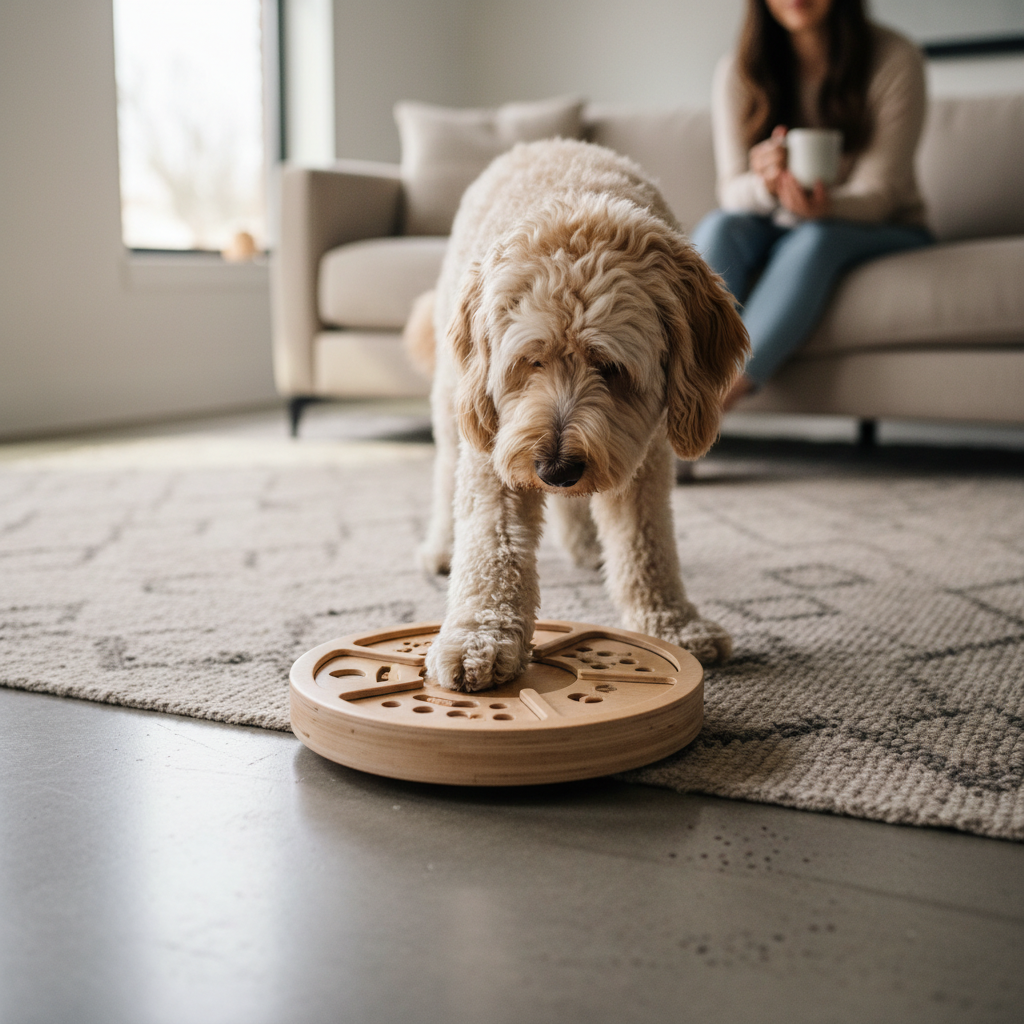
This guide helps you choose toys that actually work in real life, match difficulty to your dog, and rotate options so the “new toy effect” lasts longer. You’ll also see a quick comparison table, a short self-check list, and practical setups you can start today.
What “mental stimulation” looks like in dogs (and why toys help)
Mental stimulation is any activity that asks your dog to make choices: sniffing to find something, manipulating an object to access food, or solving a small “how do I get this out” problem. Toys help because they package that effort into a repeatable, safe routine you can fit into busy days.
According to the American Kennel Club (AKC), enrichment activities like puzzle toys and scent work can support a dog’s well-being by reducing boredom and encouraging natural behaviors. That matters most for smart, active breeds, but plenty of laid-back dogs benefit too, especially when weather or schedules limit outdoor time.
- Sniffing work often tires dogs out faster than you’d expect, it’s focused and calming.
- Problem-solving builds confidence in many dogs, but needs the right difficulty curve.
- Chewing can be soothing, yet it must match the dog’s bite strength and chewing style.
Quick comparison table: toy types that stimulate the brain
If you’re staring at a wall of products, start with the “job” you want the toy to do: calm your dog down, keep them busy while you work, slow fast eating, or redirect chewing. This table is a practical shortcut.
| Toy type | Best for | How it stimulates | Watch-outs |
|---|---|---|---|
| Puzzle boards & sliders | Quick 5–15 min sessions | Sequence + paw/nose manipulation | Some dogs flip it, supervision helps early |
| Treat-dispensing rollers | Independent play, apartment energy | Cause-and-effect learning | Can be noisy on hard floors |
| Stuffable rubber toys | Calm settling, crate time | Long-form licking + chewing | Size must prevent swallowing risk |
| Snuffle mats | Nose-led dogs, anxious dogs | Scent searching, natural foraging | Some dogs shred fabric, choose durable mats |
| Chew puzzles / safe chew toys | Heavy chewers with supervision | Oral stimulation + persistence | Inspect for cracks, replace when worn |
How to pick the right toy for your dog (a fast self-check)
Most “this toy didn’t work” stories come down to mismatch, wrong level, wrong material, wrong motivation. Before you buy three more, run through this list once.
- Motivation: Does your dog work for kibble, high-value treats, or play? Food-driven dogs love puzzles, toy-driven dogs may prefer tug-and-think games.
- Chewing style: Gentle nibbler, focused gnawer, or “I destroy things”? This decides material and whether you supervise.
- Frustration tolerance: If your dog quits quickly, start simpler and “show them the win” for a few reps.
- Noise sensitivity: Some dogs avoid clacky dispensers on tile, soft options can be better.
- Household reality: Do you need 20 minutes of quiet during calls, or a 5-minute brain break before a walk?
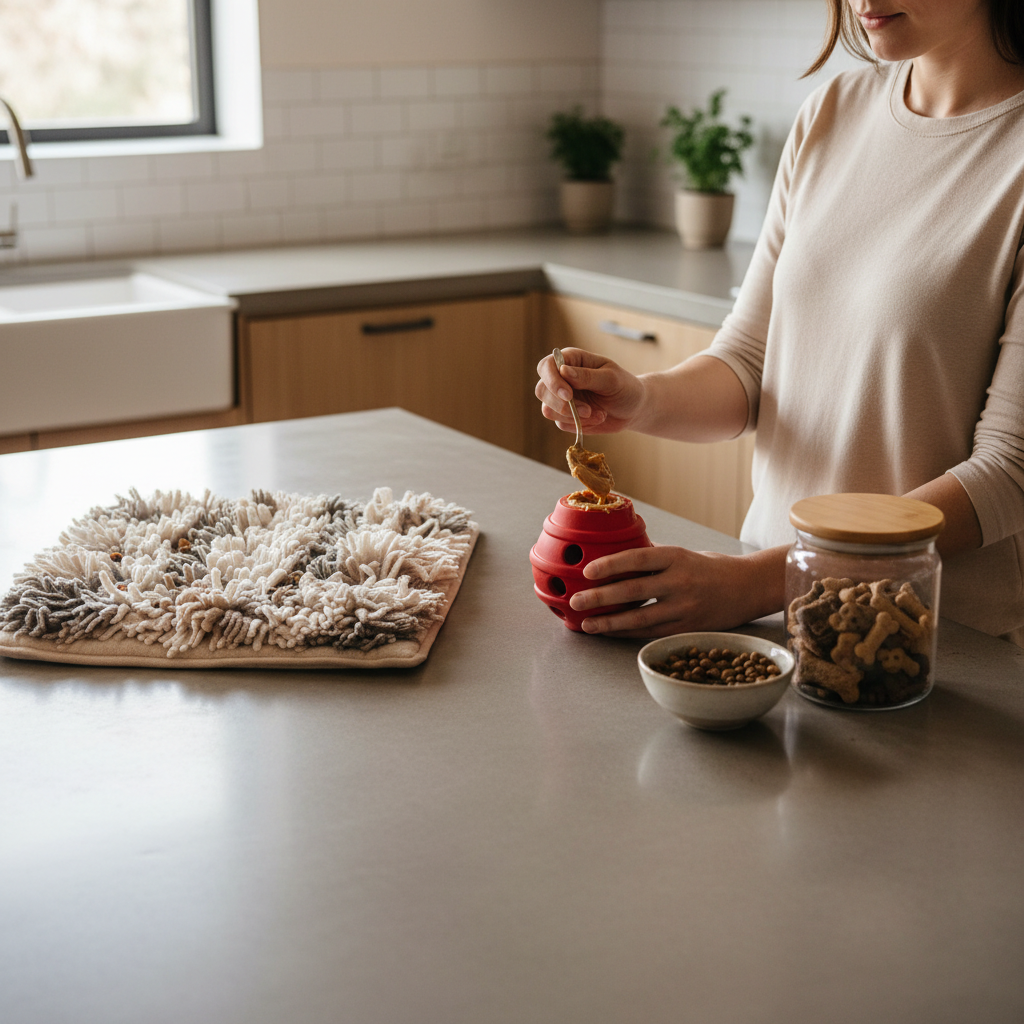
Key point: for most dogs, the best dog toys for mental stimulation are the ones they can “solve” within a minute or two at first. You can always make it harder later, you can’t easily undo a bad first impression.
Top toy categories that reliably boost mental stimulation
You don’t need a huge toy box, you need a small set with different “brain jobs.” In many homes, 4–6 items rotated weekly beats 15 toys tossed in a basket.
Puzzle toys (beginner to advanced)
Puzzle toys are great when you want focused effort in a short window. Start with simple lids or single-step sliders, then move to multi-compartment boards once your dog stops guessing and starts thinking.
- Beginner: open wells, easy flip lids, treat visible at first
- Intermediate: sliders that require a paw hold plus a push
- Advanced: layered puzzles, multiple steps, fewer scent cues
Treat dispensers and rollers (movement + problem-solving)
These keep many dogs busy because they combine chasing with “how do I get it to drop.” If your dog gets overstimulated, choose a slower-dispensing style and use kibble instead of high-sugar treats.
- Use on rugs to reduce noise and prevent slipping
- Pick a size that can’t fit behind couch legs easily, retrieval matters
Stuffable toys and lick-based enrichment (calming, longer sessions)
Licking is often self-soothing for dogs, so stuffable toys can be a go-to for crate time or evening wind-down. The “secret” is texture layering, not just stuffing it full.
- Easy fill: kibble mixed with wet food
- Stickier: small amount of xylitol-free peanut butter as a seal
- Longer: freeze the stuffed toy for a tougher challenge
According to the ASPCA, xylitol can be dangerous for dogs, so avoid peanut butter or spreads that contain it, and if you’re unsure, check labels or ask your veterinarian.
Sniff-and-find toys (snuffle mats, hide-and-seek plush)
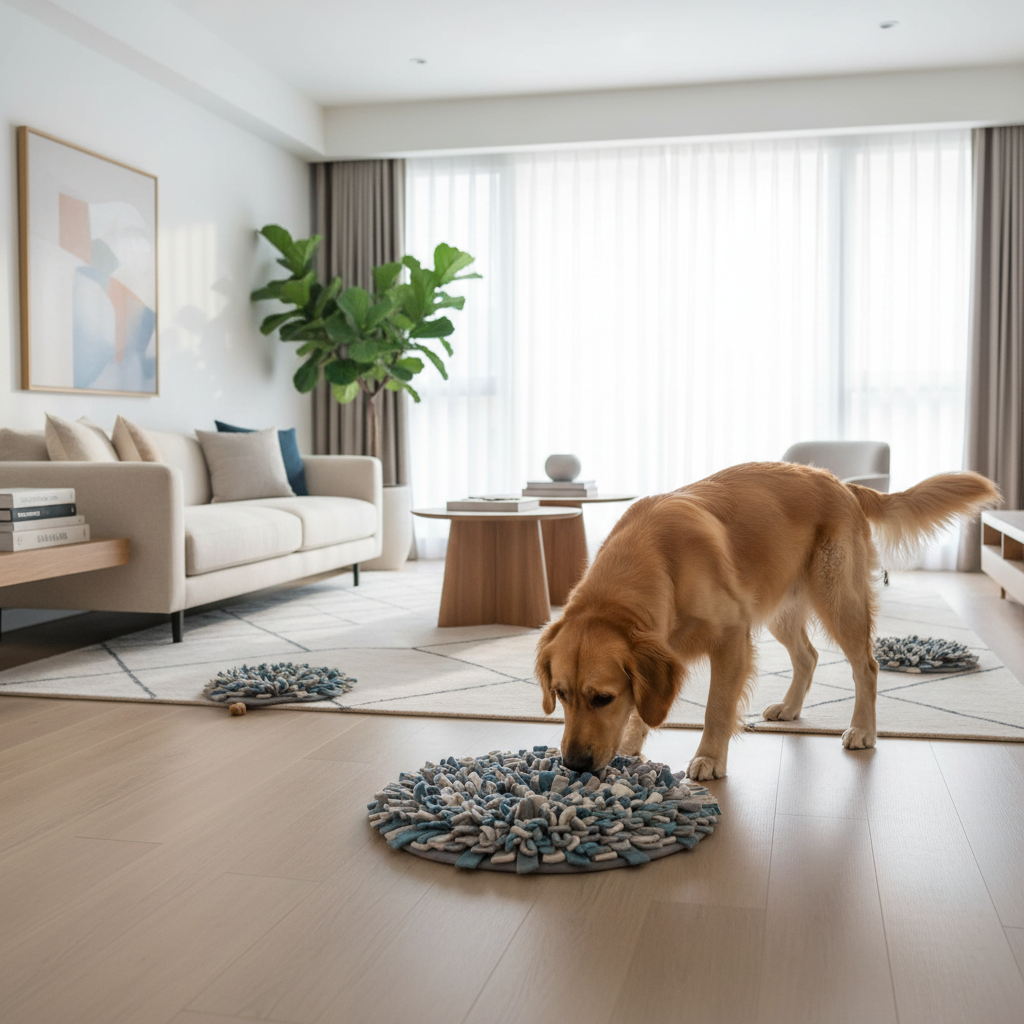
Scent games feel “natural” for dogs, which is why they often work even when puzzle boards flop. Snuffle mats suit dogs who inhale meals, and they’re also a low-conflict option for multi-dog homes if you separate dogs during use.
- Scatter kibble deep in folds, start shallow if your dog is new
- Pick washable materials, sniff games get gross fast
How to build a simple enrichment routine (without overthinking it)
Many people buy one puzzle, use it three days in a row, the dog masters it, then it “stops working.” Rotation fixes that, and it also keeps you from escalating difficulty too quickly.
- Monday/Wednesday: snuffle mat meal, 10 minutes
- Tuesday/Thursday: treat dispenser while you work, 15 minutes
- Friday: puzzle board, short and sweet
- Weekend: “find it” game with treats around one room
If your dog gets stuck, don’t just watch them fail, help once, lower difficulty, and end on a win. That keeps the toy reinforcing rather than annoying.
Practical tip: keep a small “enrichment jar” of pre-portioned kibble or treats, when your dog ramps up, you can redirect in 20 seconds instead of negotiating with them for 10 minutes.
Safety notes and common mistakes (what editors hear again and again)
Enrichment toys are still toys, which means wear, choking risk, and “my dog ate the thing” scenarios can happen. If your dog is a power chewer or eats fabric, supervision is not optional.
- Size matters: toys should be large enough to prevent accidental swallowing, especially with treat-stuffables.
- Inspect weekly: cracks, loose seams, or pieces breaking off mean it’s time to replace.
- Don’t jump levels: hard puzzles too early often create avoidance, not skill.
- Skip “set and forget”: for many dogs, long unsupervised sessions increase risk, not enrichment.
- Watch calories: treat toys can quietly add up, adjust meals as needed.
If your dog guards toys or becomes frantic around food puzzles, choose lower-arousal options like sniff games with scattered kibble, and consider guidance from a qualified trainer or veterinary behavior professional.
When mental-stimulation toys aren’t enough
If you’re buying the best dog toys for mental stimulation and your dog still can’t settle, the missing piece may be outside the toy aisle. Pain, anxiety, insufficient sleep, and under-exercising can all look like “boredom,” and it’s easy to misread.
- Sudden behavior changes (new destruction, irritability, accidents) warrant a vet check, just to rule out medical causes.
- Separation anxiety signs (panic when you leave, self-injury, nonstop vocalizing) typically need a structured plan, not just a puzzle toy.
- High-drive dogs may need training games, decompression walks, and predictable routines alongside enrichment.
According to the American Veterinary Medical Association (AVMA), discussing behavior concerns with your veterinarian is a reasonable first step, and they can refer you to behavior specialists when needed.
Conclusion: choose one “thinking” toy and make it a habit
The most effective setup is rarely complicated, pick one puzzle or sniff option your dog can succeed with, run it a few times a week, then rotate in a second toy to keep novelty alive. If you want a low-effort place to start, a snuffle mat meal plus a stuffable toy for downtime covers a lot of households.
If you try one change this week, make it this: reduce the difficulty, increase the consistency, and watch how quickly your dog starts to settle between activities.
FAQ
What are the best dog toys for mental stimulation for puppies?
Puppies do best with simple puzzles, soft treat-dispensing toys, and short sniff games, because attention spans are short and frustration hits fast. Keep sessions brief, and choose puppy-safe materials and sizes.
How long should my dog use a puzzle toy each day?
Many dogs do well with 10–20 minutes total, split across the day. If your dog gets amped up or starts obsessing, shorter sessions with an easier win often work better.
Do snuffle mats really tire dogs out?
For a lot of dogs, yes, sniffing is focused work and can be calming. It won’t replace physical exercise for every dog, but it often helps take the edge off, especially indoors.
My dog solves puzzles too fast, should I buy the hardest one?
Usually not right away. You’ll get more mileage by rotating toys, changing treat size, or freezing a stuffable toy, then step up difficulty gradually so your dog stays engaged instead of frustrated.
Are treat toys safe for aggressive chewers?
They can be, but it depends on the dog and the toy material. Supervision, correct sizing, and regular inspection are key, and if your dog breaks off chunks, switch to safer, more durable options and ask your vet for guidance.
Can mental stimulation reduce barking?
If barking comes from boredom or under-stimulation, enrichment can help by giving your dog a “job.” If barking stems from fear, territorial triggers, or separation anxiety, toys alone may not be enough.
What can I use if I don’t want to give extra treats?
Use part of your dog’s regular kibble in puzzles or snuffle mats, and subtract that amount from meals. You can also use non-food enrichment like hide-and-seek with a favorite toy, depending on what motivates your dog.
If you’re trying to create calmer days and you want a more tailored shortlist, it can help to match toy type to chewing style, food motivation, and your schedule, a simple plan often beats chasing whatever toy is trending.