
Turtle filter waterfall low flow almost always means the filter is being restricted somewhere, and the trick is finding whether it’s a water-level issue, a clog, or a worn part before you start replacing things.
If you keep turtles, you already know why this matters: turtles are messy, they push food around, they kick up debris, and a weak waterfall return can turn a “fine yesterday” tank into cloudy water and odor faster than most fish setups.
There’s also a common misunderstanding here, people assume “low flow” equals “the filter is too small.” Sometimes that’s true, but many low-flow cases come from simple maintenance gaps, wrong media placement, a pinched hose, or even a slightly low tank waterline.
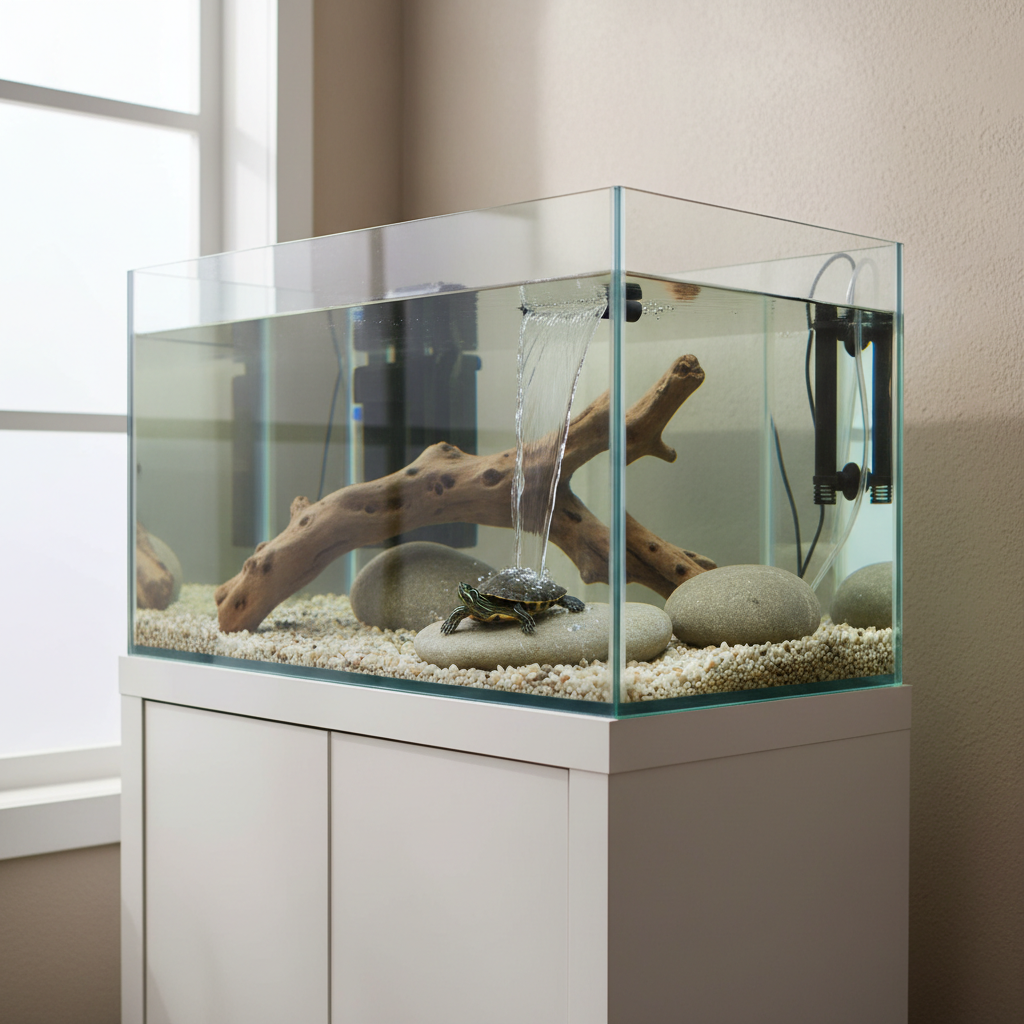
Below is a practical way to diagnose the cause in minutes, then fix it in the right order, starting with what’s most likely and cheapest, and ending with the situations where you might want a shop or manufacturer to weigh in.
What “low flow” usually looks like (and what it can hint at)
Most people notice low flow in one of three ways: the waterfall stream is thinner, the return sputters with bubbles, or the flow looks fine for a day and then fades again.
- Thin, steady trickle often points to a restriction: clogged intake sponge, gunked impeller, packed media, or kinked tubing.
- Sputtering or lots of bubbles often suggests air in the line: low water level, loose connections, poor priming, or a tiny leak on the intake side.
- Flow drops again soon after cleaning often means your “first-stage” capture is missing: no prefilter sponge, prefilter too small, or turtles producing more solids than your setup catches.
One more clue: if the motor sounds louder than normal, it can be struggling against blockage, running partially dry due to air, or dealing with a worn impeller.
Root causes: why a turtle filter waterfall gets weak
Turtle tanks create a specific kind of clogging, big food bits, plant shreds, shell shed, and fine sand if you use it, so the causes cluster into a few buckets.
1) Water level and head height (especially for “waterfall” returns)
A waterfall-style return needs a stable waterline. If the tank level drops even an inch or two, some systems start pulling air, and once air enters, flow can look weak even if the motor is fine.
Also, every extra inch the filter must push water upward reduces output. This is normal physics, but it surprises people when they add a taller stand, route hoses around a cabinet, or mount a return higher for splash.
2) Intake blockage: prefilter sponge and strainer
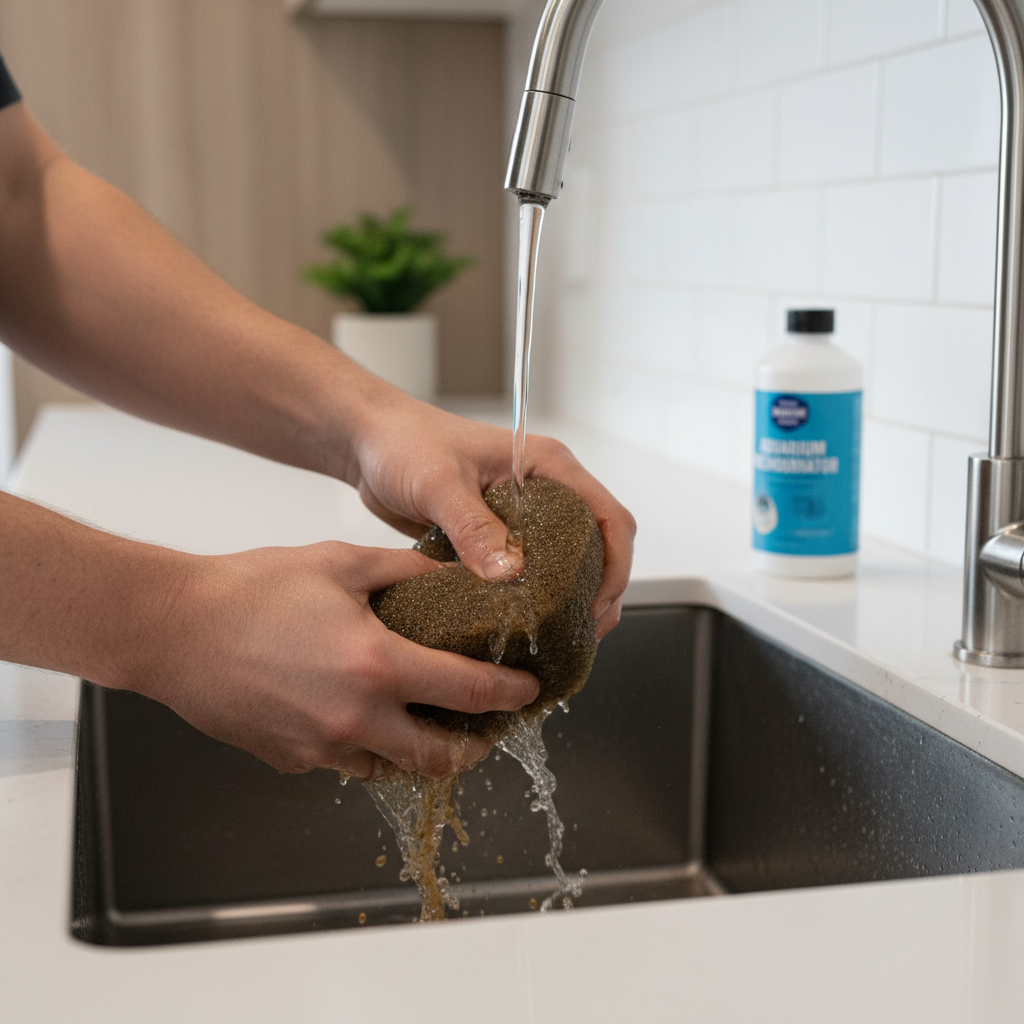
This is the most common culprit in turtle setups. A prefilter sponge protects the filter, but it also loads up fast. If it turns brown and compacted, it can choke the whole system.
According to the U.S. Environmental Protection Agency (EPA), routine maintenance of water systems is key to keeping performance stable; aquariums aren’t municipal systems, but the principle still applies, flow and filtration drop when pathways clog.
3) Impeller and impeller well buildup
Even when media looks clean, the impeller area can collect slime and grit. That gunk adds friction and reduces the pump’s ability to move water. In turtle tanks, calcium deposits can also build up depending on your tap water.
4) Media packed too tightly or in the wrong order
Overstuffing is a real thing. If you cram extra floss into a basket or compress sponges, you often get crystal water for a day, then the floss mats down and the flow collapses.
Another quiet issue: if fine polishing media sits before coarse mechanical stages, it clogs prematurely. Many low-flow complaints come down to “the filter is trying to do the hard work at the wrong stage.”
5) Tubing, fittings, spray bars, and “hidden” restrictions
Kinked hoses, partially closed valves, a dirty spray bar, or a return nozzle clogged with biofilm can all reduce the waterfall effect. Turtle tanks also invite accidents, a basking platform can press on tubing, or a turtle can bump a suction-cup line out of position.
A quick self-check checklist (10 minutes, no tools)
If your turtle filter waterfall is low, run this quick sequence in order, it prevents you from cleaning everything blindly.
- Check water level: Is the intake fully submerged, and is the return positioned as designed?
- Listen: Any rattling, grinding, or “air sucking” sound?
- Look for bubbles: Continuous microbubbles from the return often mean air is getting in on the intake side.
- Inspect prefilter: Is the intake sponge dark, slimy, or collapsed?
- Check hose routing: Any sharp bends, pinches, or heavy objects pressing hoses?
- Verify valves: Quick-disconnect valves fully open, no half-turned levers.
- Return outlet: Remove and rinse any nozzle/spray bar parts, check for slime inside holes.
If you find one obvious issue early, fix it and re-test flow before moving on. Many situations are single-cause, not a “everything is broken” scenario.
Fixes that work (by scenario), without overdoing it
Here’s the order that tends to give the best results with the least disruption to your tank’s beneficial bacteria.
Scenario A: Low water level or air getting into the line
- Top off the tank to the recommended level for your filter and return style.
- Reseat intake tubes and tighten hose clamps or collars (hand-tight, not over-torqued).
- Re-prime the system carefully, follow the manufacturer’s steps so the canister or housing fills completely.
- If bubbles persist, inspect O-rings for dryness or cracks, a light coating of aquarium-safe silicone lubricant often helps seals seat properly.
If your filter sits far below the tank or your hose run is long, you may need to simplify the routing. Less distance and fewer bends usually means stronger output.
Scenario B: Prefilter or intake is clogged (most common)
- Rinse the intake sponge in tank water you removed during a water change, not under hot tap water, to reduce beneficial bacteria loss.
- If the sponge is collapsing or permanently compacted, replace it, sponges are cheap and meant to be consumables.
- Consider upsizing prefilter surface area, a larger sponge clogs slower and protects the canister better.
In messy turtle tanks, many keepers find that cleaning the prefilter weekly (or even every few days during heavy feeding) prevents “mystery” low-flow cycles.
Scenario C: Impeller is dirty or worn
- Unplug the unit, remove the impeller cover, and pull the impeller gently.
- Clean the impeller blades and the well with a small brush (a soft bottle brush works).
- Soak mineral buildup in diluted vinegar, then rinse thoroughly before reassembly.
- If the impeller shaft looks worn, swollen, or the magnet is chipped, replacing the impeller often restores most flow.
According to the American Veterinary Medical Association (AVMA), proper husbandry supports animal health; stable filtration and water quality are part of that husbandry, even if the AVMA won’t tell you which filter brand to buy.
Scenario D: Media is overpacked or “too fine too early”
- Rebuild the stack: coarse mechanical first, then finer mechanical, then biological, then chemical (if you use it).
- Avoid compressing floss into a brick, it should sit lightly so water can pass through.
- If you want very clear water, use polishing floss as a temporary step, not a permanent choke point.
Scenario E: Return outlet is restricting the waterfall
- Remove the spray bar/nozzle and scrub the inside, slime can narrow openings.
- Try a slightly more open return attachment to increase visible waterfall effect.
- Position the return to reduce splashing without raising it excessively above waterline.
Troubleshooting table: symptom → likely cause → fix
If you’re deciding what to do next, this table usually gets you unstuck fast.
| What you see | Likely cause | What to do first |
|---|---|---|
| Waterfall turns into a trickle | Prefilter or media clogged | Rinse intake sponge, check media compression |
| Return sputters, lots of bubbles | Air leak or low water level | Top off water, re-prime, check O-ring seating |
| Flow is fine after cleaning, drops in 24–72 hours | Not enough prefiltration for turtle waste | Increase prefilter size, adjust feeding cleanup |
| Motor is louder, slight grinding sound | Dirty or worn impeller | Clean impeller well, replace impeller if worn |
| Flow weak only at the outlet | Spray bar/nozzle partially blocked | Clean outlet parts, check for biofilm |
Practical habits that keep waterfall flow steady
Once you restore output, a few habits keep your turtle filter waterfall from sliding back into low flow every week.
- Prefilter routine: quick rinse on a schedule that matches your feeding, not your calendar.
- Feed cleaner: many owners use a separate feeding tub to reduce tank debris, it’s not mandatory, but it can dramatically cut solids.
- Don’t over-polish: crystal-clear water is nice, but stuffing fine floss everywhere tends to backfire in turtle tanks.
- Keep tubing simple: fewer bends, fewer fittings, less head pressure.
- Track “normal”: take a quick video of your normal waterfall flow, it makes future changes obvious.
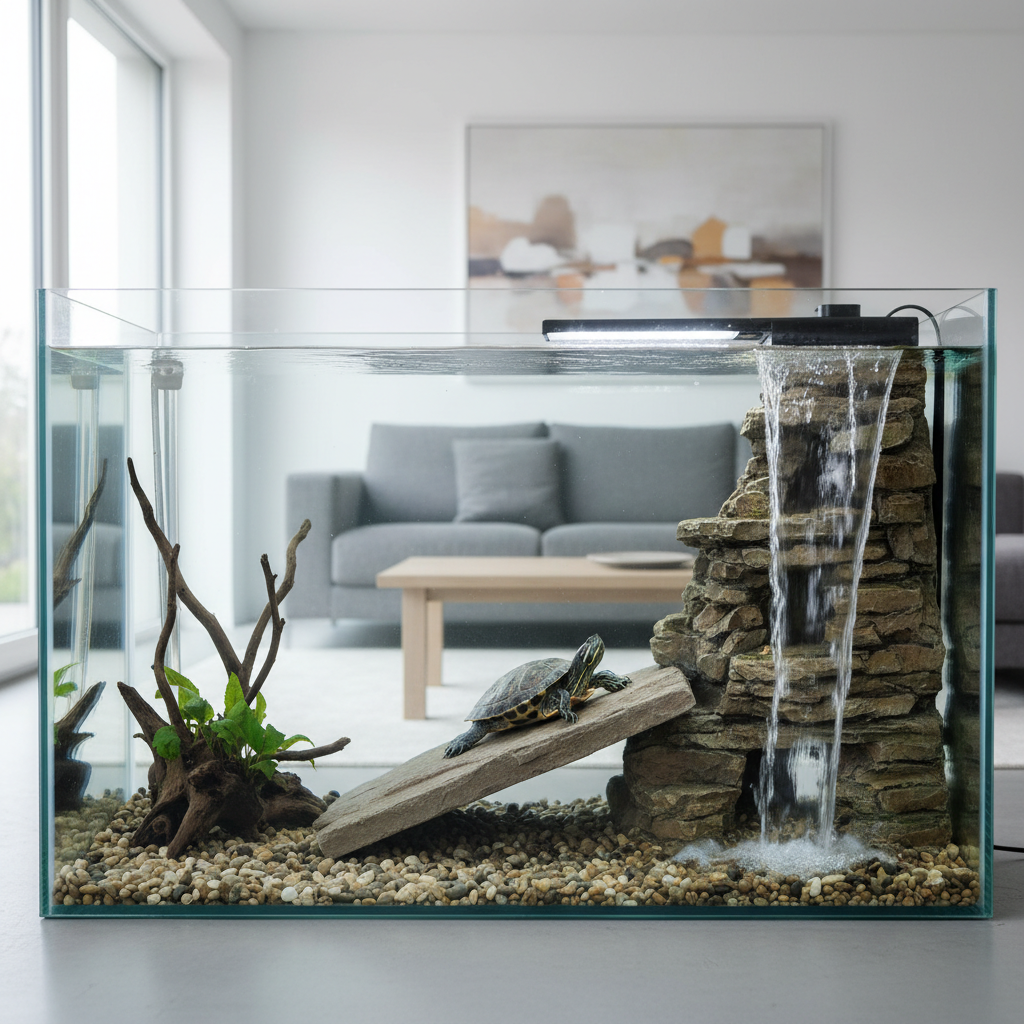
Key takeaway: in many setups, protecting the filter with the right prefilter and not choking the flow with over-fine media does more than buying a bigger unit.
Common mistakes (the ones that waste time)
- Deep-cleaning everything at once, you can destabilize biological filtration and still miss the real restriction point.
- Ignoring tiny air leaks, a slightly misseated O-ring can look like “weak pump.”
- Assuming higher GPH fixes everything, head height, clogs, and outlet restrictions can make a powerful filter look weak.
- Rinsing bio media under hot tap water, it’s not always catastrophic, but it can reduce beneficial bacteria and lead to ammonia issues.
When it’s time to ask for help (or replace parts)
If you’ve cleaned the intake, impeller, outlet, confirmed water level, and re-primed, but the turtle filter waterfall remains low, the motor block may be failing, or there may be a hairline crack pulling air on the intake side.
- Contact the manufacturer if the unit is under warranty, they may troubleshoot by serial number and send the correct seals or impeller.
- Consider a local aquarium shop if you want someone to spot-check setup and hose routing, it’s often a “small fix” you stop noticing at home.
- If water quality has been impacted (odor, cloudiness, turtle skin or eye irritation), it’s smart to consult a reptile veterinarian, since husbandry and health signs can overlap and online guesses get risky.
Conclusion: get your waterfall back without chasing your tail
Most low-flow problems come down to simple restrictions, an overloaded prefilter, a dirty impeller well, or air entering the intake line, and the fastest path is testing in a calm order instead of tearing the whole filter apart.
If you do two things this week, make the prefilter rinse routine realistic for how your turtle actually eats, and check your water level and seals any time you see bubbles, those small habits prevent most repeat low-flow surprises.
FAQ
Why did my turtle filter waterfall suddenly get weak overnight?
Overnight drops often come from a clogged intake sponge or a piece of debris shifting onto the strainer. If you also see bubbles, check the water level and intake connections because a small air leak can show up fast.
Is low flow dangerous for my turtle?
Low flow itself isn’t usually an emergency, but it can lead to poorer water quality, and that’s where risk increases. If your turtle shows signs of irritation or appetite changes, it’s reasonable to consult a reptile veterinarian.
How often should I clean a prefilter sponge on a turtle tank?
Many setups need weekly rinsing, and heavy feeding can require more frequent attention. A good rule is: rinse it when the waterfall output visibly drops, then adjust the schedule so it rarely reaches that point.
Can I use vinegar to clean the impeller and parts?
Vinegar is commonly used for mineral deposits, but it should be diluted and followed by thorough rinsing so no residue enters the tank. Avoid harsh household cleaners that can leave unsafe residues.
My filter has strong flow with no media, but weak flow when assembled. What does that mean?
That pattern usually points to media restriction: overpacked baskets, clogged fine floss, or incorrect order. Rebuild with coarse mechanical first and avoid compressing fine layers.
Why does my return sputter after a water change?
After maintenance, air often gets trapped in the canister or hoses. Re-prime carefully, tilt the canister slightly if the design allows, and verify O-rings and quick-disconnect valves are seated properly.
Should I upgrade to a higher GPH filter to fix low flow?
Sometimes, especially if the filter is undersized for turtle waste, but low flow is more often a maintenance or restriction issue. It’s worth fixing the cause first, then upgrading if you still can’t maintain stable output between cleanings.
If you’re dealing with recurring low flow and you’d rather not keep guessing, it helps to map your exact filter type, hose length, waterline, and media layout, then build a simple maintenance plan around your turtle’s feeding and waste pattern, that’s usually the more “set it and forget it” path.