
How to introduce a new cat to a dog comes down to controlling distance, scent, and speed, so neither pet feels cornered or forced to “be friends” on day one.
If you rush this, you often get the worst version of both animals, a dog that fixates and a cat that bolts, swats, or hides for days. Do it in smart stages and you usually see steadier progress, fewer scary moments, and a home that feels predictable again.
A quick myth to drop now, a calm first meeting does not guarantee long-term harmony, and a tense first meeting does not mean failure. Most homes land somewhere in the middle, and your job is to stack small wins until the pattern feels normal.

What makes dog–cat introductions go wrong (and what usually helps)
Most “bad introductions” are really management problems, not personality flaws. Common triggers tend to look like this.
- Chase instinct in dogs, especially when the cat runs. Even friendly dogs can switch into prey-style behavior.
- Fear-driven defensiveness in cats. Corner a cat and you often get hissing, swatting, or a full-on panic sprint.
- Too much access too soon, like letting them meet face-to-face in a hallway or letting the dog follow the cat around.
- Resource tension, food bowls, favorite people, couches, doorways, litter box routes.
- Stress stacking, the new cat is already overwhelmed by smells and sounds, the dog is hyped by novelty.
According to the American Veterinary Medical Association (AVMA), early socialization and controlled, positive exposures matter for reducing fear and aggression-related behaviors. In practice, that “controlled” part is where most households win or lose.
Before they meet: set up your home for success
If you prepare the space well, the actual introduction feels almost boring, which is exactly what you want. Aim for separation that still allows tiny, safe exposures.
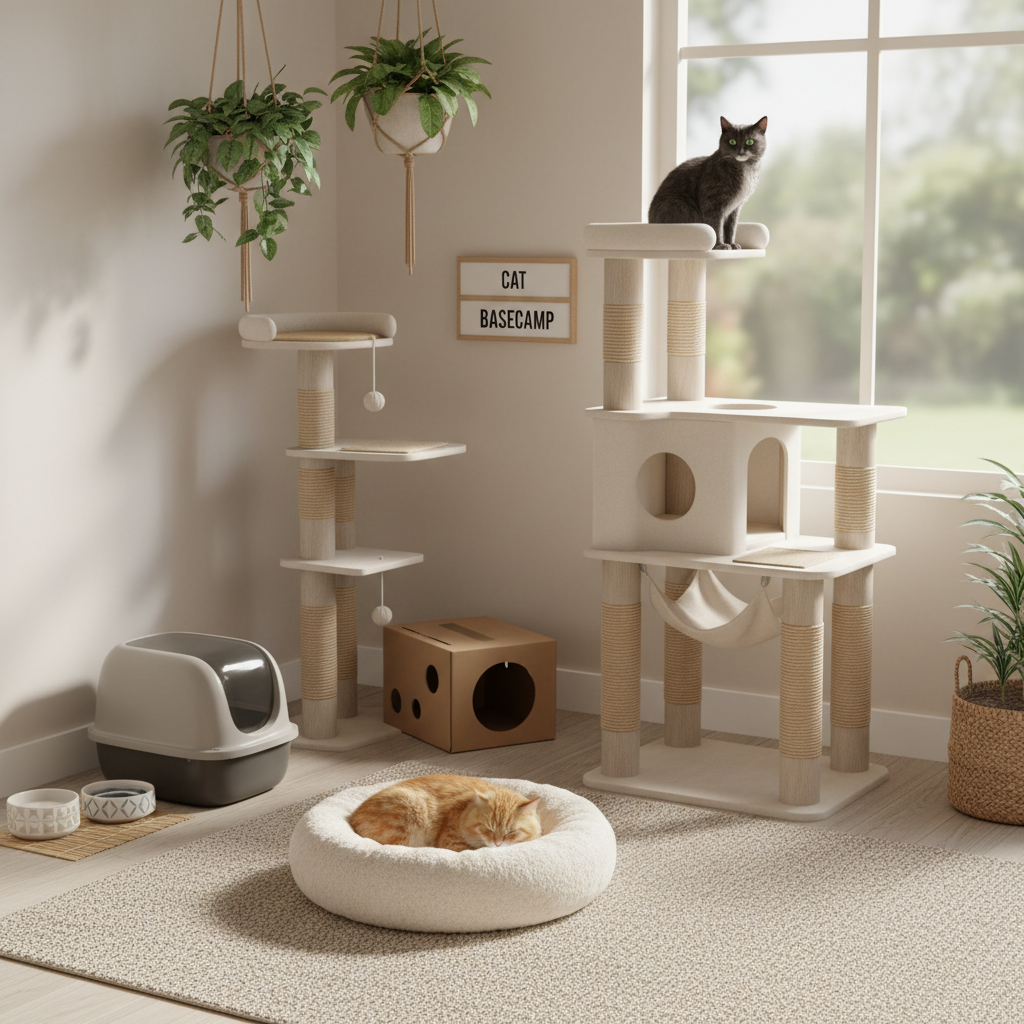
Create a “cat basecamp” room
- A room with a door, litter box, water, food, scratching, and a hiding spot
- Vertical space if possible, a cat tree or shelves help the cat feel in control
- No dog access, not even “just to sniff”
Pick the right barriers and tools
- Baby gate (or two stacked gates) for visual access without contact
- Leash and harness for the dog during early sessions
- Treats for both pets, something higher-value than usual
- Optional: a crate for the dog if the dog is crate-trained and stays relaxed inside
Also, plan the traffic flow. Cats need routes that do not force them to pass the dog, especially to reach the litter box. A lot of “my cat won’t use the litter box anymore” starts right there.
Quick self-check: are you ready to start introductions?
Before you try how to introduce a new cat to a dog in the same room, make sure the basics are true. If not, you are not behind, you are just not ready yet.
- The cat eats, drinks, and uses the litter box normally in basecamp
- The cat explores the room when humans are present, not only at night
- The dog can respond to simple cues like “sit” and “leave it” around mild distractions
- The dog can see the closed basecamp door without whining, pawing, or guarding it
- You have at least 10 minutes a day for structured sessions
If the dog already has a history of harming small animals, or the cat shows extreme fear responses, it may be safer to talk with your veterinarian or a qualified behavior professional before progressing.
A staged plan that works in many households (with a realistic timeline)
Some pairs move fast, others need weeks. The right pace is the pace where both pets stay under threshold, meaning they can still eat treats and respond to you.
Stage 1: scent swapping (usually 2–7 days)
- Swap bedding, or rub each pet with a separate soft cloth and place it near the other pet’s space
- Feed treats on opposite sides of the closed basecamp door
- Let the dog sniff, then call away and reward, this is practice for disengaging
If either pet refuses food near the scent source, increase distance. That is information, not stubbornness.
Stage 2: visual access behind a barrier (often 3–14 days)
- Use a baby gate, keep the dog leashed at first
- Keep sessions short, 1–5 minutes, multiple times a day beats one long session
- Reward calm looking, reward turning away, reward sniffing the floor instead of staring
- Give the cat an “exit,” a perch or a way to leave the gate area
Good signs include soft body language, curiosity, and easy treat-taking. Concerning signs include a stiff freeze, hard staring, trembling, lunging, or a cat flattening ears and crouching low.
Stage 3: same room, controlled, no chasing (days to weeks)
- Dog on leash, cat loose with vertical options
- Start with parallel activities, dog does a chew on a mat, cat gets treats tossed away from the dog
- End the session while it still feels calm, not after someone loses it
According to the ASPCA, management and positive reinforcement are key tools for reducing problem behaviors during multi-pet introductions. That’s the mindset here, you are building calm habits, not testing “will they get along.”
A simple table: what to do based on what you see
When people get stuck, it’s usually because they keep guessing. Use this as a quick decision guide.
| What you notice | What it often means | What to do next |
|---|---|---|
| Dog stares, body stiff, ignores treats | Over threshold, high arousal | Increase distance, shorten session, practice “look at that” then look away |
| Dog whines but can sit and take treats | Excited but still learning | Reward calm, add mat work, end before whining escalates |
| Cat hisses then retreats and recovers quickly | Normal boundary setting | Give more escape routes, keep sessions brief, do not punish hissing |
| Cat won’t eat for hours after sessions | Stress too high | Go back a stage, focus on scent-only and door feeding |
| Both can pass the gate, glance, then disengage | Great progress | Try short supervised room time with dog leashed |

Hands-on training that makes the introduction smoother
Management prevents disasters, training changes the pattern. Even 5 minutes a day can shift the dog’s default response from “go!” to “check in.”
Teach a real “leave it” and “place”
- Leave it means disengage from the cat, then get paid for looking back at you
- Place means go to a mat and settle, not just touch it and bounce back up
Reward the behavior you want, not just “no chasing”
- Dog glances at cat then looks away, reward
- Dog sniffs the ground, reward
- Dog chooses the chew toy while cat moves, reward
For the cat, your main “training” is agency, give choices and safe exits. Forced holding or “let them fight it out” tends to create longer-term fear.
Common mistakes to avoid (these slow you down)
- Face-to-face introductions as the first meeting, especially in tight spaces
- Letting the cat run while the dog is loose, it rehearses chasing fast
- Punishing warning signs like growling or hissing, you remove the warning but keep the emotion
- Overconfidence after one good day, progress often looks like two steps forward, one step back
- One litter box in a risky location, cats may avoid it if the dog can block the path
Also watch the “helpful” kid behavior. A lot of households accidentally add pressure by encouraging the cat to “say hi” or by letting the dog hover near the basecamp door.
When to get professional help (and what kind)
If you see repeated lunging, snapping, or a cat that cannot function outside hiding, it’s reasonable to bring in extra support. You are not failing, you are managing risk.
- Start with your veterinarian if either pet shows sudden behavior change, pain can amplify reactivity
- Look for a credentialed behavior professional for a customized plan, especially if the dog’s prey drive is intense
- If anyone is bitten or there is an injury, pause introductions and get guidance before resuming
According to the American College of Veterinary Behaviorists (ACVB), behavior problems can have medical and environmental components, so a professional plan often combines training steps with management and, in some cases, veterinary care.
Key takeaways and a practical next step
How to introduce a new cat to a dog safely is less about one “perfect” meeting and more about repeating calm, controlled moments until both pets stop treating each other as a big event.
- Go slower than your optimism, especially in the first two weeks
- Use barriers and leashes until calm becomes the default
- Measure progress by recovery, how quickly they relax after seeing each other
If you want a simple next move, set up basecamp today, then start door feeding tomorrow. Once both pets can eat calmly on opposite sides of the door, you have a solid foundation to build on.
FAQ
How long does it take to introduce a new cat to a dog?
Many households need a few weeks for comfortable co-existence, and some need longer. A better metric than days is whether both pets can stay relaxed and take treats during each stage.
Should I let my dog “sniff the cat” right away?
Usually no, direct face-to-face sniffing can be intense for the cat and exciting for the dog. Start with scent swapping and barrier sessions so both animals have space and choice.
What if my dog is friendly but keeps staring at the cat?
Staring often signals fixation, not friendliness. Increase distance, reward looking away, and practice “place” so the dog learns a default calming behavior around movement.
Is hissing a sign the introduction failed?
Not necessarily. Hissing can be normal communication, the issue is whether the cat can retreat and then settle again, or whether the stress spirals for hours.
Can I carry my cat into the room to “show” the dog?
This often backfires because the cat feels trapped and the dog may jump up. It’s typically safer to let the cat choose distance and movement while the dog stays controlled.
What if my dog tries to chase every time the cat moves?
Pause free movement sessions and go back to barrier work with the dog leashed. You may need focused training on impulse control, and in higher-risk cases it’s smart to consult a qualified professional.
Do I need to keep them separated forever?
Many pairs reach a point where they can share space with basic supervision, but some dogs and cats do best with ongoing management like gates and cat-only zones. The goal is safety and low stress, not forcing closeness.
If you’re trying to introduce a cat and dog and you’d rather not guess your way through it, a structured plan with clear stages, the right barriers, and a few targeted training cues can save a lot of time and stress, and a trainer or behavior pro can help tailor it to your exact pets and home layout.