
how to treat diarrhea in cats at home starts with two priorities: keep your cat hydrated and figure out whether this looks mild and short-lived, or like something that needs a vet now.
Diarrhea can be messy, stressful, and confusing because the cause ranges from “ate something weird” to parasites, infections, medication side effects, or chronic gut disease. The same symptom can mean very different things depending on your cat’s age, overall health, and how they act between litter box trips.
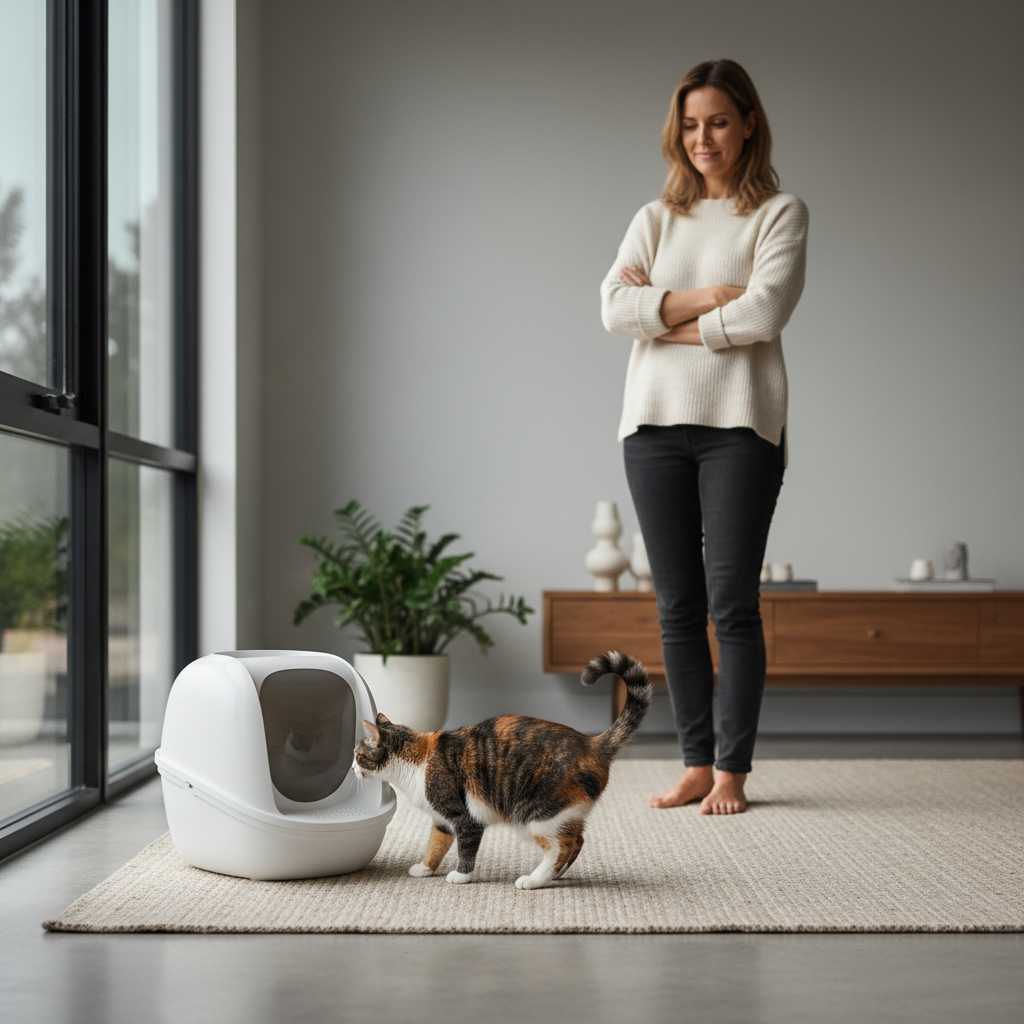
This guide focuses on what you can reasonably do at home for mild cases, how to watch for dehydration and other red flags, and how to avoid common “helpful” moves that backfire. If you’re on the fence, that’s normal, cats hide illness well, and when in doubt it’s okay to call your vet for triage.
When diarrhea is an emergency (don’t wait at home)
Some situations move from “monitor and support” to “get medical help” quickly, especially for kittens and seniors. According to the American Veterinary Medical Association (AVMA), diarrhea can lead to dehydration and electrolyte problems, which may become serious if untreated.
- Blood in stool (red streaks or black, tarry stool)
- Repeated vomiting, or can’t keep water down
- Extreme lethargy, collapse, or obvious pain
- Signs of dehydration: sticky gums, sunken eyes, skin “tents” when gently lifted
- Kittens, very small cats, seniors, or cats with diabetes, kidney disease, hyperthyroidism
- Known toxin exposure (human meds, lilies, pesticides, antifreeze, spoiled food)
- Diarrhea lasting over 24–48 hours, or worsening despite diet support
If any item fits, treat it as “call now,” even if your cat still wants to eat. Waiting to “see one more day” is where mild cases sometimes turn complicated.
What usually causes diarrhea in cats (so your plan matches the likely trigger)
Before you change anything, take a breath and think about what changed recently. In many households, the cause is something simple, but it helps to be honest about the timeline.
- Diet change: new food, new treats, a sudden switch, rich table scraps
- Food intolerance: certain proteins or additives can irritate some cats
- Hairballs and over-grooming: more common during seasonal shedding
- Stress: new pet, moving, boarding, loud construction, schedule shifts
- Parasites: especially in kittens, rescues, or outdoor cats
- Infections: bacterial or viral causes, sometimes after exposure to other cats
- Medications: antibiotics are a classic trigger, but not the only one
- Chronic GI issues: inflammatory bowel disease, pancreatitis, other conditions
This matters because the best home approach for “new food upset stomach” is not the same as “possible parasites,” and the second one often needs testing and prescription treatment.
Quick self-check: mild vs. concerning diarrhea (a simple decision checklist)
Use this as a fast sorting tool. It’s not a diagnosis, it’s a “what lane am I in” check, which is what most people need at 10 p.m. when the litter box looks wrong.
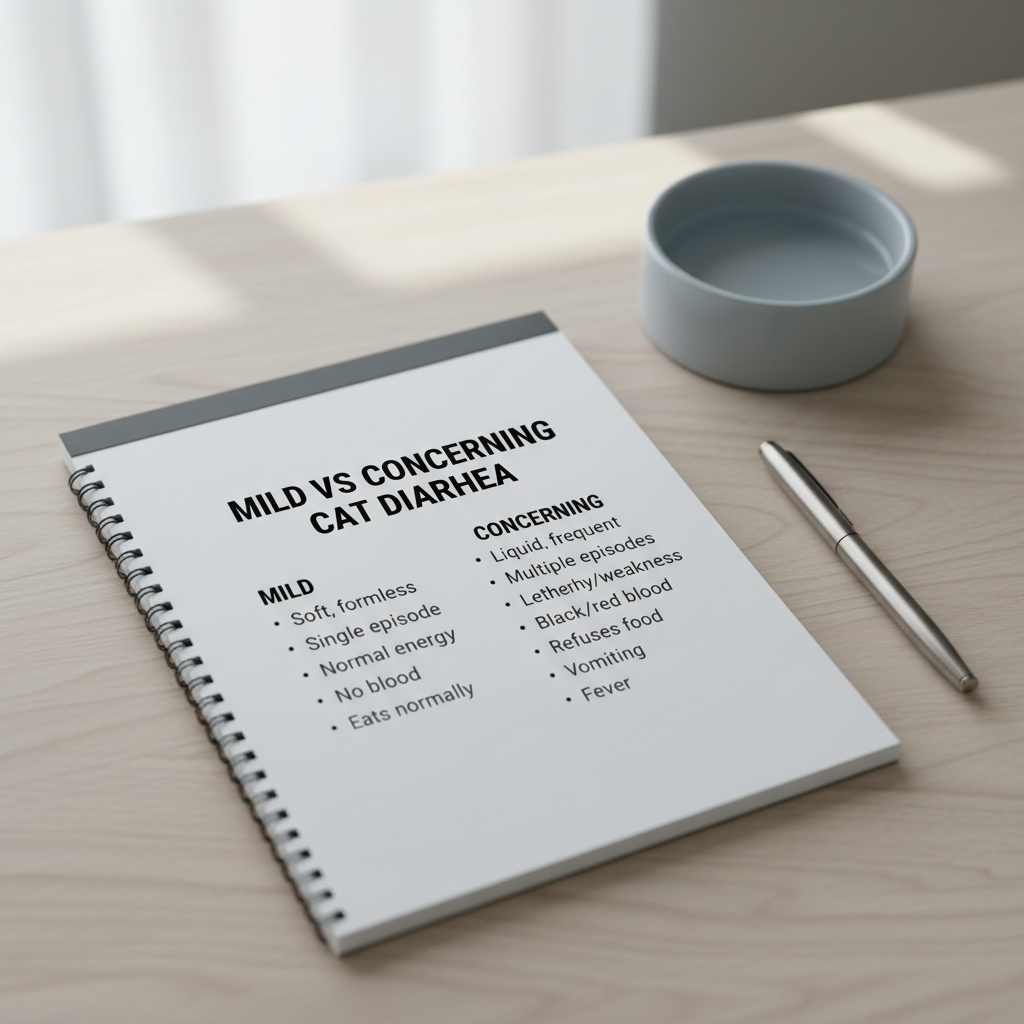
- Likely mild: your cat is alert, drinking, no vomiting, stool is soft to loose but not pure water, no blood, and the episode started within the last day.
- More concerning: watery stool every few hours, accidents outside the box, appetite drop, hiding, feverish feel, weight loss, or diarrhea that keeps returning.
Key point: if your cat acts “off” in a way you can’t explain, treat that as meaningful even if the poop looks only moderately loose.
How to treat diarrhea in cats at home: step-by-step for the first 24 hours
how to treat diarrhea in cats at home usually works best when you keep changes simple, track what you’re seeing, and avoid stacking multiple “fixes” at once. You want a clear read on what helps.
1) Prioritize hydration (without forcing)
- Offer fresh water in a quiet spot, consider a cat fountain if you already own one.
- Add a small amount of water to wet food to increase fluid intake.
- If your vet has previously recommended an oral rehydration solution for your cat, ask whether it’s appropriate now.
Skip syringing water unless a vet tells you to, aspiration risk is real, and stressed cats fight harder than you’d expect.
2) Feed a gentle, GI-friendly diet (small portions)
Many cats do better with small, frequent meals rather than an empty stomach. Fasting cats, especially overweight cats, can be risky because cats may develop hepatic lipidosis in certain scenarios, so don’t do a long fast without veterinary guidance.
- Best option: a veterinary GI diet you already have at home, canned or dry.
- Common home option: plain cooked chicken (no skin, no seasoning) in small amounts.
- If your cat tolerates it, add a small spoon of plain pumpkin (no spices, not pie filling) as fiber support, but don’t overdo it.
If your cat refuses bland food, don’t start an all-you-can-eat buffet of treats. That usually drags the problem out.
3) Reduce triggers you can control
- Stop all new treats, dairy, human food, and flavored lickable toppers for now.
- Keep the routine steady: quiet room, predictable feeding times, fewer disruptions.
- Clean the litter box more often; some cats avoid a messy box, then strain elsewhere.
4) Track the right details (this helps your vet later)
- How many episodes in 12 hours
- Stool appearance: soft vs watery, mucus, blood, black color
- Appetite, water intake, vomiting, energy level
- Recent diet changes, medications, stress events
This is the “boring” step that saves time and money if you end up needing care.
Home care options your vet may approve (and what to avoid)
People often ask for an over-the-counter fix, but cats are not small dogs, and common human products can be unsafe. According to the ASPCA Animal Poison Control Center, many human medications can be toxic to pets, and dosing mistakes happen easily.
Options that are sometimes used (with veterinary guidance)
- Probiotics formulated for cats: may help some mild cases, especially after stress or antibiotics.
- Prescription anti-diarrheals: used in select cases, but your vet chooses based on cause and cat health status.
- Deworming: common when parasites are suspected, but the right product depends on the parasite.
Things to avoid at home
- Human anti-diarrhea meds (like loperamide): can be dangerous for cats in many situations.
- Essential oils: many are irritating or toxic to cats, especially in diffusers.
- Milk or “settling” dairy: lactose intolerance is common in adult cats.
- Rapid food switches back and forth: it can keep the gut irritated.
Practical table: what to do based on what you see
If you want a quick plan without overthinking, this is the closest thing to a safe cheat sheet. When in doubt, choose the more cautious path.
| What you’re seeing | What it may suggest | What you can do at home | When to call the vet |
|---|---|---|---|
| Soft stool 1–3 times, cat acts normal | Mild dietary upset or stress | Hydration + small bland meals, stop treats, monitor 24 hrs | If it lasts >48 hrs or worsens |
| Watery diarrhea, frequent trips | Stronger irritation, infection, parasites | Hydration support, isolate from other cats, note frequency | Same day, sooner if kitten/senior |
| Mucus in stool, straining | Colon irritation, parasites possible | Keep diet simple, avoid meds, collect sample if possible | Within 24 hrs, bring stool sample |
| Blood (red) or black/tarry stool | Bleeding in GI tract | Do not medicate, keep cat calm | Urgent, same day emergency |
| Diarrhea + vomiting + low energy | Dehydration risk, systemic illness | Offer water only, stop experimenting with foods | Urgent evaluation |
How long should you try home treatment, and when should it be improving?
For many mild cases, you should see some improvement within 24 hours, fewer trips, stool a bit more formed, energy staying steady. If you’re doing “all the right things” and it keeps going, that often means the trigger isn’t just diet.

Call your vet sooner if your cat has a history of GI issues, recent antibiotic use, or any dehydration signs. It’s also reasonable to call earlier if you can’t tell whether your cat is drinking, some cats are stealthy about water intake.
Key takeaways (so you don’t overcomplicate it)
- Hydration and monitoring come before supplements and “quick fixes.”
- Keep diet changes simple, small meals, bland or vet GI food, no treats.
- Don’t use human anti-diarrheal meds unless your vet specifically directs it.
- Duration matters: beyond 24–48 hours, testing becomes more important.
- Behavior changes are a red flag, even if stool looks only mildly abnormal.
Conclusion: a calm plan, plus a clear next step
how to treat diarrhea in cats at home is mostly about doing fewer things, more thoughtfully: stabilize hydration, feed gently, remove obvious triggers, and watch your cat’s overall condition rather than fixating on one litter box moment. If you can’t confidently label it “mild,” or if it doesn’t trend better within a day, calling your vet is the most practical move.
If you want an easy action step, start a simple symptom log tonight and plan a stool sample drop-off if the diarrhea continues into tomorrow, it speeds up diagnosis and can shorten the whole ordeal.