
how to stop puppy from chewing everything usually comes down to two things: preventing “bad” chewing before it happens, and teaching your puppy what chewing is allowed.
If you feel like your puppy’s mouth is on your shoes, furniture, cords, and hands all day, you’re not imagining it. Chewing is how puppies explore, soothe teething pain, burn off stress, and entertain themselves when they don’t yet know your house rules.
The good news is you don’t need a harsh correction to fix it. In many homes, the biggest shift comes from better management, better chew options, and a few consistent training habits that reward the right choice.
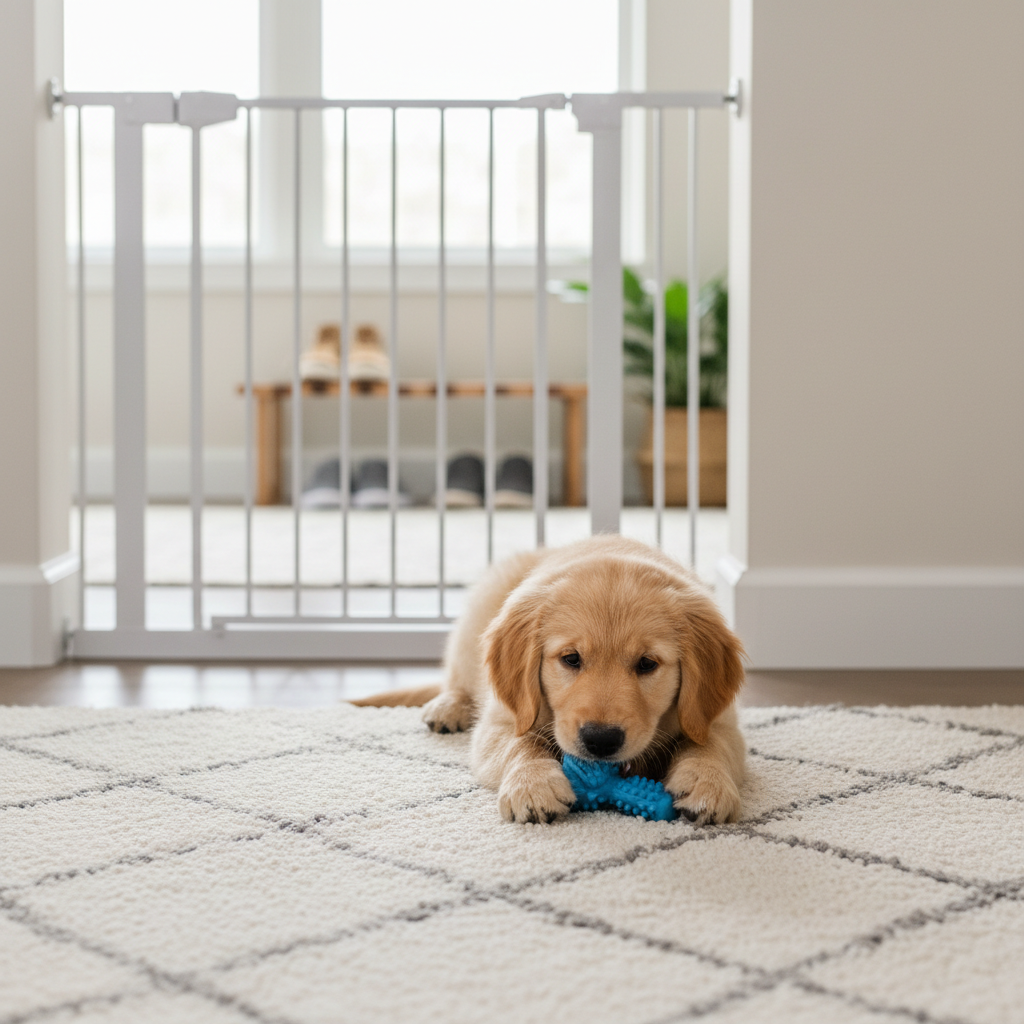
I’ll walk through why it happens, how to tell which kind of chewing you’re dealing with, and a practical plan you can start today, even if you’re busy and your puppy is… extremely enthusiastic.
Why puppies chew everything (and why it feels nonstop)
Chewing is normal puppy behavior, but the reason matters, because the fix changes depending on what’s driving it.
- Teething discomfort: Many puppies seek pressure on gums. You’ll often see more chewing in the morning and evening, or after naps.
- Exploration: Puppies don’t have hands, so they investigate with their mouths. New textures become “experiments.”
- Overtired or under-stimulated: A puppy that misses naps, or a puppy that’s bored, tends to chew whatever is closest.
- Anxiety or frustration: Some pups chew when left alone, when routines change, or when they can’t reach you.
- Accidental reinforcement: If chewing a shoe makes you chase them, you may be turning it into a game.
According to the American Veterinary Medical Association (AVMA), chewing is a common canine behavior and can increase with teething, boredom, and anxiety, so addressing the underlying cause usually works better than punishment.
Quick self-check: what kind of chewing is this?
Before you buy ten toys and hope for the best, take two minutes and identify the pattern. It saves time and money.
Chewing pattern checklist
- Mostly evenings, zoomy behavior, nipping: often overtired, needs naps and calmer routines.
- Targeting table legs, baseboards, corners: often boredom plus easy access; environment management helps fast.
- Only when alone or when you leave: may be separation-related stress; go slower with alone-time training.
- Swallowing fabric, socks, underwear: higher risk for blockage, treat as urgent management issue.
- Chewing your hands and sleeves: normal puppy mouthing that needs redirection and bite inhibition work.
Key point: If your puppy is destroying items while you’re watching, it’s usually a supervision and redirection problem. If it happens when you’re gone, it’s usually a management and alone-time training problem.
Puppy-proofing that actually reduces chewing (fastest wins)
When people ask how to stop puppy from chewing everything, they usually want a training trick. Training matters, but management is what protects your home today.
Think of it as setting your puppy up to practice the right habit. Less access to “illegal” items means fewer rehearsals of the wrong behavior.
- Use gates and pens: Keep your puppy in the same room as you, especially during high-chew times.
- Pick up temptation: Shoes, kids’ toys, remotes, and laundry go into bins with lids.
- Block dangerous areas: Cords, cleaning supplies, and small objects should be physically inaccessible.
- Leash indoors (sometimes): A lightweight house leash can prevent sneak-attacks on furniture.
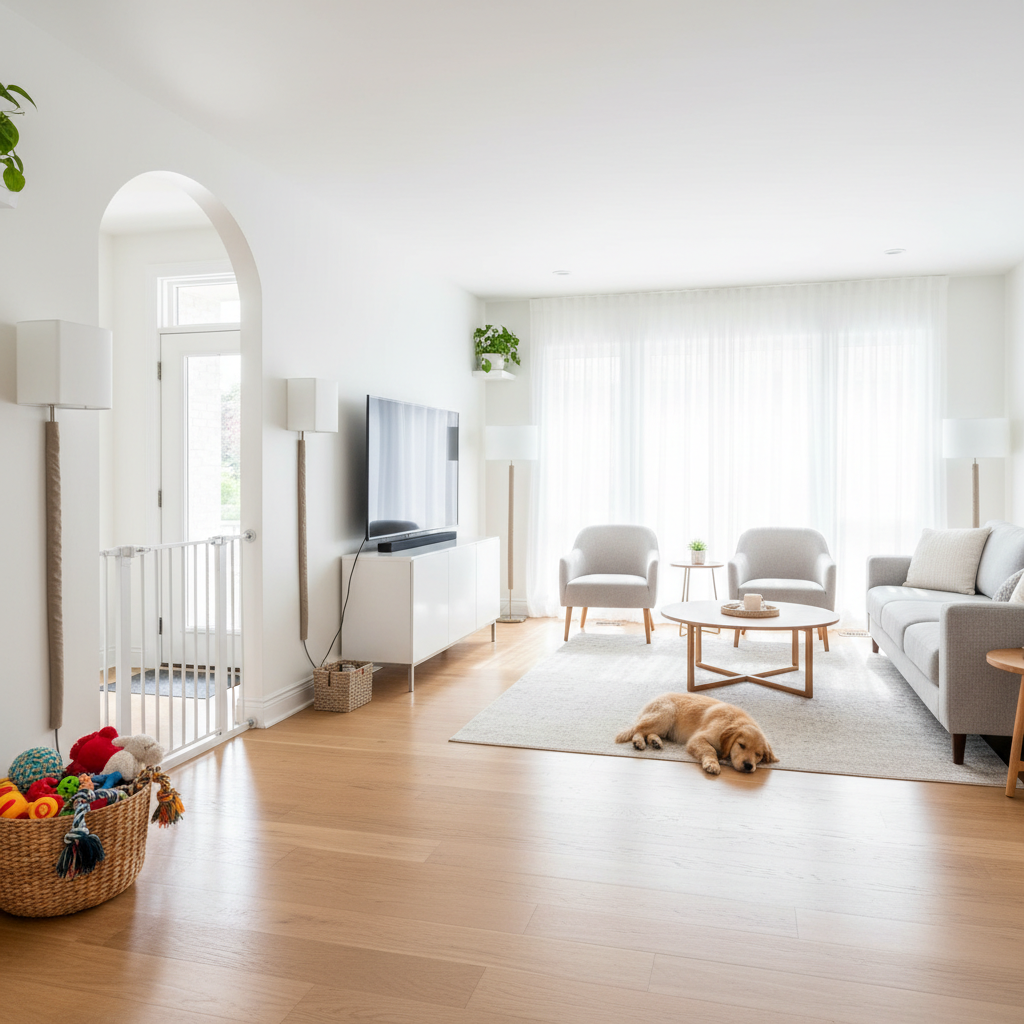
If you do nothing else this week, do this: limit access + increase supervision during the hours your puppy tends to get mouthy. Many families see improvement just from that.
Teach “chew this instead” (a simple training loop)
The most reliable approach is making approved chewing more rewarding than random household items. You’re not trying to stop chewing, you’re trying to aim it.
The redirection loop
- Catch the moment early: If you can interrupt before your puppy gets fully committed, it’s easier.
- Swap, don’t snatch: Offer a chew toy right at their mouth, then praise when they take it.
- Mark and reward: A calm “yes” and a small treat when they choose the toy builds the habit.
- Make it interesting: Wiggle the toy, start a short tug, or hold it for them to get the chewing started.
According to the American Kennel Club (AKC), consistent redirection and rewarding appropriate chewing helps puppies learn what’s acceptable, especially during teething.
Keep expectations realistic: you’ll repeat this a lot at first. Repetition is not failure, it’s the process.
Pick the right chew toys (and rotate them like a pro)
Not all chew toys “hit” the same. Many puppies ignore a toy because it’s the wrong texture, too hard, too easy, or not novel anymore.
Chew toy matching table
| Chewing need | What you’ll notice | Chew options to try | Safety notes |
|---|---|---|---|
| Teething pressure | Gnawing, drooling, seeking edges | Rubber chew toys, puppy teething rings, chilled (not frozen-solid) options | Avoid very hard items that can crack teeth |
| Busy brain | Chews when bored, roams looking for trouble | Stuffable toys, treat-dispensing puzzles, snuffle mats | Supervise until you know they don’t shred and swallow pieces |
| Destructive urge | Targets furniture, baseboards | Durable rubber chews, nylon chews made for puppies, supervised edible chews | If chunks break off, remove and replace |
| Mouthing people | Grabs sleeves, hands, ankles | Tug toy, soft toy for carrying, quick “trade” toy near you | Keep tug gentle; stop if it ramps biting |
Rotation helps more than people expect. Put most toys away, offer 3–5 at a time, then swap every day or two so they feel “new” again.
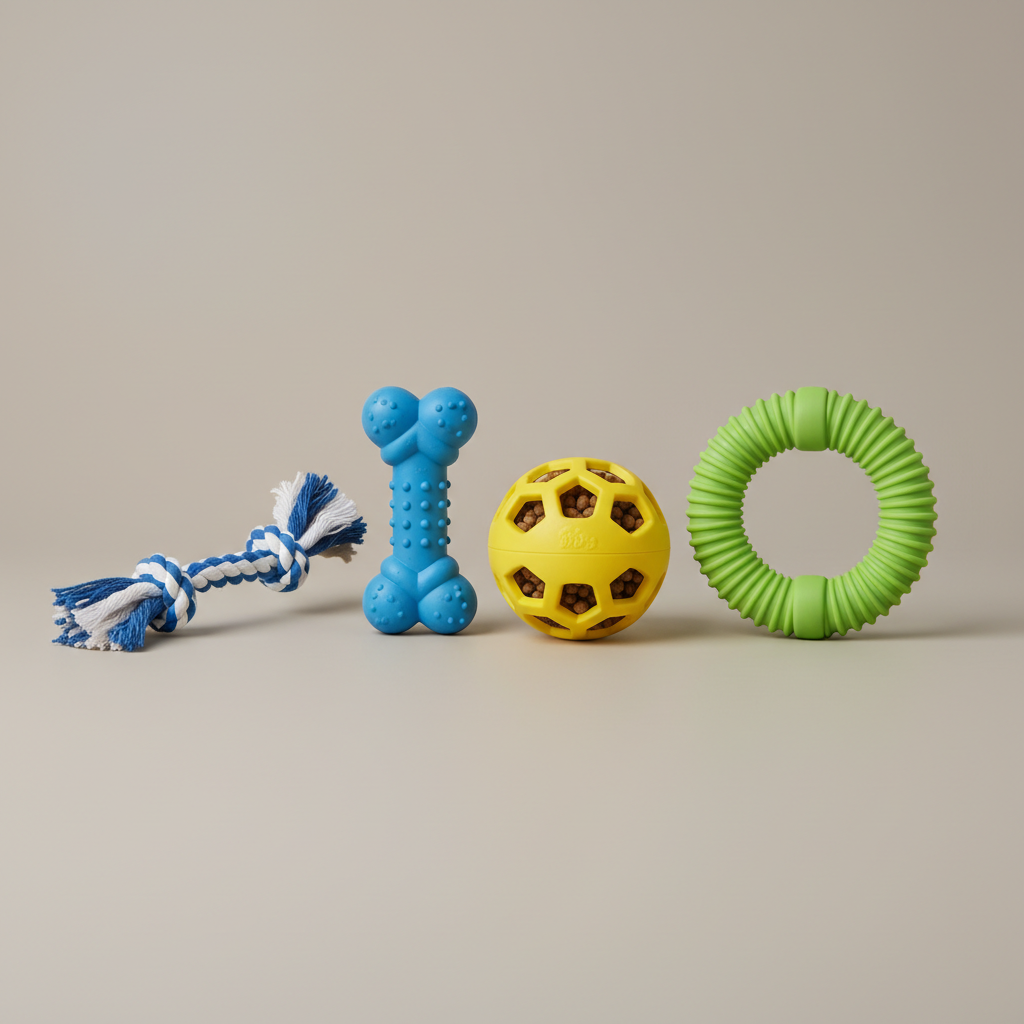
Safety reminder: If your puppy chews aggressively or tends to swallow fabric, talk with your veterinarian about safer chew options and supervision rules for your specific pup.
A practical daily plan: less chaos, more calm chewing
If you’re trying to figure out how to stop puppy from chewing everything, a loose routine beats random “corrections.” Puppies do better when chewing outlets appear before they go looking for trouble.
Simple schedule you can adapt
- Morning: potty, short play, then a food puzzle or stuffed chew while you get ready.
- Midday: training session (5–8 minutes), sniff walk, then nap in a crate or pen.
- Afternoon: supervised free time with a chew rotation, redirect any wandering-mouth moments.
- Evening: calmer enrichment, lick mat or stuffed toy, then early bedtime to avoid overtired biting.
Many chewing blow-ups come from missed naps. If your puppy turns into a tiny woodchipper at night, adding a nap and shortening evening play can change the whole vibe.
Common mistakes that keep the chewing going
Some “normal” human reactions accidentally train more chewing, or create anxiety around you and your stuff.
- Chasing the puppy: becomes a game, and the stolen item becomes valuable.
- Yelling or scary corrections: may stop behavior in the moment, but often increases stress chewing later.
- Too much freedom too soon: an open house is a buffet. Earn freedom room by room.
- Only offering one toy: the toy gets boring, the couch stays interesting.
- Using bitter sprays as the main plan: can help in specific spots, but rarely teaches what to do instead.
According to the ASPCA, punishment-based approaches can create fear and may worsen behavior issues, so many trainers focus on management plus reward-based teaching.
When to get professional help (and when it’s urgent)
Some chewing is normal, but a few scenarios deserve faster support because the risk is higher, or the cause may be more complex.
- Possible intestinal blockage risk: chewing and swallowing socks, underwear, toys, or stuffing. If you suspect swallowing, call your veterinarian promptly.
- Damage to teeth or gums: bleeding, broken teeth, or sudden refusal to chew may need a vet check.
- Chewing linked to panic when alone: drooling, frantic behavior, attempts to escape crates, destruction focused on exits. A qualified trainer or veterinary behaviorist can help you build a plan.
- Chewing escalates despite good management: you may need a tailored enrichment and training program for your puppy’s breed mix, age, and energy level.
In the U.S., you can look for a credentialed professional through directories such as the Certification Council for Professional Dog Trainers (CCPDT). If medication is ever discussed, that’s a veterinarian conversation.
Conclusion: what works for most households
how to stop puppy from chewing everything is less about stopping a puppy from being a puppy, and more about guiding the habit into safe lanes: limit access, supervise smartly, and make approved chews the easiest choice.
- Today: reduce freedom, put tempting items away, set up a pen or gated area.
- This week: run the “chew this instead” loop, rotate chew options, and protect high-risk zones.
If you want one action that pays off quickly, keep a chew toy within arm’s reach in every room you use. The faster you can redirect, the faster your puppy learns.
Key takeaways
- Management prevents practice, and practice builds habits, so start with puppy-proofing.
- Reward correct chewing so your puppy understands the rule, not just your frustration.
- Match chews to the reason your puppy is chewing, especially teething vs boredom.
FAQ
- How long does the puppy chewing phase last?
It varies by dog, but many puppies improve as teething eases and training consistency builds. You’ll usually see steady progress when access is controlled and appropriate chewing gets rewarded. - Should I use bitter apple spray on furniture?
It can help in specific areas, especially on baseboards or table legs, but it works best as a backup to supervision and redirection. Test a small spot first, and don’t rely on it as your only plan. - What if my puppy ignores chew toys?
That often means the toy isn’t the right texture or it’s not rewarding enough yet. Try rotating toys, adding food stuffing, or briefly engaging with the toy to “activate” it before you hand it over. - Is it normal for my puppy to chew my hands?
Puppy mouthing is common, but you still want to teach softer mouths. Redirect to a toy, reward calm interaction, and make sure your puppy gets enough naps because overtired puppies bite more. - Can I crate my puppy to stop chewing?
Crates can be helpful for safety and naps, but they should be introduced gradually and positively. If crating seems to cause panic, slow down and consider guidance from a qualified trainer. - What are signs the chewing is anxiety-related?
Chewing that happens mainly when alone, combined with pacing, drooling, whining, or scratching at doors can suggest stress. A structured alone-time plan and professional help may be appropriate. - When is chewing a medical concern?
If you suspect your puppy swallowed something, or you notice vomiting, lethargy, loss of appetite, or painful mouth symptoms, contact a veterinarian. It’s better to ask early than wait.
If you’re trying to keep your home intact while still raising a confident puppy, a simple setup with a pen, a rotation of safe chews, and a short daily enrichment plan can be the most “real life” solution, and a trainer can tailor it if your puppy’s chewing pattern is intense or tied to alone-time stress.