
Dog treat dispenser ball interactive toys work best when you treat them as both a feeder and a training tool, not just a “busy ball” you toss on the floor and hope for the best.
If your dog finishes meals in 20 seconds, pesters you during Zoom calls, or turns “independent play” into chewing baseboards, this category can feel like a small miracle. But reality is a little pickier: the right ball, the right treats, and the right difficulty level matter more than the brand name.
This guide helps you choose a dispenser ball that matches your dog’s size and style, set it up so your dog actually uses it, and avoid the common pitfalls that lead to frustration, broken toys, or upset stomachs.
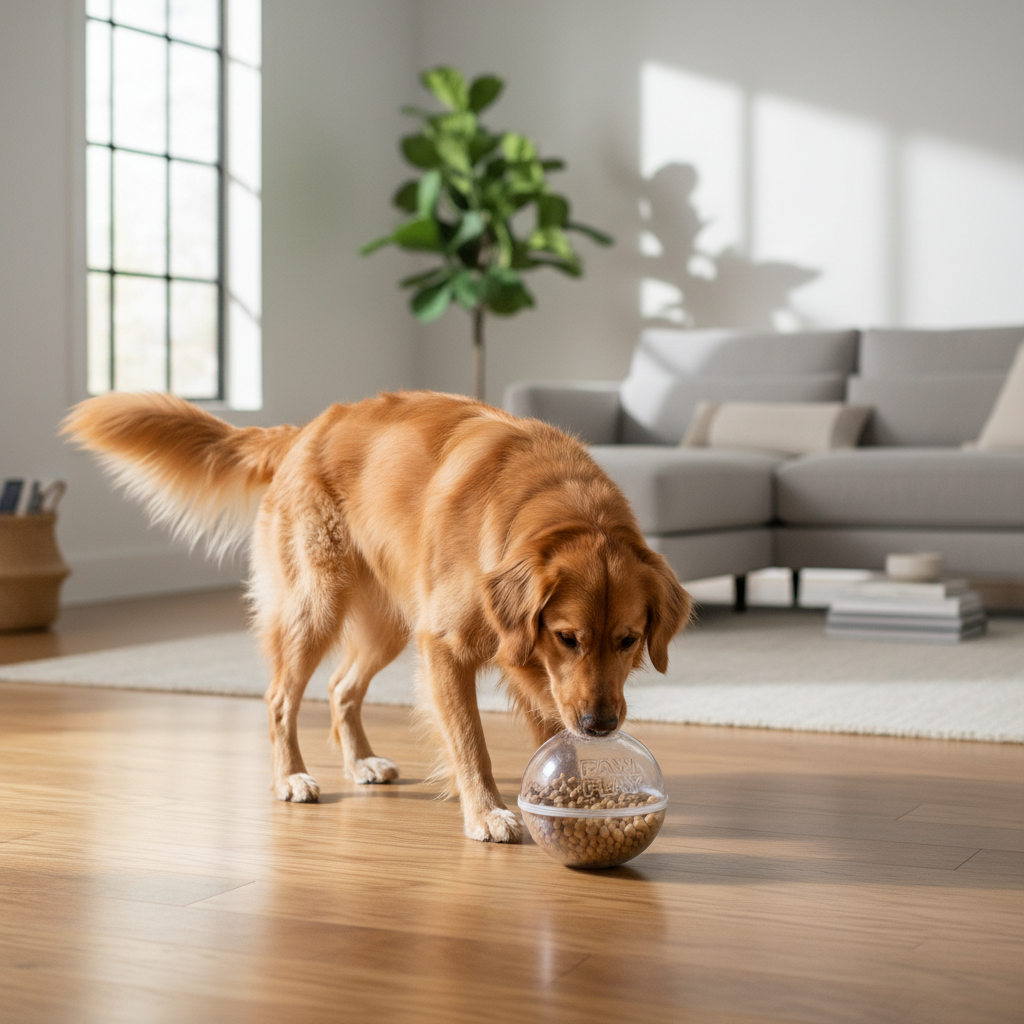
Why dogs love treat dispenser balls (and why owners keep buying them)
Most dogs don’t just want food, they want the “work” around food. A rolling dispenser turns snacks into a mini scavenger hunt, and that taps into natural foraging behavior.
- Mental stimulation: figuring out how the ball releases food can take the edge off boredom.
- Slower eating: for many fast eaters, it spreads calories over time and reduces scarfing.
- Independent play: in real homes, it often buys you 10–25 minutes of focused activity.
- Training support: it can reinforce calm persistence, rather than barking for attention.
According to American Veterinary Medical Association (AVMA), enrichment supports animal welfare by encouraging species-typical behaviors, which is exactly what these puzzle-style feeders aim to do.
What to look for when choosing a dispenser ball
Picking the “cutest” option is how people end up with a ball that either dumps all the treats in 30 seconds or never releases anything. Focus on function.
Size, weight, and your dog’s play style
- Small dogs: lighter balls roll easily, but avoid tiny openings that jam.
- Medium dogs: look for a stable roll and enough weight that the ball doesn’t bounce wildly.
- Large dogs and power chewers: durability and thicker material matter more than “fun shapes.”
If your dog tends to pick toys up and chew in a corner, a soft rubber ball may last minutes, not months. In that case, a harder, thicker option is usually safer, though no toy is indestructible.
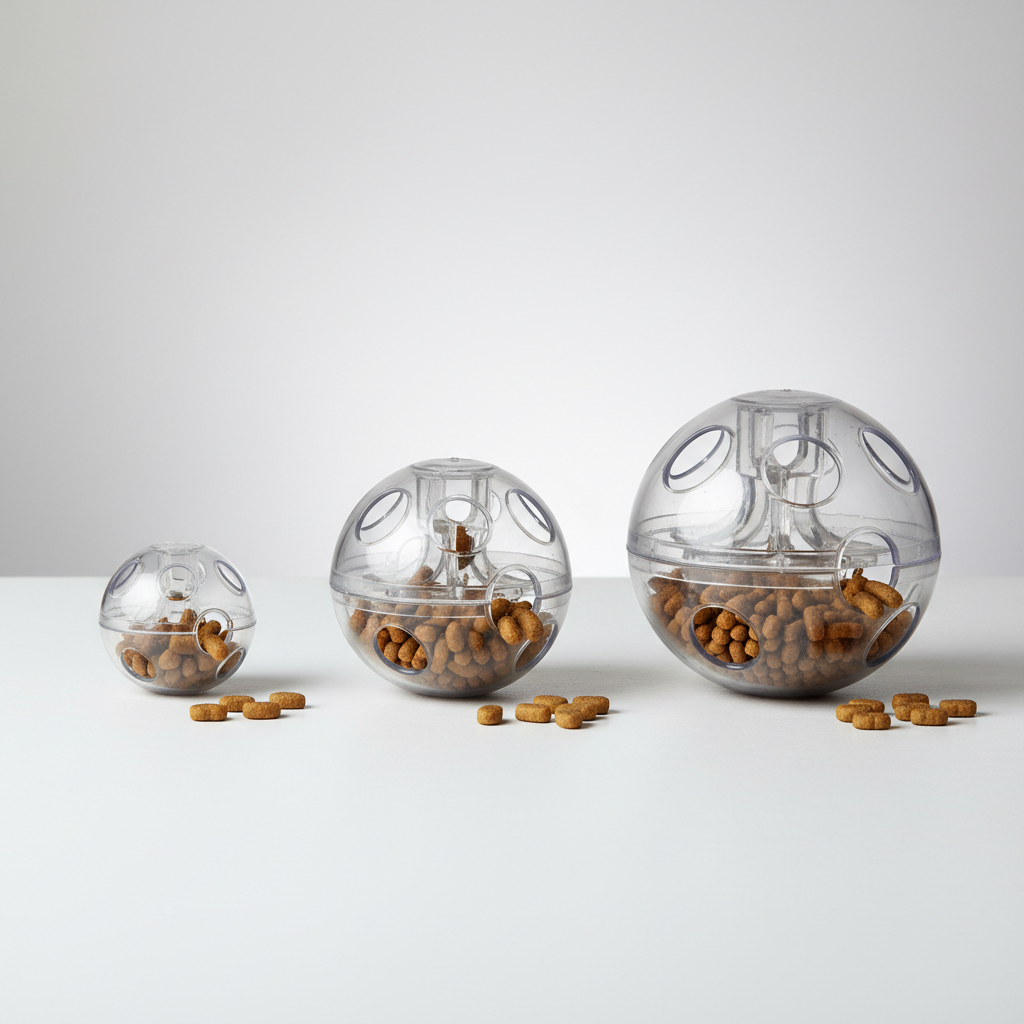
Adjustable difficulty (this is the real cheat code)
Many of the better models let you change hole size or internal barriers. That’s useful because your dog gets smarter fast, and what felt “challenging” on day one can become effortless by week two.
- Easy: wide opening, larger treats, shorter sessions.
- Medium: smaller opening, mixed treat sizes, rolling required.
- Hard: smallest opening, fewer high-value pieces, longer engagement.
Material and cleaning reality
In a typical U.S. household, ease of cleaning is what decides whether the toy gets used. Sticky treats can turn into a smell problem quickly.
- Dishwasher-safe: convenient, but confirm heat-safe parts.
- Hand-wash only: fine if the interior is easy to access.
- Avoid deep crevices: they trap peanut butter-style fillers.
Quick self-check: is this toy a good fit for your dog?
A dog treat dispenser ball interactive setup is usually a strong match if your dog likes problem-solving and food, but there are a few “maybe not” flags.
- Good fit: your dog noses things around, enjoys kibble, and can stay engaged without getting frantic.
- Needs a gentler start: your dog quits after 30 seconds, paws hard, or barks at the toy.
- Use with caution: your dog guards food, swallows non-food items, or destroys toys quickly.
If you’re dealing with resource guarding or repeated GI upset, it’s worth asking a veterinarian or a qualified trainer for guidance before you make food puzzles part of the routine.
How to set it up so it actually works (step-by-step)
This is where most people get stuck: they fill the ball, give it to the dog, and the dog either gives up or goes full chaos. A small setup tweak fixes a lot.
1) Start easy on purpose
Put a few larger, smelly treats inside and keep the opening fairly open. The goal is to teach the “rule” of the game: push ball, food appears.
2) Choose the right food for the right session
- Daily calories: use part of your dog’s kibble, so you’re not accidentally overfeeding.
- High motivation: add a small amount of freeze-dried topper or tiny training treats.
- Avoid sticky early on: soft fillers can frustrate beginners and complicate cleaning.
3) Pick a surface that helps, not hurts
Hard floors usually roll better and keep the ball “alive.” Thick carpet can make dispensing too difficult and your dog may decide the toy is broken.
4) Keep sessions short, end on success
Five to ten minutes is plenty at first. If your dog gets the last treat out and looks proud, stop there. That calm success is what builds repeat use.
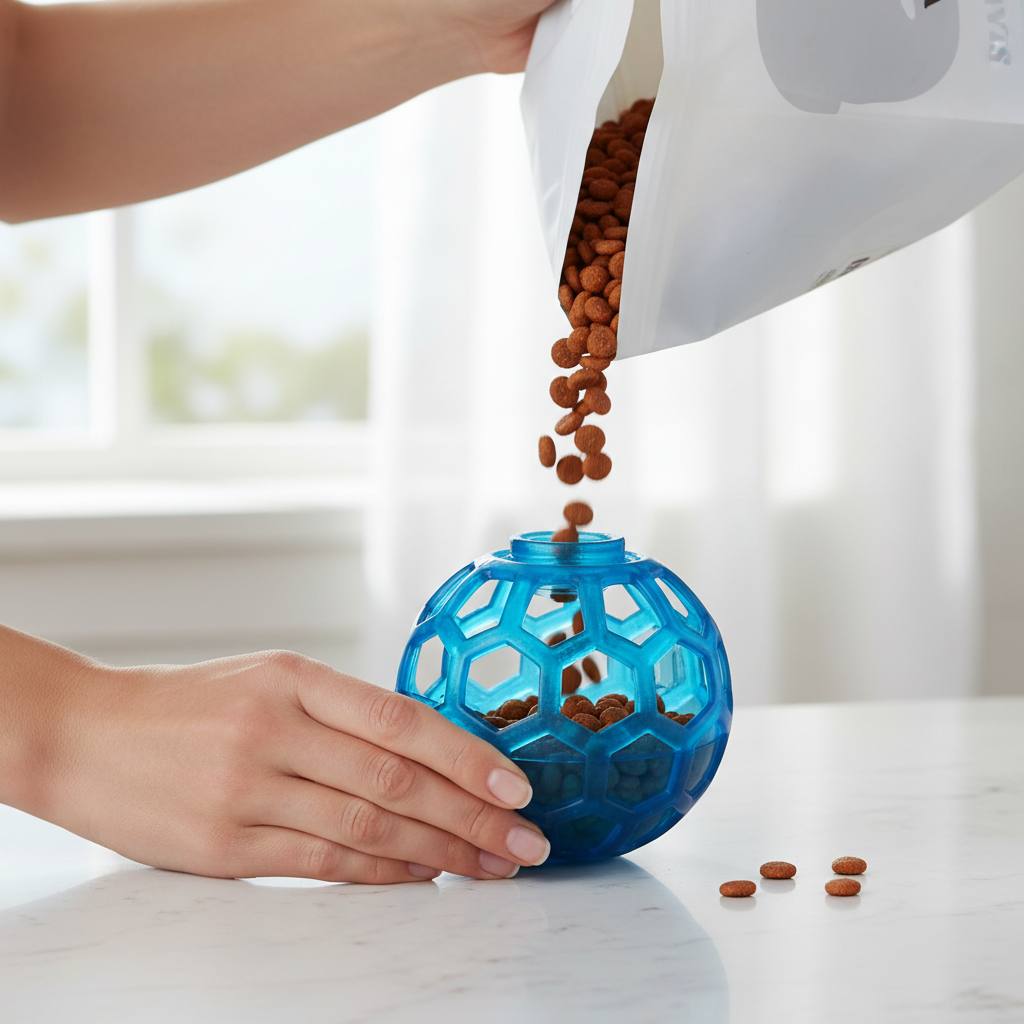
Treat and ball pairing guide (a practical table)
Different treats change how the ball behaves. If your dog loses interest fast or gets too amped, the food choice is often the reason.
| Goal | What to put inside | Ball setting | Notes |
|---|---|---|---|
| Slow eating at dinner | Kibble (measured portion) | Easy to medium | Best for routine use, watch total calories |
| Keep dog busy during calls | Mix kibble + a few high-value bits | Medium | Rotate treats so novelty stays high |
| Reduce boredom on rainy days | Small training treats | Medium to hard | Shorter sessions can prevent frustration |
| Beginner introduction | Larger crunchy treats | Easy | Teach the “push = reward” rule fast |
Common mistakes and safety notes (worth reading)
This toy category is simple, but a few common habits can make it backfire.
- Overfilling the ball: it can turn a 15-minute enrichment session into a full extra meal.
- Going too hard too soon: many dogs interpret “no treats coming out” as failure and quit.
- Using it unsupervised with aggressive chewers: damage and swallowing risks vary by dog and toy design.
- Ignoring noise and floor impact: some balls are loud on hardwood, a towel “play zone” can reduce clatter.
- Not cleaning often: old food residue can attract pests and create unpleasant smells.
According to American Kennel Club (AKC), puzzle toys can be helpful enrichment, but they still require supervision and appropriate sizing, especially for dogs that chew intensely.
Key takeaways (so you can decide fast)
- Match the ball to your dog’s mouth and chew strength, not just their weight.
- Adjustable difficulty keeps a dispenser useful after the novelty phase.
- Use measured kibble when the goal is daily enrichment without extra calories.
- Start easy and build up, frustration is the main reason dogs “reject” these toys.
A well-set-up dog treat dispenser ball interactive routine can genuinely improve daily life: your dog gets a job to do, you get fewer boredom behaviors, and mealtime becomes calmer instead of chaotic.
If you want to try one this week, keep it simple: pick a sturdy ball in the right size, start with an easy opening and a small portion of kibble, then increase difficulty only after your dog shows smooth, confident play.
FAQ
What size treat dispenser ball should I get for my dog?
Choose a ball your dog can push with their nose but not fully fit in their mouth. If you’re between sizes, many households do better sizing up for safety and durability, especially with enthusiastic chewers.
Can a treat dispenser ball replace a food bowl?
Often, yes for part of the meal, especially for fast eaters. Still, some dogs get frustrated if every meal becomes “work,” so a mix of bowl meals and puzzle meals tends to be more sustainable.
Why does my dog give up on the ball after a minute?
Most of the time it’s set too hard, the surface has too much friction (like thick carpet), or the rewards aren’t motivating enough. Make it easier for a few sessions and let your dog “win” quickly.
Are treat dispenser balls safe for puppies?
Many are safe when sized appropriately and used with supervision. Puppies may chew more intensely and unpredictably, so pick a durable material and avoid leaving the toy down when you can’t watch.
What treats work best inside a dispenser ball?
Dry kibble and small crunchy treats usually dispense most reliably and keep cleanup easier. Sticky or soft treats can work in some designs, but they can also clog openings and create hygiene issues.
How often should I clean a treat dispenser ball?
If you use dry kibble, a quick rinse and dry every few uses often works. If you use oily or soft treats, cleaning after each use is a safer habit to prevent residue buildup.
Will this help with separation anxiety?
It may help some dogs settle for short periods by providing a focused task, but it’s not a full treatment plan. If your dog shows panic signs, destructive escape attempts, or self-injury risk, consult a veterinarian or behavior professional.
If you’re trying to build a calmer routine, a dispenser ball is a solid “low effort, high return” enrichment option, and if you’d rather not guess, bring your dog’s size, chew habits, and diet goals to a vet or trainer and ask what style of puzzle feeder fits best.