
How to potty train a cat usually comes down to one thing: making the litter box the easiest, cleanest, most predictable bathroom option in your home.
If you are dealing with “surprise puddles,” poop outside the box, or a kitten who seems to miss more than they hit, you are not alone, and it is rarely about spite. Most problems trace back to box setup, litter choice, stress, or a medical issue that makes the box feel uncomfortable.
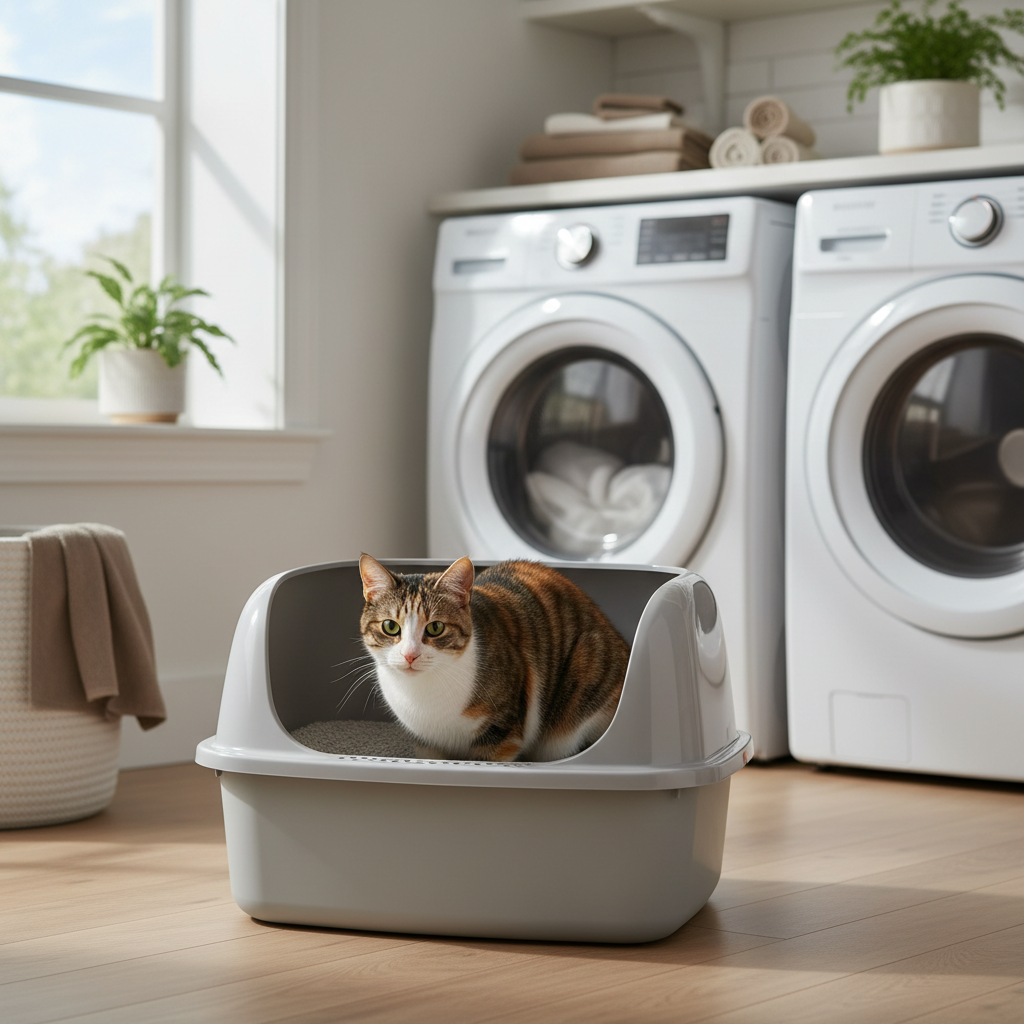
This guide focuses on the practical steps that work in many U.S. households: how to set up the box, how to train a kitten versus an adult cat, what to do after an accident, and when to pause training and call a veterinarian. You will also get a quick checklist and a small table you can use to troubleshoot fast.
Start With the Basics: The “Right” Litter Box Setup
Before you try any training trick, fix the environment. Cats are picky in a very specific way: they want privacy, easy access, and a box that does not smell like a gas station bathroom.
Box size, style, and number
- Size: Many cats prefer a box about 1.5x their body length (nose to base of tail). Too small often equals “half in, half out” accidents.
- Style: Open boxes are often easier for training. Covered boxes can trap odor and feel scary for some cats, even if they look nicer to humans.
- How many: A common rule is “one per cat, plus one extra,” especially in multi-level homes. It is not a law, but it prevents traffic jams and territorial issues.
Placement matters more than people think
Pick a spot that is quiet but not hard to reach. Laundry rooms can work if the machines are not startling. Avoid placing the box next to food and water, and avoid dead-end closets where a cat can feel trapped by another pet.
Litter choice and depth
Most cats accept unscented, clumping litter, poured to about 2–3 inches. Heavy perfume can backfire. If you need to change litter types, transition slowly by mixing the new litter in over 7–10 days.
How to Potty Train a Kitten (Step-by-Step Routine)
When people ask how to potty train a cat, they often mean a kitten who is still learning the “where.” Kittens learn fast, but they also have tiny bladders and weak routines.
A simple daily routine that works for many kittens
- Put the kitten in the box after meals, after naps, and after play.
- Let them sniff, scratch, and circle. If they hop out, calmly place them back once or twice, then stop pushing.
- When they use it, keep praise gentle. Over-the-top excitement can startle some kittens mid-squat.
- Scoop at least once daily. Kittens may refuse a dirty box and “choose” the nearest soft surface instead.
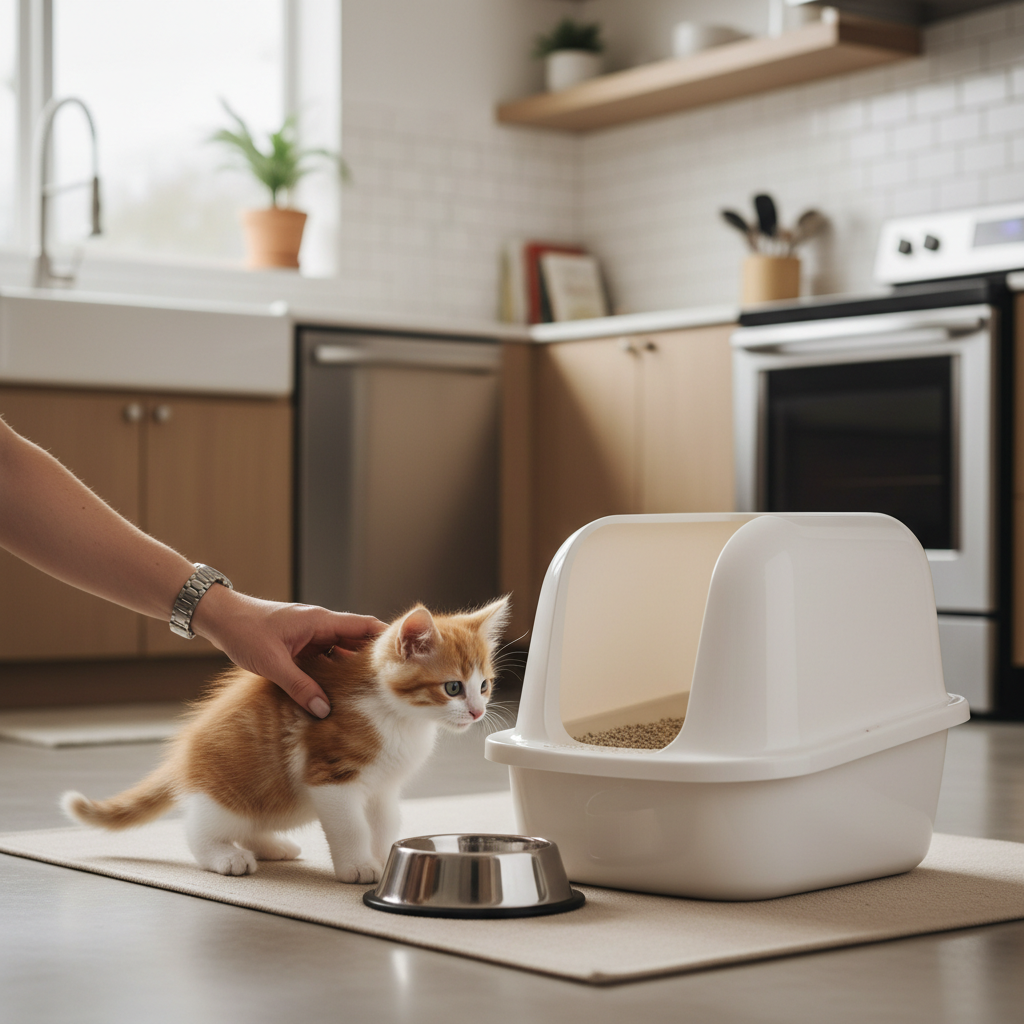
One practical tip: confine early training to a smaller “safe room” for a few days, with the box visible and close by. Too much space too soon can lead to frantic last-second searching and accidents behind furniture.
Training an Adult Cat: It’s Usually Re-Training
Adult cats typically already know what a litter box is. When they stop using it, something changed, and it is your job to identify what.
Common adult-cat scenarios
- New home, new box: Keep the setup simple, use unscented litter, and start with one quiet room until habits stabilize.
- New pet or baby: Add boxes and create “no ambush” routes so the cat can enter and exit safely.
- Previous bad box experience: Painful urination, a loud noise, or being cornered can create avoidance. The fix often starts with relocation and a fresh box.
According to the American Association of Feline Practitioners (AAFP), inappropriate elimination is a common behavior complaint, and medical causes should be considered alongside environmental and stress factors. In real life, that means: do not assume it is behavioral if the change is sudden.
Quick Self-Check: Why Is Your Cat Missing the Box?
If you want a faster answer to how to potty train a cat, do this quick triage. The goal is not perfection, it is identifying the most likely category so you stop guessing.
- Timing: Did accidents start suddenly (days) or gradually (weeks)? Sudden changes raise the odds of medical discomfort or a new stressor.
- Location: Near the box can mean the box feels “wrong” (dirty, too small, scary). Far away can mean access issues or territory stress.
- Surface: Pee on soft items (laundry, rugs, beds) often signals comfort-seeking or anxiety, but can also happen with urinary problems.
- Posture: Straining, frequent small urinations, vocalizing, or blood-tinged urine suggests urgency for veterinary guidance.
Troubleshooting Table: Symptom → Likely Cause → What to Try
Use this as a practical decision tool. If more than one row matches, start with hygiene and box setup, then stress, then medical concerns.
| What you see | Often points to | What to try first |
|---|---|---|
| Pee just outside the box | Dirty box, box too small, litter dislike | Scoop daily, larger open box, unscented clumping litter |
| Poop outside but pee inside | Box location/privacy issue, stress, constipation | Add second box, quieter spot, talk to a vet if stools seem hard or infrequent |
| Pee on beds or laundry | Stress, comfort seeking, urinary discomfort | Block access short-term, add box nearby, schedule vet check if sudden |
| Spraying on vertical surfaces | Territorial marking, stress, sometimes intact cats | Reduce triggers, add boxes, consider vet advice on behavior and medical screening |
| Frequent trips, little output | Possible urinary issue | Contact a veterinarian promptly, especially if straining or lethargy appears |
What to Do Right After an Accident (Without Making It Worse)
This is where many well-meaning people accidentally train the wrong lesson. Cats do not connect punishment with a past accident, they connect it with you, the room, or the box.
Do this instead
- Clean with an enzymatic cleaner made for pet urine. Regular soap may remove the smell to you, but not to your cat.
- Blot, do not scrub on fabric, since scrubbing can push urine deeper.
- Temporarily block the spot with a hamper, upside-down carpet runner, or closed door while you reset the litter routine.
- Refresh the box: scoop, top up litter, and consider a second box if this keeps repeating.
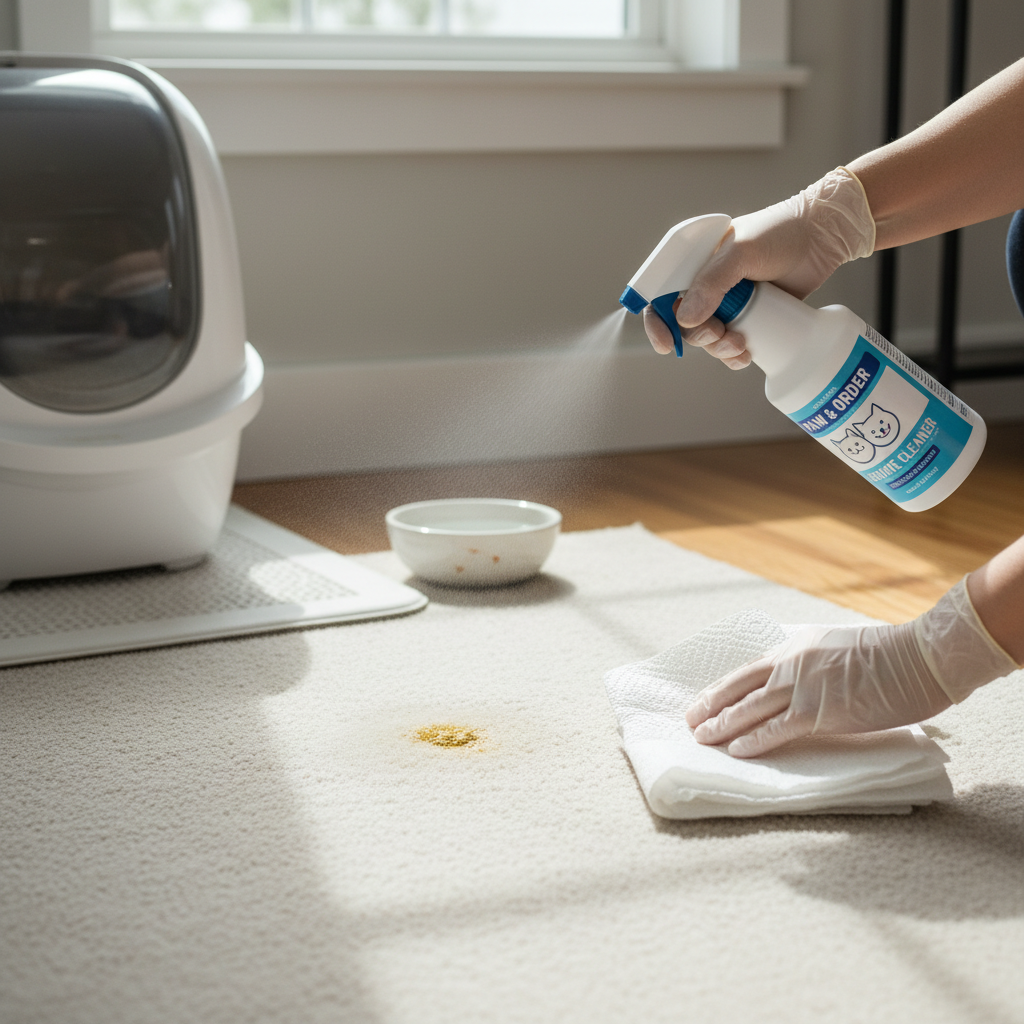
If your cat had an accident, place a box closer to that area for a week or two, then slowly move it a few feet per day toward the long-term spot. It feels almost too simple, but this “make the right choice easier” approach solves a lot of cases.
Common Mistakes That Stall Progress
Most litter problems do not need a fancy product, they need one or two bad assumptions removed.
- Cleaning too rarely: Many cats treat a dirty box as “already taken.” If scooping daily feels like a lot, try two smaller scoops, morning and evening.
- Switching litter or boxes constantly: Rapid changes can create distrust. Change one variable at a time and give it several days.
- Using scented litter to “fix odor”: It can irritate sensitive cats. Better ventilation and more frequent scooping usually beat fragrance.
- Putting the box where your cat gets ambushed: In multi-pet homes, a dominant cat can block access without you noticing.
- Rubbing a cat’s nose in it: This often increases hiding behavior and stress, and it does not teach location.
When to Get Professional Help (Vet or Behavior Support)
If you are stuck on how to potty train a cat after fixing the basics, it may be time to bring in help. Medical discomfort and stress can look identical at home.
- Call a veterinarian soon if accidents started suddenly, your cat strains, cries, urinates frequently, or seems lethargic.
- Ask about pain and mobility in older cats. Arthritis can make high-sided boxes feel like climbing a fence.
- Consider a behavior professional if you suspect anxiety, inter-cat conflict, or marking. According to the American Veterinary Medical Association (AVMA), behavior concerns are a valid reason to consult your veterinarian, who may recommend behavior resources or a referral.
For male cats in particular, urinary blockage can be life-threatening in some situations, so if you see repeated straining with little to no urine output, do not “wait and see,” contact a clinic right away.
Key Takeaways You Can Apply Today
- Make the litter box easy: right size, quiet location, clean, unscented litter.
- Train with timing for kittens: after meals, naps, and play.
- Accidents are data: clean enzymatically, then adjust placement or add a second box.
- Sudden changes deserve a medical check, especially if you see straining or discomfort.
If you pick just one action today, scoop the box, add a second box in a low-traffic area, and watch what changes over the next week. Small adjustments often reveal the real cause faster than any single “hack.”
Conclusion
Learning how to potty train a cat the right way is less about “teaching” and more about removing friction: the box stays clean, the location feels safe, the litter feels right, and stress stays low. If you run into repeated accidents or any sign of pain, looping in a veterinarian early tends to save time and frustration for everyone.