
how to make a cat happy often comes down to a few practical things you can control every day: safety, choice, predictable routines, and the right kind of attention.
If your cat seems “fine” but spends hours staring at a wall, overeats, wakes you up at 4 a.m., or gets snappy when touched, that’s usually not attitude, it’s information. Cats show stress and boredom in subtle ways, and many households accidentally reinforce the patterns they dislike.
This guide breaks the topic into real-life situations, not vague advice. You’ll get a quick self-check, a simple weekly plan, and a table you can use to match common behaviors to likely needs, without assuming something is always “wrong.”
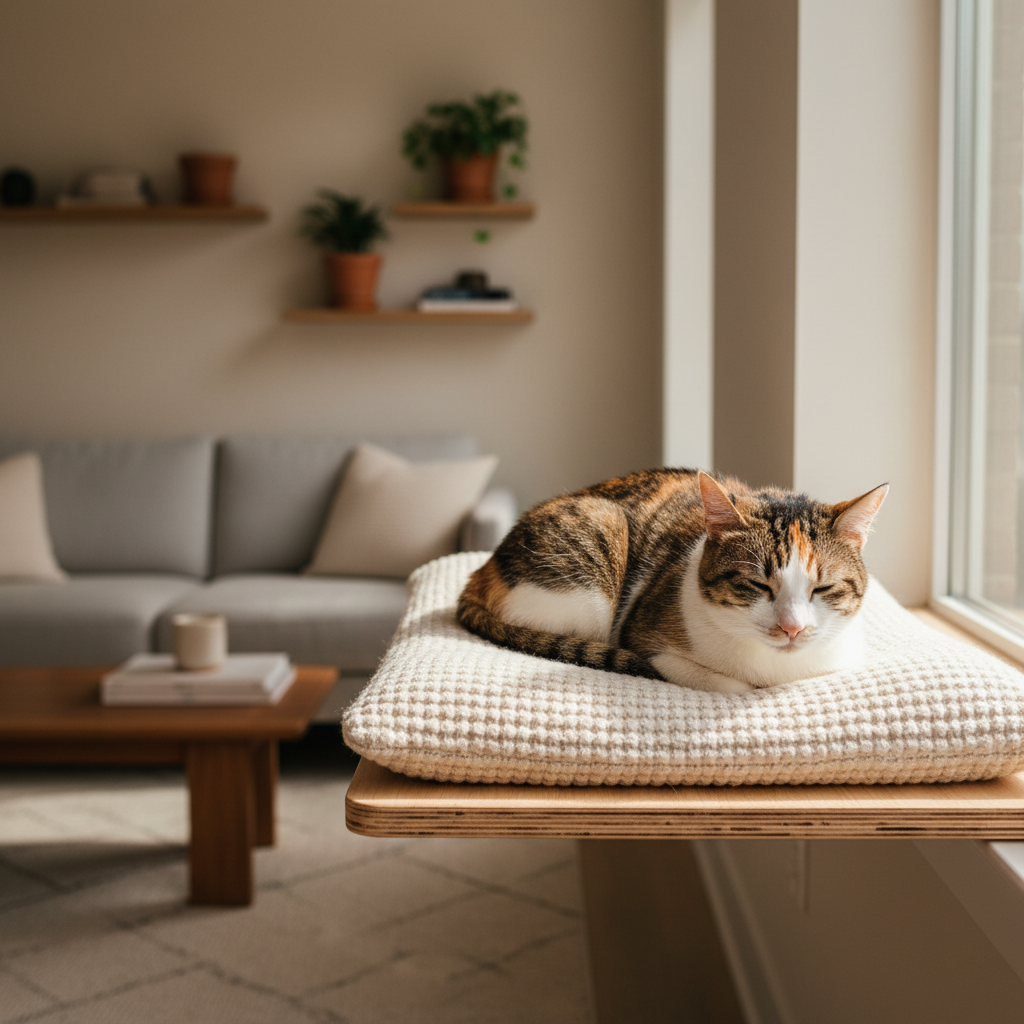
What “happy and content” looks like in a cat
A content cat is not a cat that never misbehaves, it’s a cat whose needs are met often enough that their default mood stays steady. You’ll usually see a mix of these signs, with your cat’s personality still intact.
- Relaxed body language: loose tail, soft eyes, normal grooming, naps in open areas (not only hiding)
- Healthy curiosity: checks out sounds and movement, explores, plays in short bursts
- Comfort with touch: enjoys petting in preferred zones, leaves instead of escalating
- Predictable habits: stable appetite, consistent litter box use, normal sleep patterns
According to the American Association of Feline Practitioners (AAFP), low-stress handling and a cat-friendly home setup can reduce fear and improve overall wellbeing, especially for indoor cats.
Why cats get unhappy at home (common root causes)
When people ask how to make a cat happy, they often assume the answer is “more toys” or “more cuddles.” Sometimes that helps, but many cats are actually reacting to mismatched environment and expectations.
1) Not enough control over space
Cats feel safer when they can choose distance, height, and hiding spots. A home without vertical perches, blocked-off quiet zones, or predictable “safe rooms” can leave a cat on edge.
2) Play that doesn’t match hunting instincts
Laser pointers, constant teasing, or long sessions can backfire. Most cats prefer short, intense “stalk-chase-catch” cycles followed by a cool-down.
3) Resource tension (even in “friendly” multi-cat homes)
Two cats sleeping on the same couch doesn’t automatically mean peace. They may still compete silently over litter boxes, hallway choke points, or prime window spots.
4) Unpredictable routines
Random feeding times, sudden schedule shifts, or inconsistent attention can increase vocalizing and night activity. Cats don’t need rigid schedules, but they do better with patterns.
5) Pain or medical issues
Irritability, hiding, and litter box changes can come from stress, but they can also come from discomfort. If behavior changes quickly or you see appetite/weight changes, a vet check is a sensible first step.
Quick self-check: what your cat might be asking for
Use this as a fast way to sort “normal cat stuff” from needs you can address this week. If several items in one category show up, start there.
- Boredom signals: frequent begging, knocking objects down, pouncing ankles, zoomies at night, intense window watching with frustration
- Stress signals: overgrooming, hiding more than usual, sudden swatting, avoiding certain rooms, startles easily
- Resource issues: blocking doorways, guarding food, litter box ambushes, one cat losing weight while the other gains
- Possible medical flags: missed litter box, straining, sudden aggression when touched, reduced jumping, appetite drop, vomiting/diarrhea
If medical flags appear, it’s smart to consult a veterinarian before you assume it’s purely behavioral.
A practical home setup that supports a happier cat
You do not need to redesign your whole house. Focus on “cat traffic,” comfort zones, and a few high-value upgrades that reduce friction.
Build a simple cat map
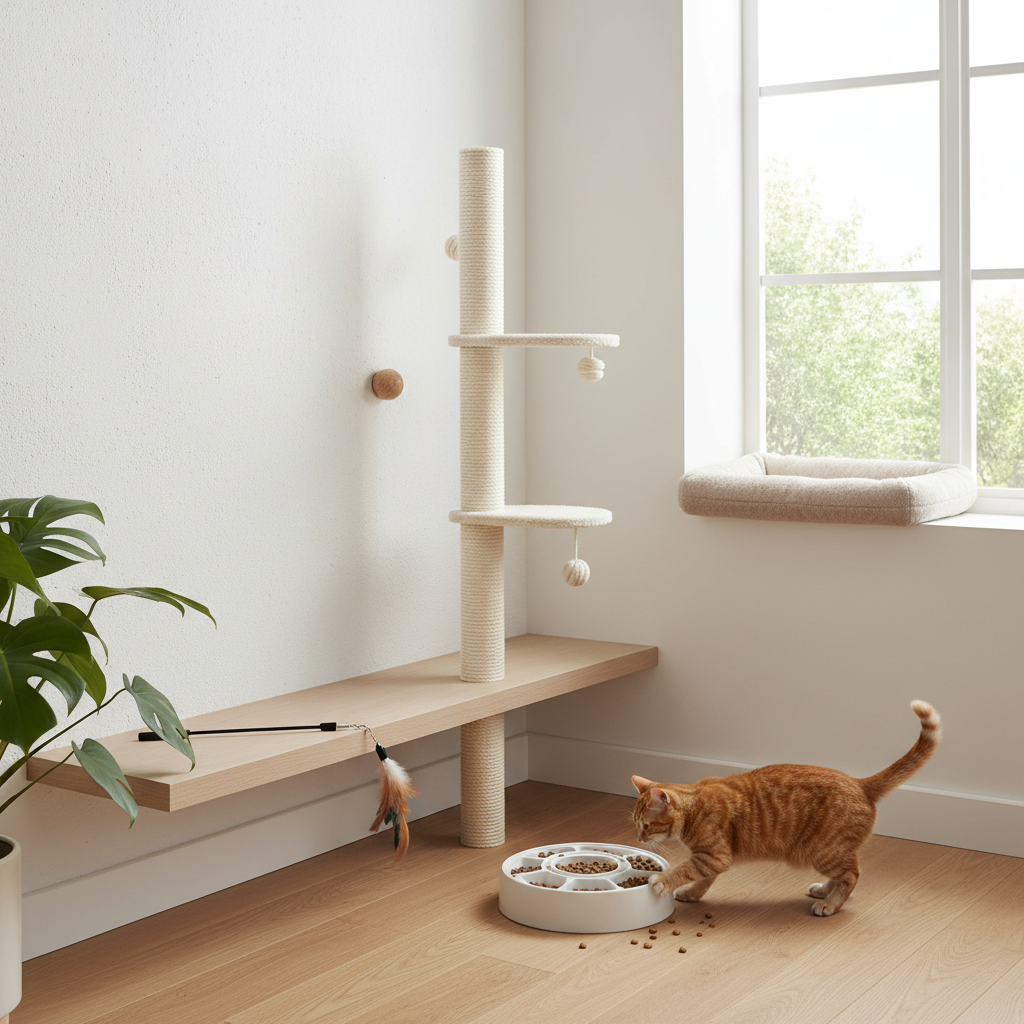
- Vertical routes: a cat tree near a window, shelves, or stable furniture they’re allowed to climb
- Quiet retreat: one low-traffic room or corner with bed + water + litter access, especially useful for timid cats
- Scratching options: at least one vertical and one horizontal scratcher placed where your cat already scratches
- Window time: perch or bed near a window, plus occasional “bird TV” videos if your cat enjoys them
Make litter box comfort non-negotiable
Many households chase “how to make a cat happy” while ignoring litter stress. According to the American Veterinary Medical Association (AVMA), changes in litter box habits can be linked to medical or behavioral causes, so it’s worth treating setup seriously.
- Keep boxes clean, in quiet spots, not next to loud appliances
- Many cats prefer uncovered boxes with unscented litter, but preferences vary
- In multi-cat homes, more boxes in more locations tends to reduce conflict
Play, food, and enrichment: the routine that works for most cats
For many cats, happiness is a cycle: hunt, catch, eat, groom, sleep. When the cycle breaks, you get night zoomies, clinginess, or “random” aggression.
A simple daily rhythm
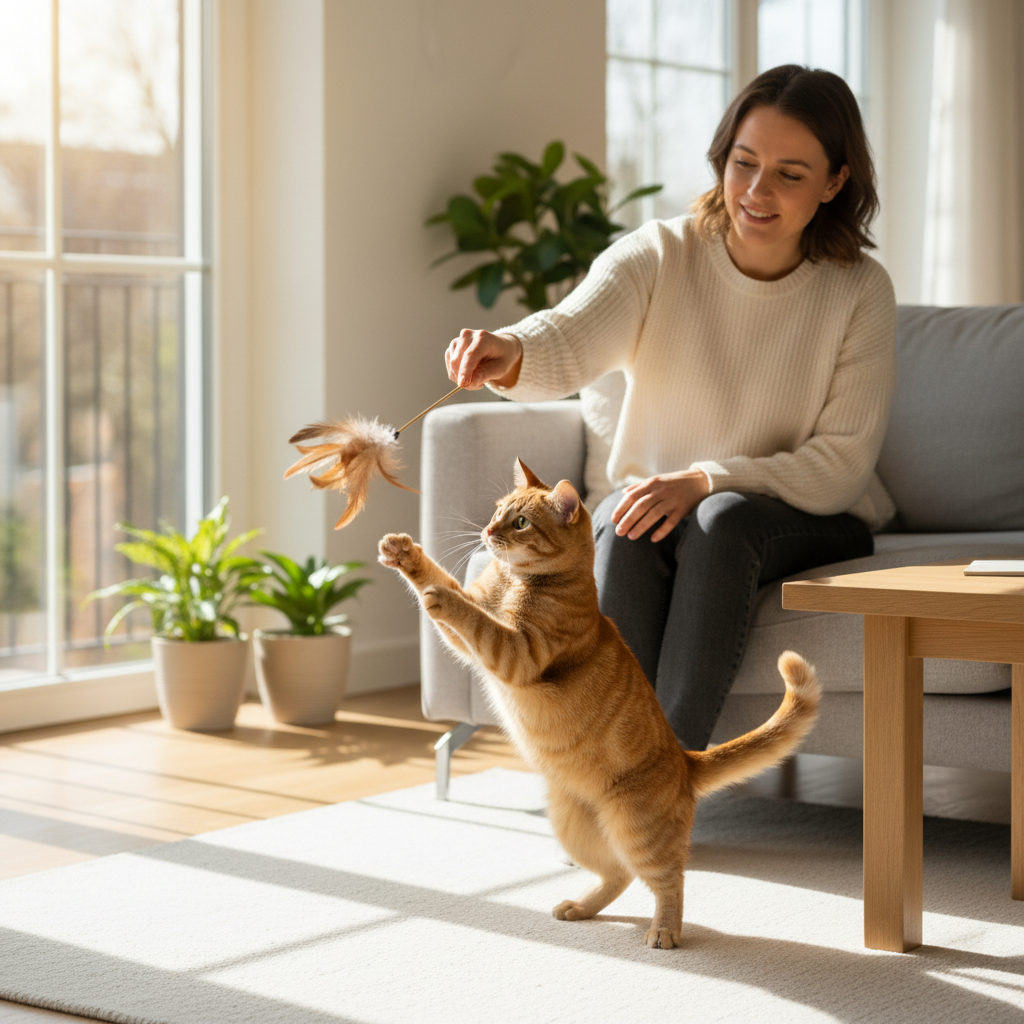
- Two short play sessions (5–12 minutes each), wand toy works well, end with a “catch”
- Meal after play to mimic the hunt-then-eat sequence
- One enrichment moment: treat scatter, puzzle feeder, scent game, or supervised balcony time if safe
Rotate, don’t overload
Leaving every toy out often makes them “invisible.” Keep a small basket available, rotate weekly, and reintroduce old toys like they’re new.
A note on lasers
Laser pointers can be fun, but some cats get frustrated without a physical “capture.” If you use one, finish with a wand toy catch or toss a treat at the end so the sequence feels complete.
Behavior-to-need table (use this to pick your next step)
This is the part most people want: if your cat does X, what should you try first. It’s not a diagnosis, it’s a prioritized starting point.
| What you see | What it often means | What to try this week |
|---|---|---|
| Wakes you up early, yowls for food | Routine drift, reinforced begging, boredom | Scheduled breakfast, evening play + meal, automatic feeder if needed |
| Bites during petting | Overstimulation, sensitivity, pain possible | Shorter petting, pause at first tail flick, vet advice if new or intense |
| Scratches furniture | Normal marking + nail care, placement mismatch | Add scratchers at “crime scene,” reward use, trim nails if tolerated |
| Hides when guests arrive | Fear, noise sensitivity | Create a safe room, offer high-value treats, no forced greetings |
| One cat chases the other | Resource pressure, play mismatch | Separate play sessions, add vertical escape routes, spread resources |
| Litter box avoidance | Box dislike, stress, medical issue possible | Vet check if sudden, clean boxes daily, try unscented litter, adjust location |
Common mistakes that keep cats unhappy (even with good intentions)
These are the “small” things that quietly sabotage progress. Fixing one or two often changes the whole vibe at home.
- Forcing affection: picking up a cat that wants distance teaches them you’re unpredictable
- Punishment for normal cat behavior: it increases stress, and the behavior often just moves elsewhere
- One big play session: many cats prefer short bursts; long sessions can tip into overstimulation
- Ignoring micro-conflicts: in multi-cat homes, quiet tension is still tension
- Fast changes: new litter, new food, new room layout all at once can spike anxiety
If you’re trying how to make a cat happy and nothing sticks, step back and ask: are you giving your cat more stimulation, or more control and predictability. Those are not the same.
When to involve a veterinarian or behavior professional
Some “mood” problems are health problems wearing a disguise. If you see sudden aggression, sudden hiding, appetite changes, repeated vomiting, weight loss, straining in the litter box, or a cat that stops jumping, a veterinary visit is a reasonable next move.
For ongoing issues like inter-cat fighting or severe anxiety, a credentialed behavior professional can help you build a plan that fits your home. According to the American College of Veterinary Behaviorists (ACVB), behavior problems may be treated with environmental changes, training, and in some cases medication under veterinary supervision.
Key takeaways and a simple 7-day plan
If you want a calmer, more content cat, aim for fewer “big fixes” and more repeatable habits. That’s where most households win.
- Protect the basics: comfortable litter setup, safe resting spots, scratch options
- Run the hunt cycle: short play, then food, then rest
- Give choices: vertical space, quiet retreat, predictable routines
- Escalations mean stop: tail flicks, skin twitching, ear changes are early warnings
Try this for 7 days: add one window perch or cat tree, schedule two short play sessions daily, feed after play, rotate toys on day 4, and do a litter box “comfort reset” (clean, quiet placement, unscented litter if tolerated). If you track just one thing, track sleep and early-morning noise, those usually change first.
If you want a more hands-off way to support how to make a cat happy, especially when you work long hours, consider setting up a rotating enrichment station with a puzzle feeder, a reliable scratching zone, and a consistent play routine you can actually keep, even on busy weeks.