Guinea pig hideout wooden options can be safe and practical, but only when the wood type, build, and finish are chosen with chewing in mind. If you’ve ever watched a pig turn a “cute house” into a snack in a weekend, you already know why this matters.
A hideout is more than decor, it’s stress relief. When the materials aren’t right, the same place meant to help them feel secure can create risk: splinters, questionable coatings, or glue they can reach. The good news is you can screen most products quickly once you know what to look for.
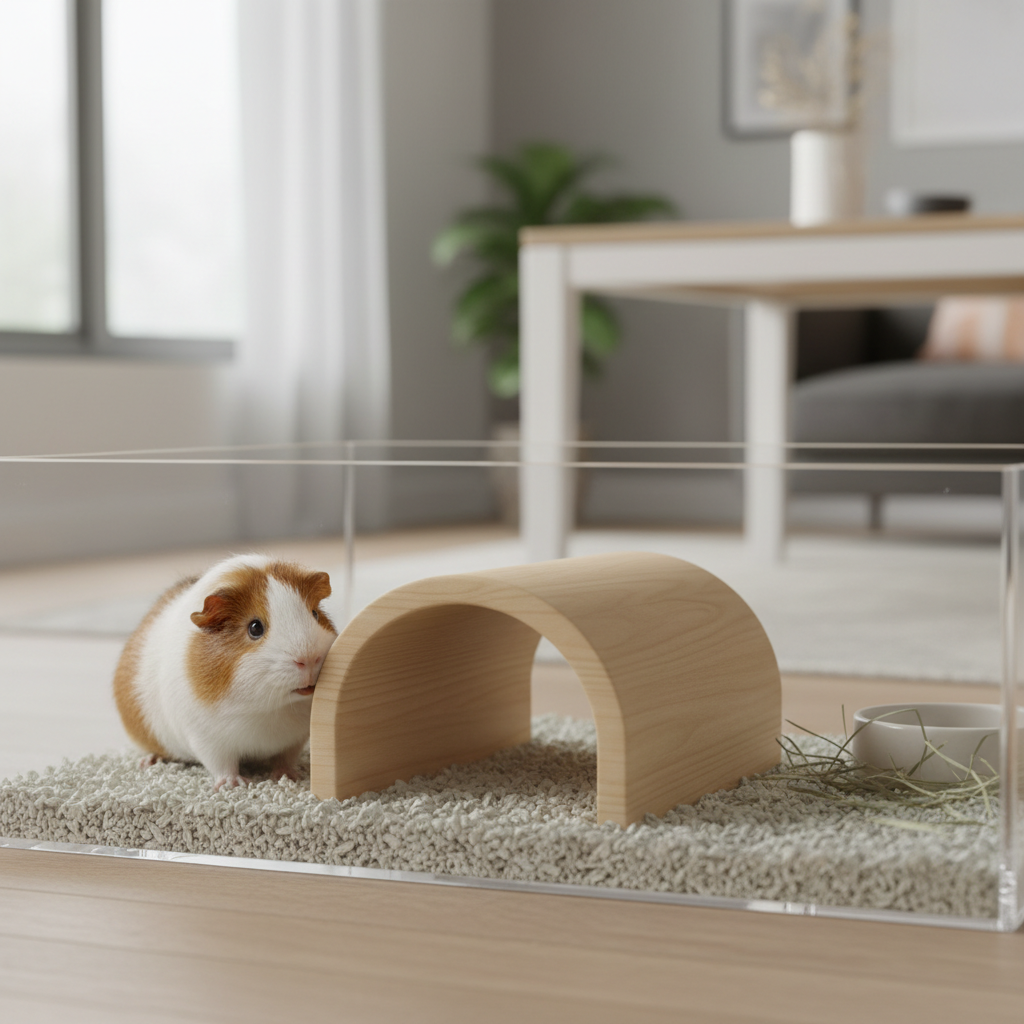
Below I’ll break down what “chew-safe” really means for wooden hides, how to self-check what you already own, and how to pick a setup that survives daily use without turning into a constant worry.
What “chew-safe” means for a wooden hideout
Chewing is normal behavior for guinea pigs, so “safe” usually means the hideout can be chewed without introducing avoidable hazards. You’re aiming for a piece that holds up structurally while keeping the chew exposure boring and predictable.
- Solid, untreated wood (or clearly pet-safe processed wood) rather than mystery composites.
- No accessible glue lines on edges they can gnaw.
- No paint, stain, or varnish unless the brand clearly states it’s pet-safe and fully cured.
- Low-splinter construction with sanded edges and thicker panels.
According to the ASPCA Animal Poison Control Center, chewing on certain woods, coatings, or treated materials can be problematic for pets, and it’s safest to avoid treated or chemically finished items when you’re unsure.
Why wooden hideouts sometimes become unsafe
Most safety issues don’t come from the idea of wood itself, they come from shortcuts in manufacturing or the way the hideout gets used in a real cage.
Common real-world failure points
- Soft wood + thin panels: the entrance edge turns into tooth marks, then cracks and splinters follow.
- Plywood/MDF/particle board: these can expose adhesives or resins once the surface is breached.
- Staples, small nails, or exposed fasteners: not always visible until a corner gets chewed down.
- Moisture damage: urine and water soften wood, raise grain, and make rough edges.
- “Cute” finishes: stains or paints may chip when chewed, even if they looked fine at purchase.
Wood types and materials: what usually works (and what I’d avoid)
When shoppers search for a guinea pig hideout wooden product, they’re often comparing “natural wood” listings that actually use very different materials. Here’s a practical way to think about it: choose woods that are commonly used in small-animal chews and avoid boards that rely on glue to be a board.
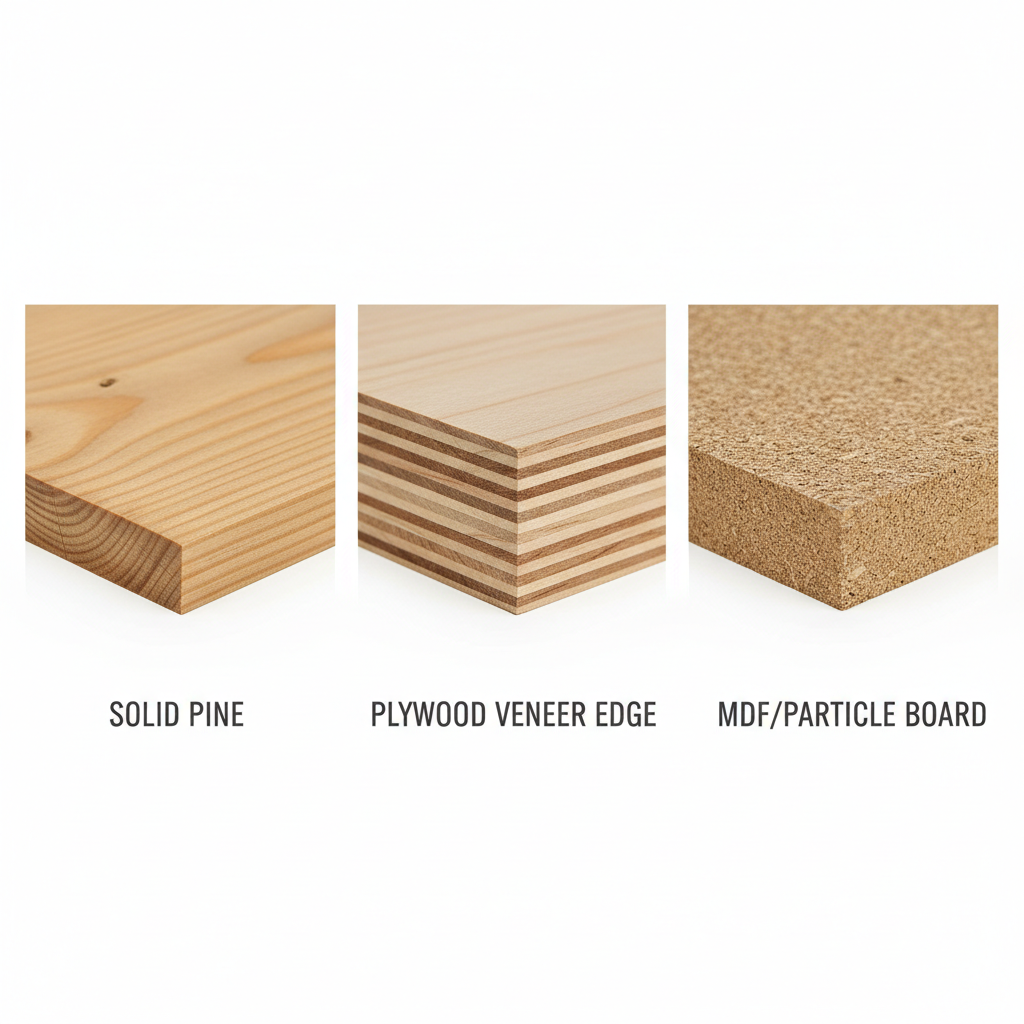
Quick comparison table
| Material | How it behaves when chewed | My take for hideouts |
|---|---|---|
| Solid pine/aspen (untreated) | Dents and shaves; can splinter if too thin | Often OK if thick, sanded, and well-built |
| Birch (solid) | Harder chew; tends to hold edges longer | Usually a durable choice for heavy chewers |
| Plywood | Layers peel; glue lines can become exposed | Riskier unless the maker clearly explains specs |
| MDF/particle board | Crumbles; moisture damage is fast | I’d skip for guinea pig habitats |
| Bamboo “wood” panels | Varies, often laminated | Only consider if the brand discloses construction |
One more nuance: even a “safe” wood can become unsafe if it’s thin, poorly sanded, or constantly wet. So don’t stop at the species name, look at thickness, edge finish, and how it’s assembled.
Self-check checklist: is your current hideout okay?
If you already own a wooden hide, you can evaluate it in under five minutes. This matters because problems often show up after a couple weeks of chewing and cleaning, not on day one.
- Run a finger along edges: if you feel sharp fuzz, lifted grain, or “needle” splinters, sand or replace.
- Inspect corners and entrances: high-traffic chew zones tell you the future of the whole piece.
- Look for exposed layers: visible ply layers or crumbly core is a red flag.
- Smell test: strong chemical odor, “fresh paint” smell, or solvent-like scent suggests finishes you don’t want in a chewing path.
- Check hardware: staples, nail heads, or loose screws should not be reachable.
- Check for damp staining: dark, soft spots usually mean urine soak; that area will roughen and break down.
According to the Humane Society of the United States, good housing should prioritize safety and cleanliness; if a hideout can’t be kept reasonably clean without degrading, it may not be the right material for that cage setup.
Choosing a chew-safe wooden hideout: what to prioritize
When you’re shopping, ignore marketing buzzwords and focus on “boring” specs. A well-made wooden hide tends to look plain, feel solid, and list its materials clearly.
Shopping signals I trust more
- Material disclosure: solid wood named (aspen, pine, birch) beats “natural wood.”
- Thicker panels: sturdier walls reduce splintering and warping.
- Sanded edges: especially around doorways and roof seams.
- Minimal parts: fewer joints means fewer places for glue to show up.
- Stable base: wobble invites chewing on stress points and accelerates cracking.
Design details that help in everyday use
- Two exits for multi-pig setups, reduces bullying and trapped “dead ends.”
- Flat roof only if it’s strong, many guinea pigs climb; thin roofs become chew targets.
- Size that fits the pig you have now, plus a little room; tight squeezes increase rubbing and chewing on entrances.
Setup and maintenance that keeps wood safer longer
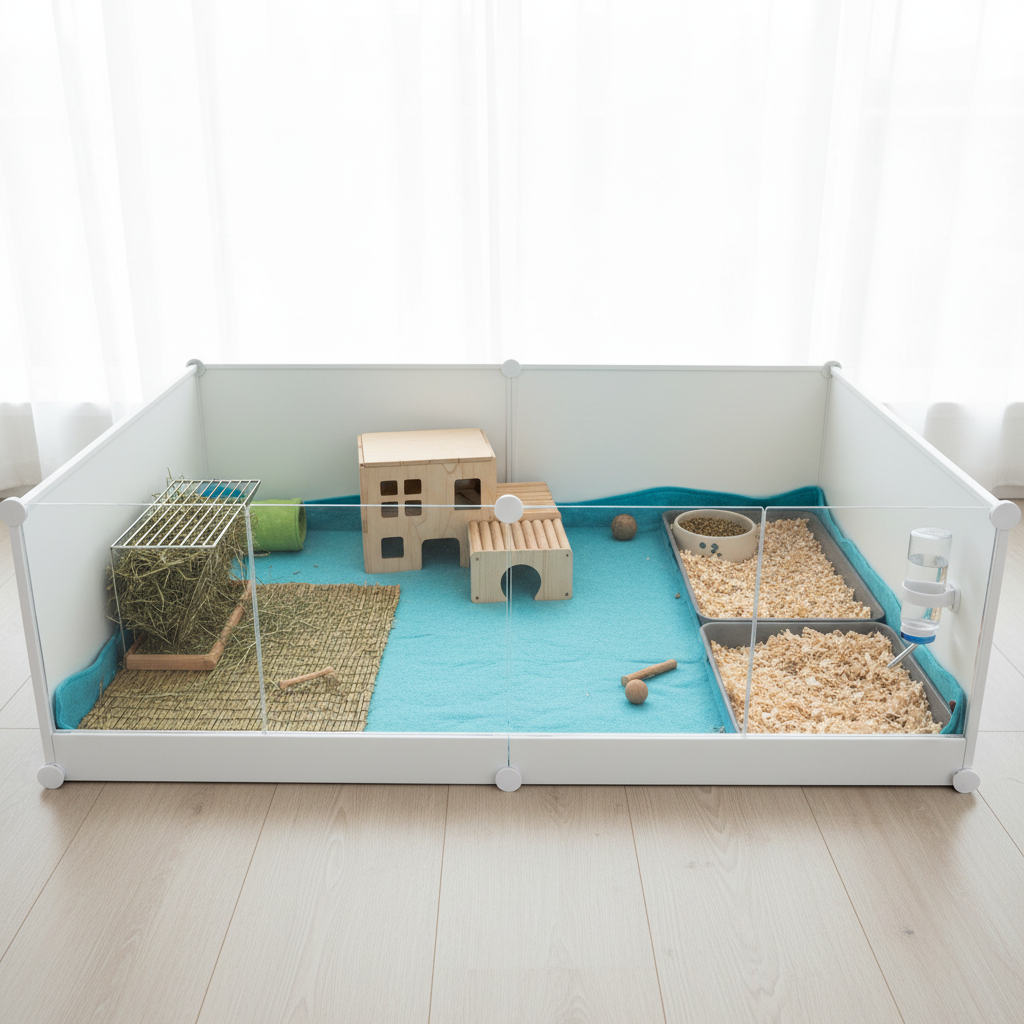
A guinea pig hideout wooden house fails faster when it lives in a damp corner or sits directly on wet bedding. A few small setup choices can make the same hide last noticeably longer.
Practical steps
- Place it on a dry surface: fleece liner, washable mat, or a tray can reduce urine soak.
- Rotate hideouts: swapping positions weekly helps you notice new chew damage early.
- Spot-clean daily: wipe obvious wet spots so they don’t become soft, rough patches.
- Deep-clean gently: avoid soaking wood; use a lightly damp cloth and let it fully air-dry.
- Offer chew alternatives: hay always comes first, then safe chew items so the hide isn’t the only outlet.
If you’re tempted to “seal” wood to make cleaning easier, pause. Many coatings can chip under chewing. If you’re unsure whether a finish is safe after it’s chewed, it’s usually smarter to choose a different hide material (like certain plastics) for the messier cage zones.
Common mistakes that waste money (or create risk)
These are the patterns that show up again and again when people message about hideout safety. None of them are rare.
- Buying for looks, not construction: cute windows and shapes mean more thin cutouts to chew.
- Assuming “eco” equals safe: “eco-friendly” can still include laminates and adhesives.
- Ignoring early chew damage: once splintering starts, it tends to accelerate.
- Using one hide for everything: the “favorite pee corner” will destroy wood fast.
- Not accounting for herd dynamics: in shared cages, one pig may guard the only entrance.
When to consider a vet or professional guidance
Most chewing is normal, but there are moments when it’s not worth guessing. According to the AVMA (American Veterinary Medical Association), changes in appetite, droppings, or behavior can signal illness and warrant veterinary attention.
- Your guinea pig stops eating hay, eats less, or seems painful when chewing.
- You notice drooling, pawing at the mouth, or facial swelling.
- There’s repeated diarrhea, very small droppings, or signs of GI slowdown.
- You suspect ingestion of a coating, glue, or foreign material.
In those cases, a quick call to an exotic vet is usually the safest next step, because dental and GI issues can move fast in small animals.
Key takeaways (so you can decide today)
- Solid, untreated wood with sanded edges tends to be the simplest “chew-safe” baseline.
- Avoid hideouts that expose ply layers, crumbly cores, or glue lines once chewed.
- How you place and clean the hide matters almost as much as the material.
- If chewing comes with appetite or poop changes, don’t wait, ask a qualified vet.
Conclusion: pick boring materials, then manage moisture
A chew-safe wooden hideout isn’t about finding a “perfect” product, it’s about stacking small advantages: simple construction, clearly disclosed materials, and a setup that keeps wood dry. If you’re choosing between two options, I’d usually take the one with thicker solid panels and fewer seams, even if it looks less fancy.
If you want a low-effort next step, inspect your current hide tonight using the checklist above, then decide whether sanding, repositioning, or replacing makes the most sense for your cage.
FAQ
Is pine safe for a guinea pig wooden hideout?
Many guinea pigs do fine with untreated solid pine, especially when edges are sanded and the wood stays dry. The bigger issue is thin pine that splinters or warps once it gets damp.
How do I know if a wooden hideout is sealed or coated?
Strong odor, visible sheen, or color staining can hint at a finish, but listings should state it clearly. If the seller can’t tell you what coating is used, it’s reasonable to choose a different hideout.
Is plywood okay for guinea pigs if it says “pet safe”?
It depends on construction and how it holds up after chewing. Plywood can peel into layers and expose glue lines, so I’d treat it as “maybe,” and monitor chew zones closely.
My guinea pig keeps chewing the doorway edge, should I stop using the hideout?
Not automatically. Check for splintering, rough edges, or cracking, then sand lightly if the material stays solid. If pieces break off easily or hardware becomes reachable, replacement is safer.
Can I use a wooden hideout in a cage with fleece bedding?
Usually yes, fleece often helps because it keeps the surface drier than loose bedding in some setups. You still want to spot-clean where urine collects and rotate placement to prevent soft spots.
What’s safer: a wooden hideout or a plastic hideout?
Both can be fine, but they fail differently. Wood can splinter or degrade with moisture, plastic can trap heat or get sharp if cracked. Choose based on your pigs’ chewing intensity and how easily you can keep the area clean.
Do chew toys reduce hideout chewing?
Sometimes, especially if the hideout chewing is just boredom. Hay access, foraging, and safe chews can help, but some pigs simply like chewing entrances, so durability still matters.
What should I do if I think my guinea pig ate paint or glue?
Play it safe and contact an exotic veterinarian for guidance, especially if you see drooling, lethargy, appetite changes, or abnormal droppings. If available in your area, you can also contact poison control resources recommended by your vet.
If you’re comparing a few hideouts and want a more straightforward path, focus on a guinea pig hideout wooden design with disclosed solid-wood materials, thick panels, and minimal seams, then set it up in a drier zone so you’re not fighting moisture and splinters every week.