
How to make dog bed at home doesn’t have to mean sewing skills, pricey foam, or a trip to a specialty store, you can get a sturdy, washable bed from items already in your closet or garage.
Most people get stuck in the same two places: choosing materials that won’t flatten in a week, and figuring out a cover that’s easy to clean. This guide keeps it simple, with a few proven builds that work for most dogs and most homes.
You’ll also see a quick cost table, a build-by-size checklist, and a short “don’t do this” section, because a cheap bed stops being cheap if it falls apart or creates a safety issue.
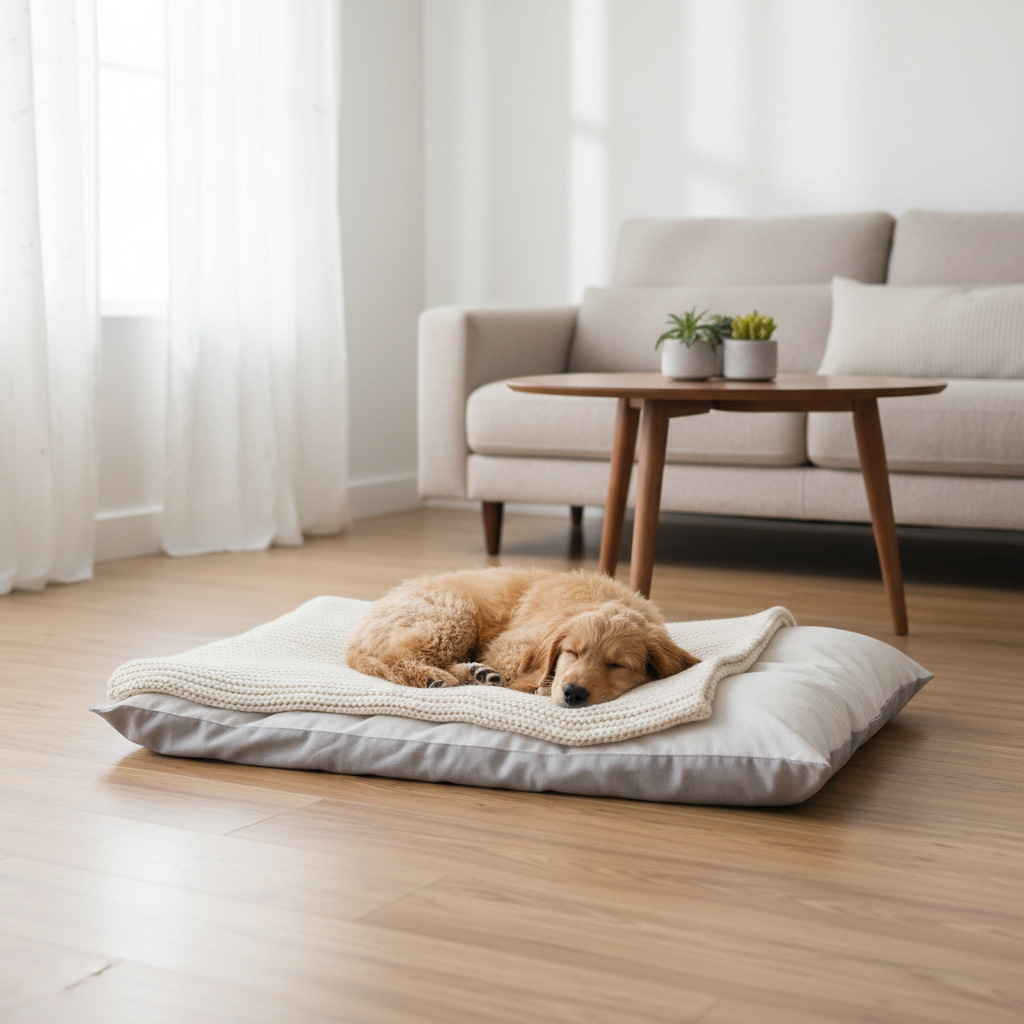
What “cheap” really means for a DIY dog bed
Cheap usually means one of two things: you spend close to $0 by repurposing what you own, or you spend a small amount to fix the two weak points that ruin most DIY beds, flat filling and messy covers.
A good baseline is this: if the bed stays supportive for a few months, survives weekly washing, and your dog actually uses it, it’s a win even if you spent a little on the cover or liner.
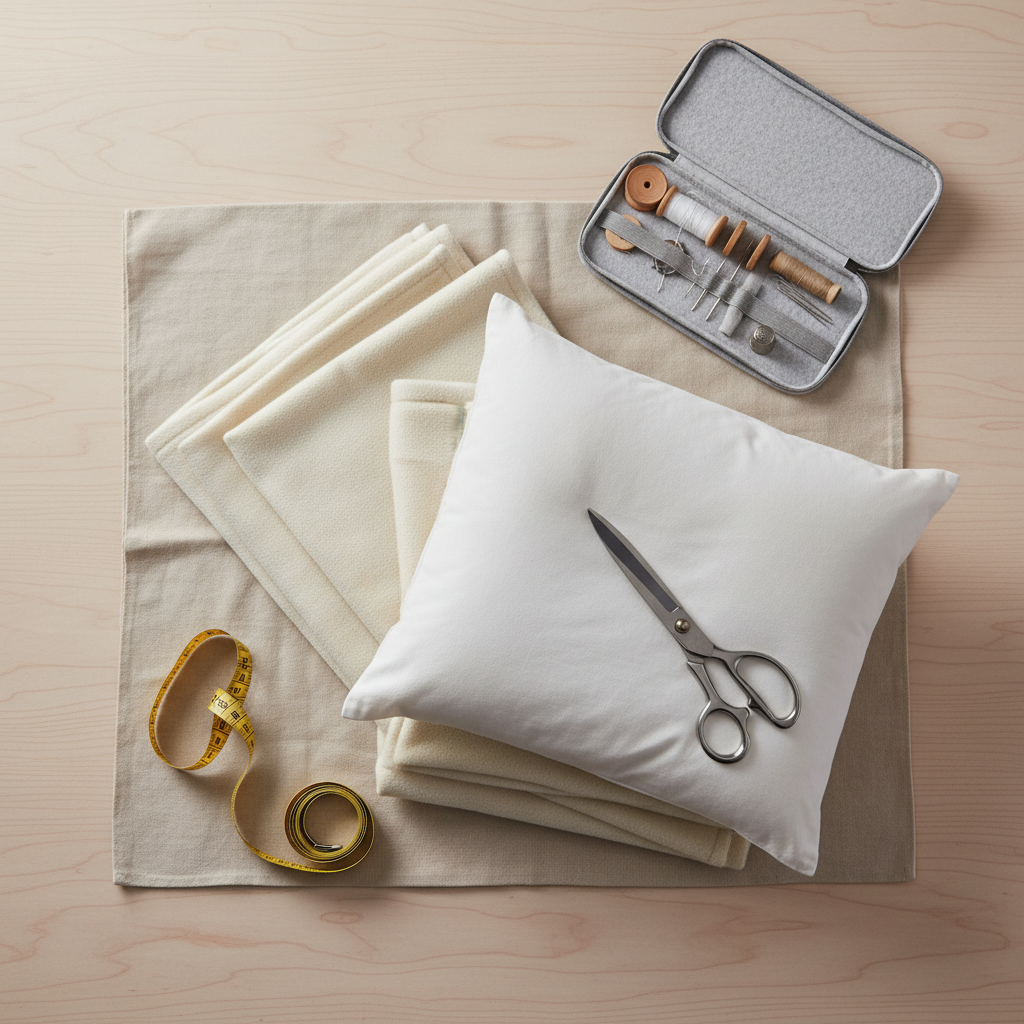
- Zero-cost route: old pillows, blankets, bath mats, crib mattresses you no longer use.
- Low-cost upgrade: waterproof liner, tougher fabric cover, non-slip bottom.
Pick the right materials (support, washability, and safety)
Before you cut anything, decide what matters most in your home: odor control, easy washing, extra cushioning for older dogs, or a bed that won’t slide across tile.
According to the ASPCA... it’s wise to choose pet products that avoid small parts and materials a pet could chew off and swallow, so for DIY beds, skip loose buttons, zippers with easy-to-pull tabs, and crumbly foam if your dog tends to shred.
Filling options ranked by “cheap + holds shape”
- Old crib/toddler mattress topper (foam): often the best balance if you already have one, cut to size.
- Layered blankets/towels: very washable, more supportive than one thick comforter when layered.
- Old pillows: easiest, but some flatten fast, better for small dogs or as a top layer.
- Shredded fabric scraps: workable, but can clump, and it’s messy unless you use an inner liner.
Cover options that don’t become a regret
- Duvet cover or large pillowcase: fast “envelope” cover, easy to remove and wash.
- Fleece throw + safety pins replaced by stitching: fine for calm dogs, risky for chewers.
- Canvas drop cloth: cheap yardage, tougher than many old sheets.
Cost and time: quick comparison table
If you’re deciding what to build, this table helps you match the project to your dog’s habits and your patience level.
| DIY option | Typical cost | Time | Best for | Main drawback |
|---|---|---|---|---|
| Pillow-in-duvet “envelope bed” | $0–$15 | 10–20 min | Calm dogs, quick setup | Can flatten, slides on hard floors |
| Layered blanket bed + washable cover | $0–$25 | 20–40 min | Most homes, frequent washing | Needs occasional re-layering |
| Foam pad bed (cut-to-size) + cover | $10–$40 | 30–60 min | Older dogs, heavier dogs | Chewers may destroy foam |
| Plastic bin “nest” with cushion insert | $10–$35 | 30–50 min | Dogs that like bolsters | Edges must be smoothed for safety |
Before you build: size and placement checklist
How to make dog bed at home works better when you size it for your dog’s sleeping style, not just their weight. Some dogs sprawl, some curl, and some switch all night.
- Measure your dog: nose to base of tail, then add 6–12 inches for sprawl space.
- Watch the “curl factor”: if your dog tight-curls, you can size down slightly and add bolsters.
- Pick a washable spot: away from food bowls, not in a draft, and not blocking walkways.
- Floor type: on tile/wood, plan a non-slip bottom or rug pad layer.
Key point: if the bed will sit on a cold floor, thickness matters more than softness. A fluffy bed that compresses to nothing still feels cold.
3 cheap DIY dog bed builds (step-by-step)
Each option below stays beginner-friendly, minimal tools, minimal skill, and you can upgrade later if your dog loves it.
Option 1: The no-sew “envelope” bed (fastest)
This is the quickest way to get a washable cover without fighting a sewing machine.
- Grab a duvet cover, large pillowcase, or two layered pillowcases.
- Insert 1–2 old pillows, or a folded blanket bundle.
- Fold the opening inward like an envelope flap so fabric overlaps.
- If needed, add a tight fold plus a couple stitches to keep the flap closed (better than pins if your dog mouths fabric).
Best tweak: slide a cheap rug pad sheet under the bed to stop skating on hardwood.
Option 2: The layered blanket bed (best “wash it a lot” choice)
For many households, this one hits the sweet spot: supportive enough, easy to refresh, and forgiving if your measurements aren’t perfect.
- Fold 3–6 blankets or towels into a rectangle slightly larger than your dog.
- Wrap the bundle in a tougher outer layer: denim, canvas, or a thick throw.
- Close it with a simple straight stitch along one edge, or use a duvet cover as the outer shell.
- Add a trash-bag-style waterproof liner inside if accidents are a concern, but keep it covered so the dog can’t chew it.
When the middle starts to dip, pull it apart and re-layer, it’s oddly satisfying and takes five minutes.
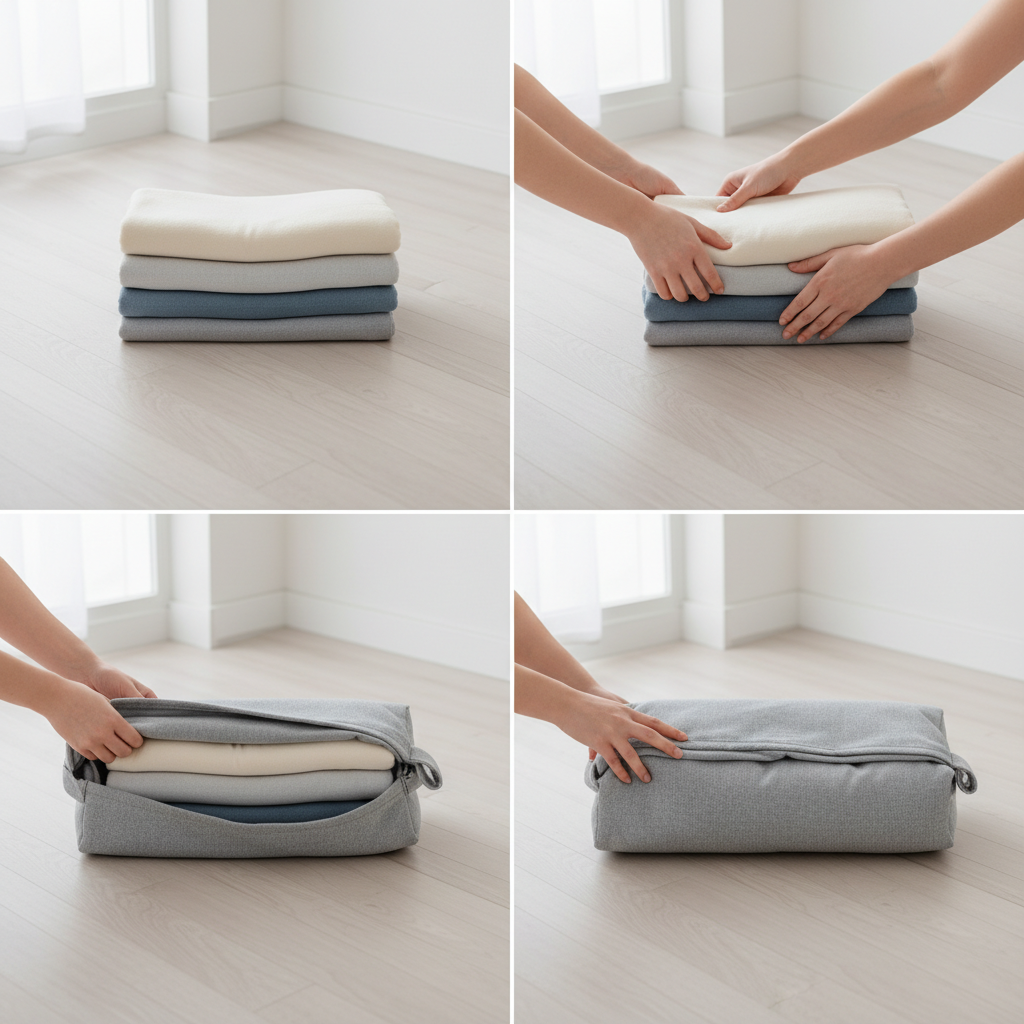
Option 3: The foam pad bed (most supportive for many dogs)
If your dog is large, older, or picky about comfort, a foam pad often gets better adoption than a pillow pile.
- Use an old foam topper, couch cushion foam, or a crib mattress topper.
- Cut foam to size with a long serrated knife, slow sawing motion works well.
- Wrap foam in an inner liner (old sheet or inexpensive waterproof liner) to protect it from drool and accidents.
- Add an outer cover that’s easy to remove and wash.
Safety note: if your dog chews bedding, exposed foam becomes a swallowing risk, in that case this build may not be a fit without a tougher cover and supervision.
Make it last: small upgrades that don’t cost much
A cheap DIY bed becomes annoying when you’re constantly re-stuffing, re-tying, and cleaning the floor under it. These upgrades tend to pay off quickly.
- Waterproof inner layer: keeps the core from holding odors, even a basic liner helps.
- Non-slip bottom: shelf liner, rug pad, or a strip of grippy fabric stitched to the underside.
- Double cover system: inner liner stays on, outer cover washes weekly.
- “Bolster” edges: roll two towels and tuck them along the sides for dogs that like to lean.
If you’re trying to figure out how to make dog bed at home that stays fresh, focus on the liner and the cover, those two pieces do most of the work.
Common mistakes (and what to do instead)
Most DIY beds fail for predictable reasons, and none of them are about crafting talent.
- Using loose fasteners: safety pins, decorative buttons, and easy-pull ties can be swallowed, sew closures or use envelope folds.
- Choosing “soft” over “supportive”: one fluffy comforter compresses fast, layer thinner materials or add foam.
- No plan for washing: if the cover doesn’t come off easily, it won’t get washed often enough, build around a removable cover.
- Placing it in high-traffic spots: the bed becomes a tripping hazard and the dog avoids it, pick a calmer corner.
When to adjust the plan or ask a professional
Sometimes the bed isn’t just about comfort, it connects to health, behavior, or home hygiene. If your dog has joint pain, persistent skin irritation, or keeps avoiding every bed you offer, it may help to talk with a veterinarian or a qualified trainer to narrow the cause.
According to the American Veterinary Medical Association (AVMA)... pet owners should contact a veterinarian when they notice ongoing discomfort or changes in mobility, so if you suspect arthritis or pain, a more supportive setup might be recommended, and the DIY approach should stay conservative and safe.
Conclusion: a cheap dog bed can still feel “real”
How to make dog bed at home comes down to three decisions: pick filling that holds shape, build a cover you’ll actually wash, and avoid anything your dog can chew off. Start with the simplest version, then upgrade the liner or bottom grip if the bed slides or starts to smell.
If you want an easy next step, choose one build today, measure your dog, and commit to a removable cover, that single choice usually makes the biggest difference.