
Small animal chew toys safe options exist, but you usually have to look past the cute packaging and check what the toy is made of, how it’s finished, and whether it matches your pet’s chewing style.
If you share your home with a rabbit, guinea pig, chinchilla, hamster, or rat, chew toys aren’t “extras”, they’re daily-use items. Chewing supports dental wear for many species, and it also reduces boredom, which is a polite way of saying it can prevent a lot of annoying behaviors.
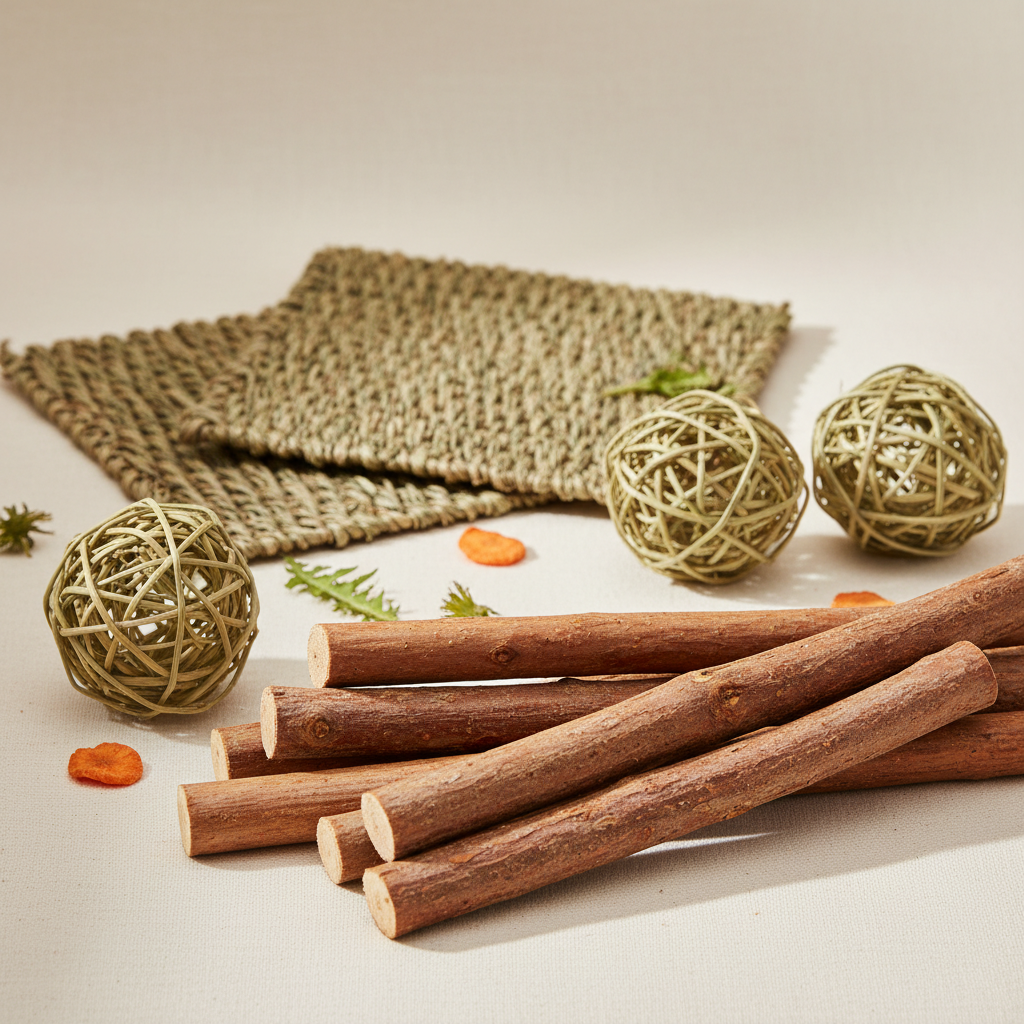
The tricky part, “non-toxic” is often used loosely. This guide helps you judge materials, spot common hazards, and build a simple rotation of chews that fits your animal, not a generic label.
Why “safe” chew toys matter more than most people think
Chewing is normal, but the wrong toy can turn that healthy habit into a vet visit. Most problems fall into a few real-world buckets.
- Splinters and sharp edges: Some woods and poorly cut pieces can crack, creating sharp points that may injure the mouth.
- GI blockage risk: Rope fibers, fabric strips, soft plastics, and some “edible” compressed materials can form clumps if swallowed.
- Unknown dyes or finishes: Bright colors can be fine or questionable, it depends on the colorants and binders used.
- Dental mismatch: A toy can be safe yet useless if it’s too soft for a heavy chewer, or too hard for a tiny mouth.
According to the American Veterinary Medical Association (AVMA)... dental care and safe environmental enrichment are foundational parts of responsible small-animal ownership, and chewing enrichment often sits right at the intersection of both.
Materials: what’s usually safe, what needs caution
When people ask for small animal chew toys safe enough for daily use, they’re usually really asking about materials. Below is a practical view, not a perfect list, because brands vary and even “natural” items can be processed differently.
Common materials that are typically well-tolerated
- Untreated fruit woods (like apple): Often used for rabbits and guinea pigs; look for “untreated” and “no pesticides” where possible.
- Timothy hay (or orchard grass) chews: Great for herbivores, and usually low drama if ingested in small bits.
- Seagrass, rattan, vine, palm leaf: Good texture variety; check weave tightness and loose strands.
- Plain cardboard (no glossy coating): Boxes and tubes are “boring” but effective; remove heavy glue seams when possible.
Materials that can be fine, but deserve a closer look
- Softwoods (like pine): Kiln-dried vs. not can matter; avoid strong resin smell and sticky surfaces.
- Compressed wood/hay blocks: Some crumble safely, others break into hard chunks; test how it fractures.
- Food-based chews (seed sticks, honey binders): Often more “treat” than chew, and not ideal for some species.
Materials many owners skip or restrict
- Soft plastics and rubber-like toys: Can become swallowing hazards for determined chewers.
- Cotton rope and fabric toys: Loose fibers may tangle in the gut; risk depends on species and chewing behavior.
- Painted/varnished wood (unless clearly labeled as pet-safe and you trust the brand): “Paint” without specifics is a pass for many cautious owners.
A quick safety checklist before you buy (or before you hand it over)
This is the “pause for ten seconds” list. It catches most of the stuff that causes trouble.
- Ingredient/material clarity: The label should say what it’s made from, not just “natural”.
- No strong chemical odor: If it smells like a hardware store, don’t test it on your pet.
- Surface check: Run your fingernail along edges, if it snags, a mouth might snag too.
- Size match: Small pieces can be swallowed whole; huge pieces can trap a jaw or create awkward leverage.
- Fiber behavior: If you can easily pull long strings off with two fingers, assume your pet can too.
- Color transfer test: Lightly rub a damp white paper towel on the surface; obvious color bleed is a red flag.
- Hardware check: Avoid exposed staples, metal clips, or mystery wire.
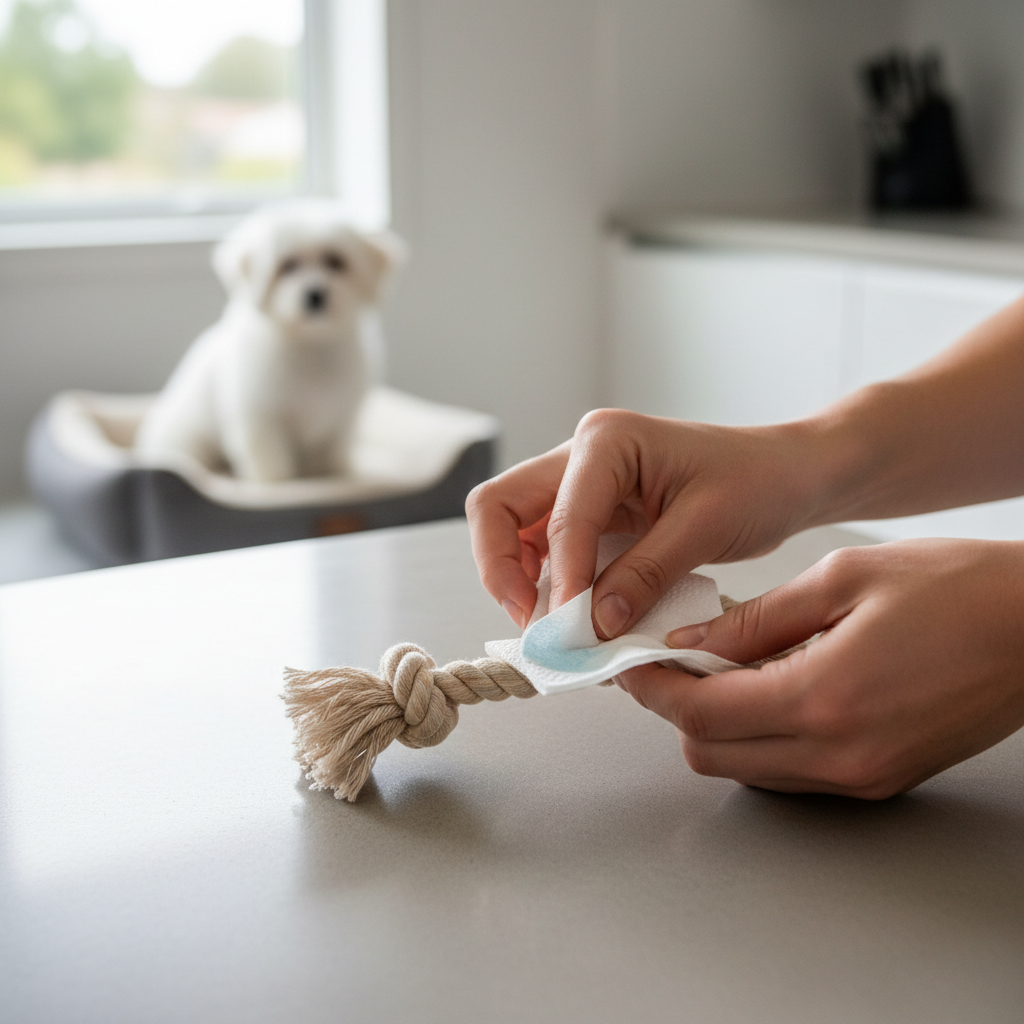
If you can’t verify what a chew contains, you’re guessing. And with small animals, guessing often ends with “we’ll keep an eye on it”, which nobody enjoys.
Choosing by species: what tends to work in real homes
Different animals chew differently. The goal is to offer small animal chew toys safe for that specific mouth, not the whole “small pets” aisle.
Rabbits
- Focus on hay-based chews, untreated wood sticks/blocks, and woven mats.
- Avoid sugary “edible” chews unless your vet says it fits your rabbit’s diet.
Guinea pigs
- Many do best with softer woods, hay chews, and cardboard hideouts they can nibble.
- Watch for over-hard blocks that your pig ignores, wasted money is the common failure mode here.
Chinchillas
- Offer harder, clean woods and pumice-style chewing stones made for chinchillas.
- Be cautious with anything that frays; some chinchillas will shred and ingest.
Hamsters and gerbils
- Small untreated wood chews, seagrass items, and chew-safe cardboard work well.
- Avoid toys that become tiny sharp shards when they break.
Rats and mice
- They’re smart and persistent; choose durable, simple materials and rotate often.
- Be careful with glued composites; rodents are excellent at finding weak points.
Safe chew toy options, pros/cons (quick comparison table)
Below is a practical comparison you can screenshot. It won’t replace brand-by-brand research, but it helps narrow choices fast.
| Chew type | Best for | Why people like it | What to watch |
|---|---|---|---|
| Untreated fruit wood sticks | Rabbits, guinea pigs, chinchillas | Good texture, simple material | Splintering, unknown sourcing |
| Timothy hay cubes/balls | Rabbits, guinea pigs | Chew + forage in one | Added binders, dust |
| Seagrass/rattan woven chews | Most small herbivores | Variety, mental enrichment | Loose strands, small swallowable bits |
| Plain cardboard tubes/boxes | Most species | Cheap, easy, often loved | Glossy inks, heavy glue seams |
| Pumice chews (species-specific) | Often chinchillas | Hard wear surface | Crumb size, dust, suitability varies |
How to introduce chew toys safely (a simple routine)
Even if the toy itself looks fine, the first week matters. You’re checking behavior and how the toy breaks down in your pet’s mouth.
- Start with one new item at a time: If poop, appetite, or behavior changes, you’ll know what to suspect.
- Supervise the first 15–30 minutes: You’re watching for aggressive shredding and swallowing.
- Rotate textures every few days: This keeps interest up and reduces “obsessive chewing” on a single risky item.
- Remove when it degrades: If it turns into sharp points, long strings, or tiny swallowable nuggets, it’s done.
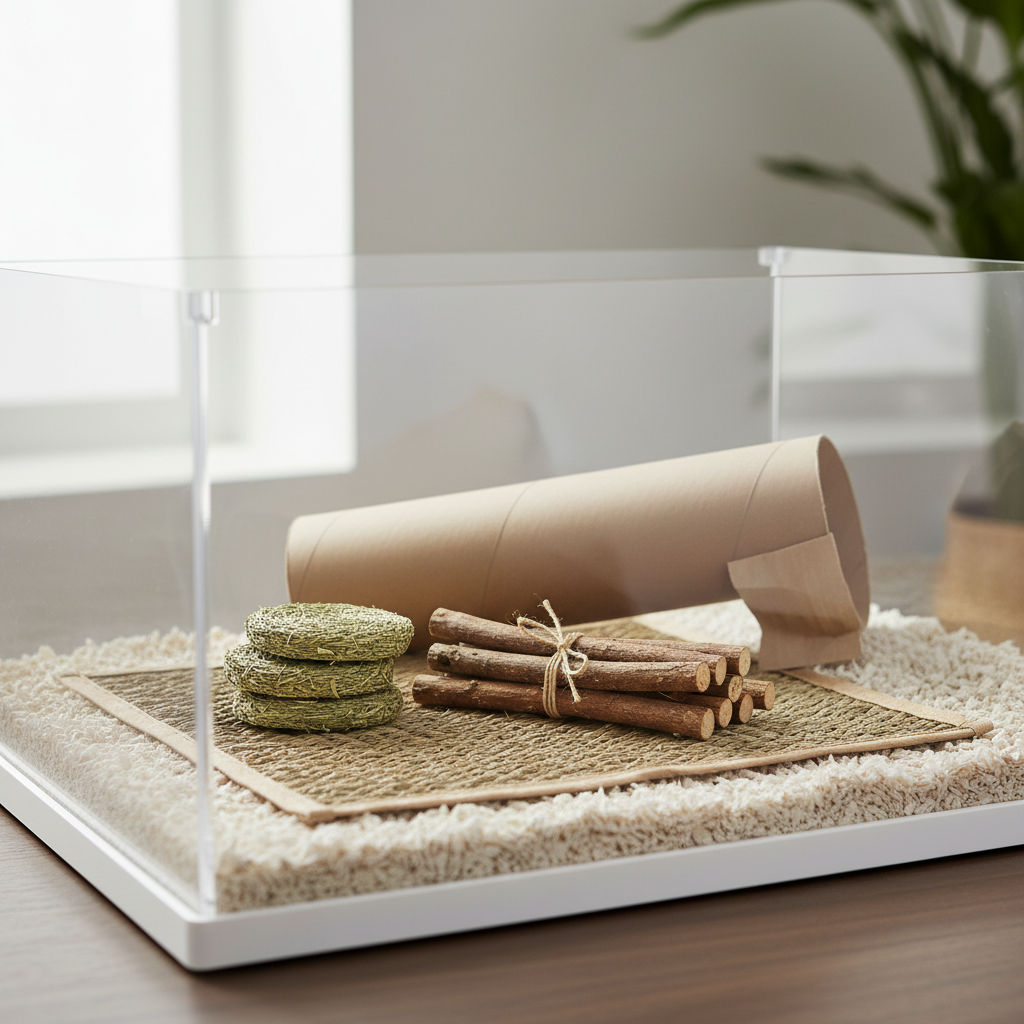
If your pet tries to eat the entire toy quickly, that’s not “enthusiasm”, it’s a signal to switch materials or increase supervision.
Common mistakes that make “non-toxic” less safe
Most unsafe moments come from good intentions plus one wrong assumption.
- Trusting vague labels: “Eco” and “natural” do not tell you about dyes, glues, or pesticides.
- Buying dog/cat chews for small animals: Ingredient and hardness standards often target different species.
- Overdoing treat-style chews: For herbivores, extra sugars or binders can be a diet problem more than a toxicity problem.
- Ignoring boredom: A bored animal may shred and swallow materials they’d normally just nibble.
- Skipping cleaning/storage: Hay and natural fibers can mold if stored damp; mold is its own safety issue.
According to the FDA... pets can be affected by contaminants in products and treats, and it’s worth treating anything chewable as part of your pet’s safety environment, not just a “toy.” If you suspect contamination or illness, stop the item and contact a veterinarian.
When to ask a vet (or an exotic specialist)
If you’re choosing small animal chew toys safe enough for a pet with health issues, it’s smart to ask a professional, especially when dental disease or GI sensitivity is already in the picture.
- Possible dental pain: Drooling, pawing at the mouth, reduced appetite, selective eating.
- Possible blockage risk: No feces, very small feces, bloating, lethargy, repeated stretching or pressing belly to the floor.
- Chronic diarrhea or recurring soft stool: New chew materials can be a trigger for some animals.
- History of chewing and swallowing fabric/plastic: A vet can help you pick safer enrichment options.
According to the American Animal Hospital Association (AAHA)... when a pet shows signs of illness or distress, prompt veterinary guidance matters, and “wait and see” can be risky, especially for small animals that decline quickly.
Key takeaways (the part you’ll actually remember)
- Material clarity beats marketing: Choose toys with specific materials listed and minimal unknown additives.
- Match toy to species and chewing style: One “universal” chew rarely fits every small animal.
- Inspect, then supervise: How a toy breaks after chewing matters as much as how it looks new.
- Rotate and remove: Rotation reduces boredom, removal reduces hazards.
Conclusion: build a small “safe chew” lineup, then refine it
The safest setup usually isn’t one perfect item, it’s a small rotation you trust: a reliable hay chew, a simple untreated wood option, and a low-risk cardboard or woven texture for variety. Start there, watch how your pet interacts, and adjust based on what they actually do, not what the label promises.
If you want one next step today, pick one chew to inspect using the checklist above, and remove anything that frays, splinters, or sheds dye. Small changes add up quickly when the toy sits in your pet’s space every day.
FAQ
What are the safest chew toys for rabbits with sensitive stomachs?
Many owners stick to plain timothy-based chews and untreated wood, avoiding treat-style sticks with binders. If your rabbit has a history of GI stasis, ask your vet what materials they prefer for enrichment.
Are dyed chew toys safe for guinea pigs?
Sometimes, but it depends on the dye and how it’s applied. If the brand doesn’t specify pet-safe colorants or you see color bleed with a damp towel test, it’s reasonable to skip it.
Is cardboard safe for small animals to chew?
Plain, non-glossy cardboard is commonly used and often well-tolerated, especially as enrichment. Avoid heavily printed, glossy, or adhesive-heavy pieces, and remove tape and labels.
How do I know if a wood chew is untreated?
Look for explicit wording like “untreated” or “no additives,” and check whether the seller mentions pesticide-free sourcing. If the product smells strongly or looks shiny like it has a finish, it may not be ideal.
What chew toys should I avoid for hamsters that swallow pieces?
In that situation, avoid anything that turns into long fibers or gummy fragments, like rope or soft plastics. Try sturdier, species-appropriate wood chews and supervise new items closely.
How often should I replace chew toys?
Replace when the toy starts forming sharp points, loose strands, or small chunks that can be swallowed. Some chews last days, others weeks, it varies by material and how determined your pet is.
Can small animal chew toys help with overgrown teeth?
Chewing can support normal wear, but it may not fix dental disease once it’s established. If you see drooling, weight loss, or difficulty eating, a vet exam is the safer move than adding harder toys.
Need a simpler way to choose?
If you’re trying to sort through labels and still feel unsure, consider making a short “approved materials” list for your species and only buying chews that clearly match it. It’s less exciting than browsing everything, but it saves time, money, and a lot of second-guessing.