
Fish tank test strips for water quality are the fastest way to catch problems like ammonia spikes, rising nitrite, or a creeping nitrate level before your fish start acting “off.” They’re not perfect, but for most home aquariums they’re a practical early-warning tool you can use in under a minute.
If you’ve ever had a tank look clear while fish clamp fins, gasp at the surface, or skip meals, you already know the frustrating part, water can go bad without looking bad. Strips help you move from guessing to checking, and that’s usually where stability starts.
This guide breaks down what strips actually measure, how to read them without second-guessing, when a liquid kit is worth the extra effort, and what to do with results that don’t look right.
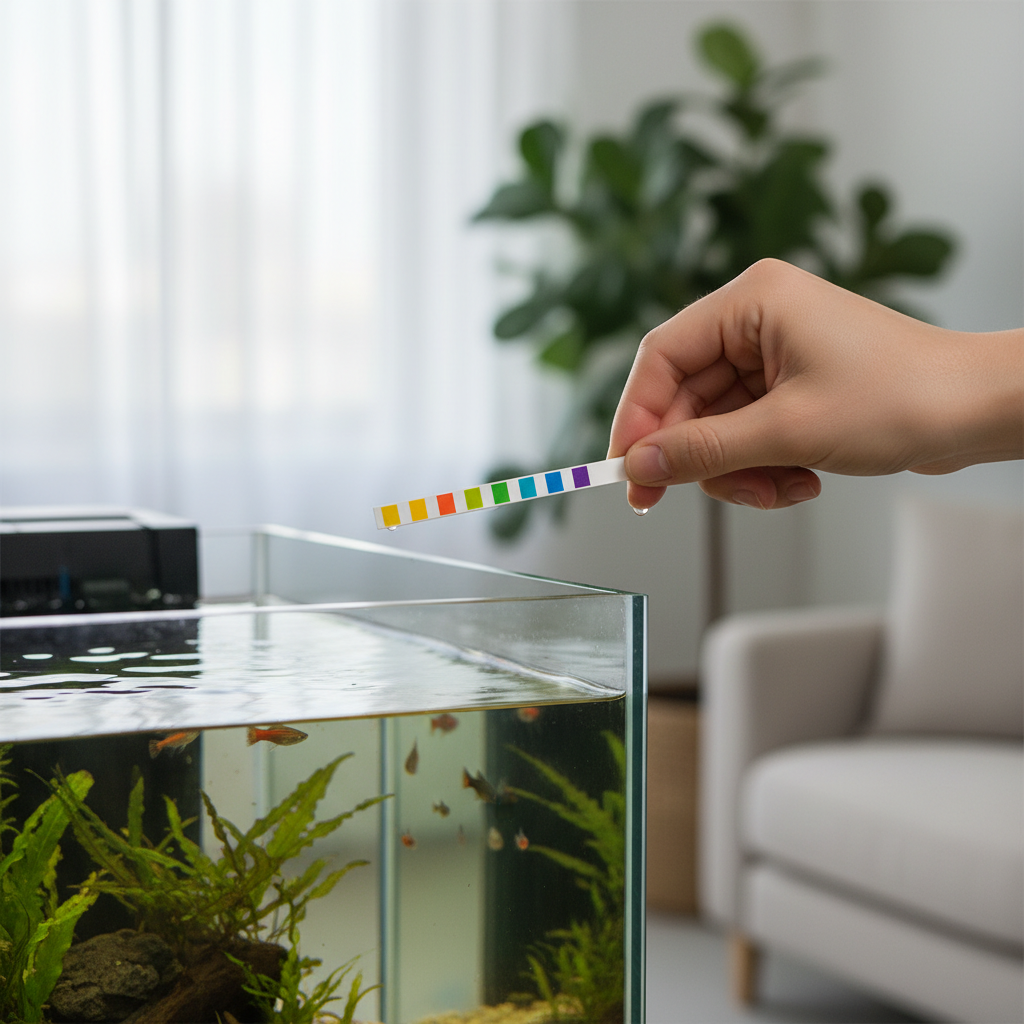
What test strips can (and can’t) tell you
Most aquarium strips are designed for a quick snapshot of common water parameters. In practice, they’re best at helping you answer one question: “Is something drifting out of the safe zone?” rather than giving lab-level precision.
Common parameters on fish tank strips
- pH: acidity/alkalinity, useful for trend checks and avoiding sudden swings.
- GH/KH (on some strips): general hardness and carbonate hardness, important for livebearers, shrimp, and pH stability.
- Nitrite (NO2-): a key “red flag” during cycling and after filter issues.
- Nitrate (NO3-): long-term waste build-up indicator, guides water-change schedule.
- Chlorine (often on tap-water strips): relevant when mixing new water.
Some brands include ammonia, some don’t. If yours skips ammonia, you’ll want another way to check it, especially in newer tanks.
Where strips are usually weaker
- Fine accuracy: color blocks can be close together, so small differences are hard to call.
- Ammonia reliability: strip-based ammonia tests can be finicky; liquid tests often read more consistently.
- User variability: timing, lighting, and moisture can change results more than people expect.
According to the U.S. Environmental Protection Agency (EPA), test methods have limits and require following directions closely to get meaningful results. Aquarium strips are no exception, technique matters.
Why your strip results look “wrong” (real-world causes)
When people say strips “don’t work,” it’s often a handling issue or a mismatch between what the strip measures and what they think it measures.
- Old or humid strips: the pads react with moisture from the air; a bathroom cabinet is a quiet strip-killer.
- Too much dunking: some strips want a quick dip, not a soak. Extra time can wash reagents.
- Reading at the wrong time: 15 seconds vs 60 seconds can shift colors noticeably.
- Bad lighting: warm kitchen lighting makes pH and nitrate colors look different; daylight is easier.
- Confusing “safe” with “ideal”: many fish tolerate a range, but stability matters more than chasing a number.
- Water changes right before testing: you may measure your fresh tap mix more than your tank trend.
If you want strips to be useful, treat them like a consistency tool, same spot, same timing, same lighting, and compare over time.
A quick self-check: do strips fit your tank situation?
Use this as a practical filter before you buy a big tub of strips or decide you “need” a lab-style kit.
- Strips are usually enough if your tank is established, lightly to moderately stocked, and you want weekly trend checks for nitrate and pH.
- Go liquid (or double-check) if you’re cycling a new tank, adding a lot of fish at once, dealing with unexplained deaths, or seeing stress signs like surface gasping.
- Consider specialty tests if you keep shrimp, discus, African cichlids, or sensitive wild-caught species where GH/KH swings matter.
Key point: for many households, a hybrid setup works best, strips for routine scans, liquid kit for ammonia/nitrite confirmation when anything looks off.
How to use fish tank test strips correctly (the “boring” steps that save fish)
Fish tank test strips for water quality only help if the routine is repeatable. The goal is to remove little errors that pile up into misleading readings.
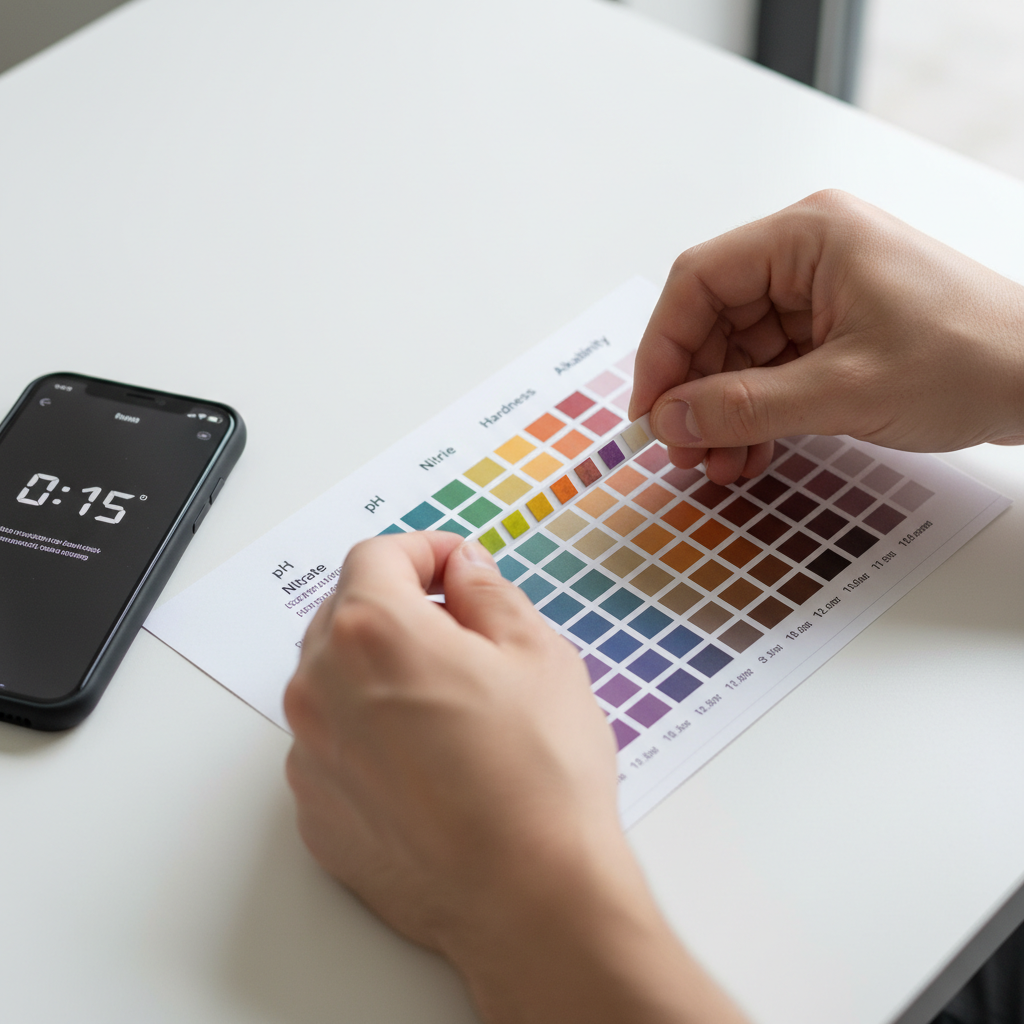
A simple step-by-step routine
- Wash and dry your hands, then close the strip container immediately after pulling one strip.
- Dip the strip as directed (often 1–2 seconds), then remove and hold it flat.
- Start a timer, don’t guess the seconds in your head.
- Read under bright, neutral light (near a window works), and compare colors at the exact time listed.
- Log results in a notes app or notebook so you see trends instead of random numbers.
Storage rules people ignore
- Keep strips dry and tightly capped, avoid humid rooms.
- Don’t touch the reagent pads.
- Watch expiration dates, and if colors on unused strips look “off,” replace.
Reading results: a practical “what to do next” table
Numbers and colors matter less than the next decision. Here’s a realistic action map you can use with most freshwater community tanks. Saltwater targets differ by system, and planted tanks often run different nitrate goals.
| Parameter | What a concerning result often looks like | What to do in the next 24 hours | What to follow up with |
|---|---|---|---|
| Nitrite | Anything above zero in an established tank | Partial water change, reduce feeding, increase aeration | Confirm with liquid nitrite test, check filter flow/media |
| Nitrate | Rising week to week, or staying high after changes | Water change, vacuum debris, remove rotting plant matter | Adjust stocking/feeding, increase maintenance cadence |
| pH | Sudden shift vs your normal baseline | Pause “pH up/down” chasing, test KH if possible | Stabilize KH, review water source changes |
| KH/GH | Big drop in KH or mismatch for species kept | Avoid rapid corrections, do smaller water changes | Consider remineralizer, crushed coral, or RO strategy |
| Chlorine (tap) | Detectable chlorine/chloramine in new water | Use a proper water conditioner, mix thoroughly | Let water circulate before adding to tank, verify dosing |
According to the U.S. Geological Survey (USGS), nitrogen compounds like nitrate and nitrite are core indicators of water quality in aquatic environments. In aquariums, that same idea applies, these readings help you manage waste and biological filtration before fish pay the price.
Fixing common problems based on your strip readings
Once strips flag an issue, the win comes from choosing the right lever. Many tanks get into trouble because people pull the wrong one, like chasing pH while ammonia is the real threat.
If nitrite shows up
- Do a partial water change, then retest later the same day.
- Feed lightly for a couple days, extra food becomes extra waste.
- Check filter flow and media, a clogged or over-cleaned filter often triggers this.
- If fish show distress, add aeration; nitrite problems can stress gills, so oxygen matters.
If nitrate keeps creeping up
- Increase water-change frequency before you increase volume; consistency tends to work better.
- Vacuum substrate where waste collects, especially under decor.
- Review stocking and feeding, small daily overfeeding beats you quietly.
- If you run a planted tank, make sure plants are actually growing; dying leaves can add waste.
If pH seems unstable
- Stop making big “pH corrections” unless you know your KH, sudden swings cause more harm than a stable slightly-off number.
- Test at the same time of day; planted tanks can shift pH between morning and evening.
- Consider your water source, seasonal changes in tap water happen in many areas.
Common mistakes that waste time (and sometimes fish)
This is the part people don’t want to hear, because it’s not exciting gear talk, but it’s where most preventable crashes start.
- Assuming “clear water” means “safe water”: clarity tells you almost nothing about ammonia/nitrite.
- Testing only after fish look sick: strips are best as a routine, not as a last-ditch tool.
- Rinsing filter media in tap water: it can reduce beneficial bacteria, then strips show nitrite and everyone panics.
- Overcorrecting: big water changes plus chemical adjusters plus filter cleaning in one day can destabilize the tank more than the original issue.
- Ignoring temperature and aeration: water chemistry interacts with oxygen and stress, especially in summer.
When you should escalate beyond strips
Fish tank test strips for water quality are a strong “screening” tool, but some situations call for a more exact read or a wider set of tests.
- New tank cycling: you usually need reliable ammonia and nitrite tracking, a liquid kit often makes life easier.
- Recurring fish deaths or disease outbreaks: water is only one variable, and you may need a fuller diagnostic approach.
- Saltwater reef systems: parameters like alkalinity, calcium, magnesium, and phosphate matter, and strips may not cover them well.
- Conflicting results: if strips say “fine” but fish behave like they’re in trouble, trust the fish and verify with another method.
If fish are gasping, losing balance, or showing rapid decline, it’s reasonable to contact a local aquarium shop, aquatic veterinarian, or a knowledgeable professional. This isn’t medical advice, but urgent symptoms often justify faster, expert input.
Conclusion: a simple routine that keeps water problems from snowballing
Used consistently, fish tank test strips for water quality can take a lot of stress out of fishkeeping because they catch drift early, long before a “mystery problem” becomes a crash. Keep strips dry, read them on a timer, and focus on trends, not perfection.
If you do one thing this week, pick a testing day, log nitrate and pH, and match that log to your feeding and water-change routine. If anything spikes or looks strange, confirm with a liquid test before making big corrections.
FAQ
Are fish tank test strips accurate enough for beginners?
For many beginners, yes, especially for routine checks like nitrate trend and basic pH. Where they can fall short is during cycling or when you need confident ammonia readings, that’s when a liquid kit helps.
How often should I use fish tank test strips?
Weekly works for lots of established tanks, with an extra test after big changes like adding fish, changing filter media, or missing maintenance. If your tank is new, more frequent checks make issues easier to catch early.
Why do my strips show nitrate but my fish still seem stressed?
Stress can come from temperature, low oxygen, ammonia, nitrite, aggression, or disease. If strips don’t include ammonia, or if readings look borderline, it’s smart to verify with a liquid ammonia/nitrite test and check aeration.
Do test strips work for saltwater aquariums?
Some do, but saltwater systems often need different parameters than a typical strip covers. Many reef keepers rely on liquid or digital tests for alkalinity and other reef-critical values.
Can I trust a strip that was left open for a while?
Usually not. Humidity can partially react the pads, so results may drift. If the cap was off or the container sat open, replacing the strips is often cheaper than chasing bad readings.
What’s the fastest safe response if nitrite reads above zero?
A partial water change, lighter feeding, and stronger aeration are common first moves, then confirm with a liquid test. If fish show severe distress, it may be worth calling a local fish store for immediate guidance.
Should I use “pH up/down” chemicals when a strip shows my pH is off?
In many cases, it’s better to aim for stability and understand KH first. Quick chemical adjustments can cause swings, which many fish handle poorly even if the final number looks “right.”
If you’re trying to keep checks simple, a good setup is strips for routine weekly scans plus one dependable liquid test for ammonia and nitrite when anything looks unusual, it’s a more realistic workflow than overtesting and then ignoring results.