
Rabbit play tunnel for indoor exercise works best when it feels safe, roomy, and predictable, not like a noisy trap your bunny has to “perform” in. If your rabbit ignores the tunnel or bolts past it, it usually means the setup is too exposed, the tunnel feels unstable, or the material smell/sound is off.
This topic matters because indoor rabbits can get bored fast, and boredom often shows up as chewing baseboards, digging the carpet, or “random” nipping. A well-chosen tunnel gives them a place to run, hide, and reset, which is a big part of enrichment, not just “play.”
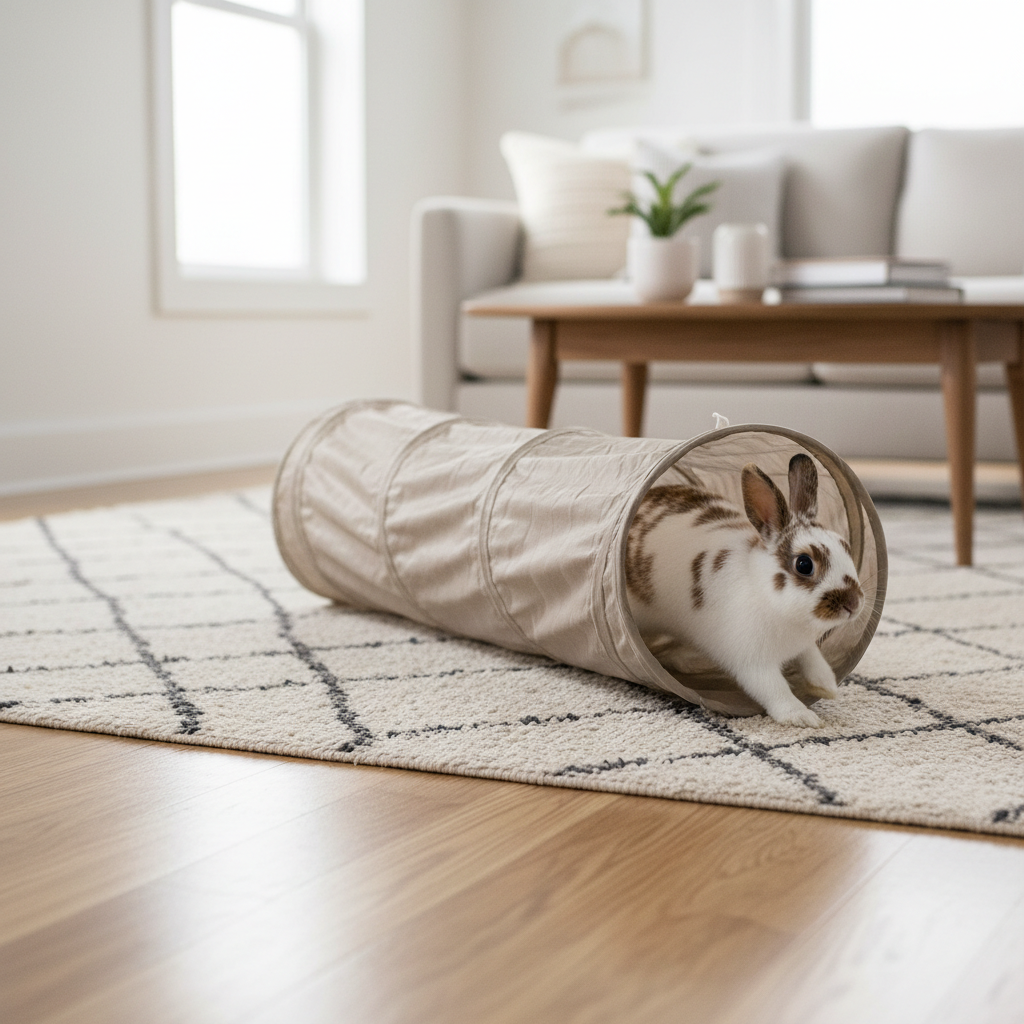
What you’ll get here is practical: why rabbits avoid tunnels, a quick checklist to pick the right size and material, and a few proven layouts that encourage movement without stressing your rabbit out. I’ll also call out common tunnel “upgrades” that look cute online but create real safety issues.
Why tunnels work for indoor rabbits (and why they sometimes don’t)
Rabbits are prey animals, so they like having a “covered route” between safe spots. A tunnel can mimic that natural preference and turn a plain room into a mini trail system.
- Movement with purpose: many rabbits sprint more when the path includes cover, not an open runway.
- Stress relief: a hide-and-pass-through space can lower hesitation in new areas.
- Enrichment variety: tunnels pair well with foraging and gentle training, so play is not just chaos.
But tunnels fail when they feel risky. Slippery floors, loud crinkle fabric, a tunnel that collapses inward, or an entrance that points straight at a doorway can make a rabbit opt out.
Quick self-check: is your tunnel setup actually “rabbit-friendly”?
Before buying another toy, check the basics. Most “my rabbit won’t use it” cases are setup problems, not personality flaws.
- Space: your rabbit can pass through without brushing both sides hard, and can turn around if needed.
- Stability: it doesn’t roll or skid when your rabbit steps in.
- Floor grip: the entry sits on a rug, foam mat, or traction surface, not slick tile.
- Noise level: fabric doesn’t crackle loudly, metal rings don’t clang.
- Exit confidence: both ends are open, visible, and not aimed at a scary zone (vacuum closet, busy hallway).
- Chewing risk: no dangling strings, loose seam tape, or exposed wire that invites gnawing.
If you fix only one thing, fix traction. A tunnel on a slippery floor is like asking someone to sprint on ice.
Choosing the right rabbit play tunnel: size, materials, and features
In the U.S., you’ll see cat tunnels marketed for rabbits. Many can work, but the details matter more than the label.
What to look for (simple, but not “cheap”)
- Diameter: big enough for your rabbit to move without scraping whiskers constantly; if your rabbit is larger, go bigger than “standard cat.”
- Length: long enough to feel like cover, short enough to keep sightlines; many rabbits prefer a medium length over an extra-long tube.
- Material: smooth fabric or canvas-like cloth tends to be quieter than crinkle plastic.
- Frame: spring steel frames hold shape well, but check the stitching around the wire channel.
- Openings: a side window can increase confidence, but only if it doesn’t create loose flaps to chew.
Red flags that matter in real homes
- Strong chemical smell: let it air out, and if it persists, skip it.
- Dangly toys or strings: rabbits chew, and strings can become a hazard.
- Very thin plastic “crinkle” lining: tempting to chew, plus the noise can spook some rabbits.
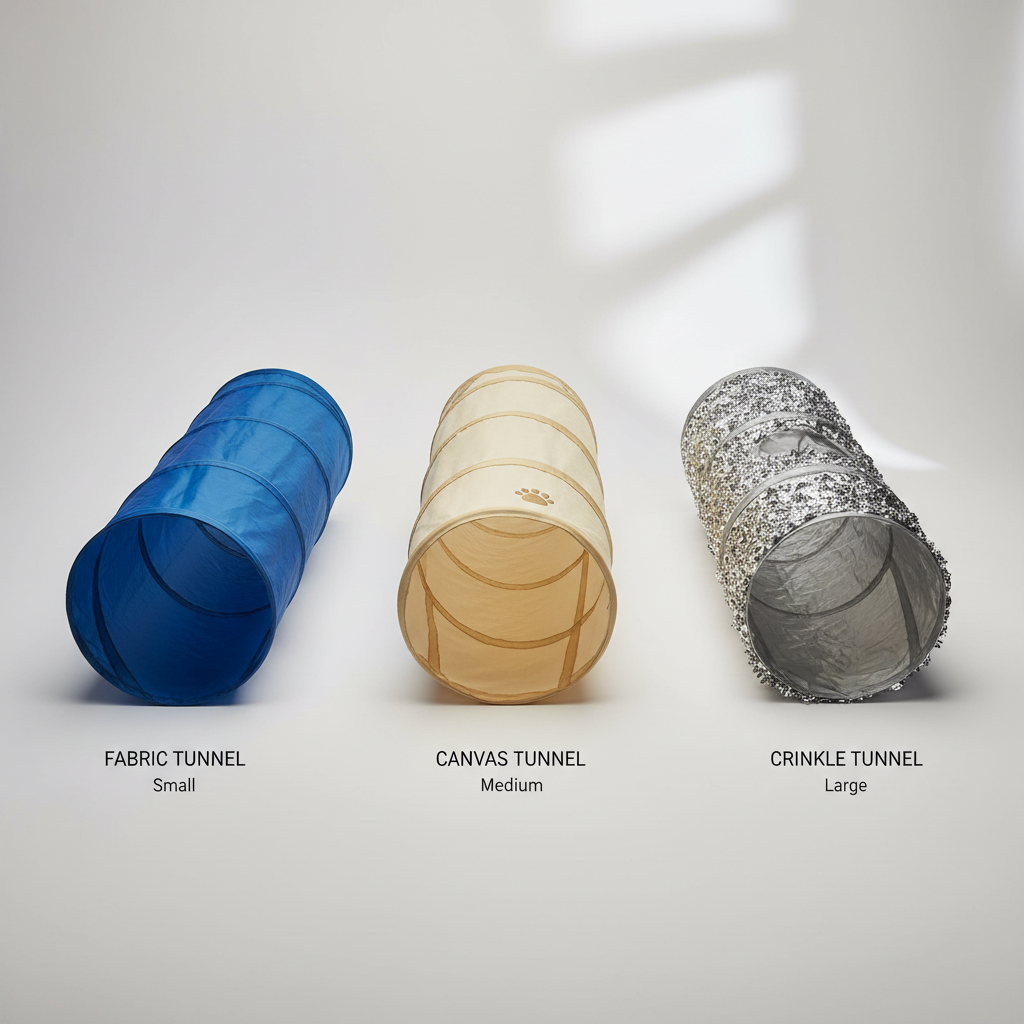
Fast comparison table
| Option | Best for | Watch-outs |
|---|---|---|
| Soft fabric cat tunnel | Most indoor rabbits, everyday play | Check seams and wire channel for chew points |
| Canvas-style tunnel | Heavy chewers, quieter play | May be stiffer, confirm it stays open |
| Cardboard DIY tunnel | Short-term enrichment, supervised sessions | Gets soggy, can collapse, replace often |
| Modular pop-up tunnels (with multiple branches) | Large pens, multi-rabbit spaces | More seams, more places to chew and snag |
Setups that encourage running, not hiding all day
A rabbit play tunnel for indoor exercise works best as part of a route. One tunnel dropped in the middle of an open room can become a nap cave, which is fine, but it won’t reliably increase activity.
Three layouts that usually work
- “Safe-to-safe” line: tunnel connects two trusted spots, like a hidey house and a pen entrance.
- Corner loop: tunnel runs along a wall with a turn, rabbits like hugging edges while they sprint.
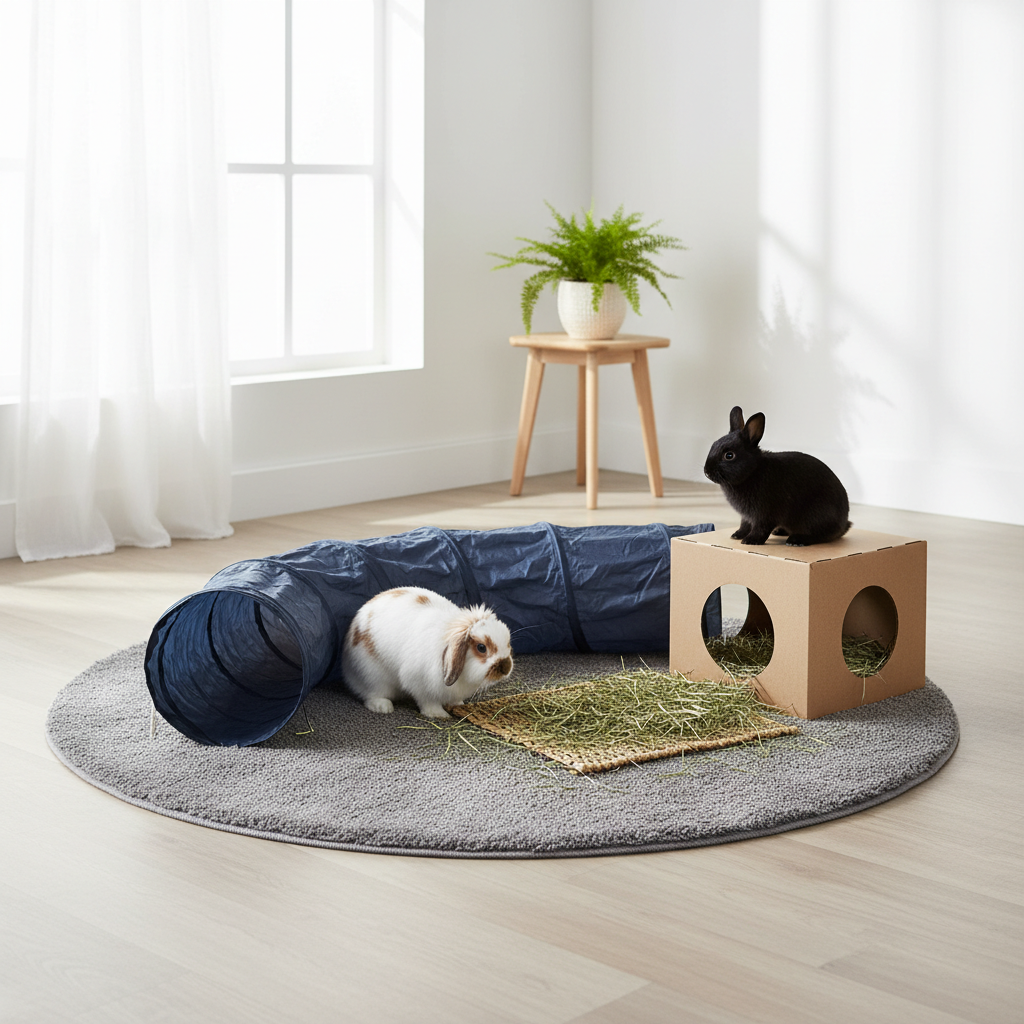
- Forage pass-through: a small scatter of hay or herbs near the exit so the rabbit completes the run and “wins.”
Keep the first sessions low-pressure. Put the tunnel down, walk away, and let curiosity do the work. Some rabbits need a day or two just to accept it as part of the room.
Practical “indoor exercise” routines using a tunnel
Think in short bursts. Many indoor rabbits will do several 30–90 second zoomie sessions across an evening, especially around dawn and dusk.
- 2-minute warm-up: place the tunnel on a grippy mat, add a hide box at one end.
- Gentle lure: guide with a treat or a piece of leafy green, but avoid forcing entry.
- Two-exit confidence: start with both ends fully open, no blankets draped over top.
- Repeat once: one or two passes is enough early on, stop before your rabbit gets suspicious.
- Rotate the “reward”: sometimes it’s a pellet, sometimes it’s a head rub, sometimes it’s nothing.
According to the American Veterinary Medical Association (AVMA), rabbits need appropriate housing, enrichment, and the ability to express natural behaviors; tunnels and hide spaces can support that goal when used safely.
Safety notes and common mistakes (the stuff people regret)
Most tunnels are low-risk, but “low-risk” is not the same as “no risk,” especially with heavy chewers or rabbits that panic in tight spaces.
- Don’t create dead ends: blocking one exit can trigger panic, even in confident rabbits.
- Avoid tight collars or harness play indoors: snagging risk increases around tunnel edges, ask a rabbit-savvy vet if you’re unsure.
- Skip elastic loops and hanging toys: they look like enrichment, but rabbits treat them like chew targets.
- Watch for ingestion: if your rabbit pulls threads or eats fabric, remove the tunnel and switch materials.
- Clean thoughtfully: mild soap and thorough drying usually works, harsh cleaners can leave smells that make rabbits avoid the tunnel.
If your rabbit shows repeated signs of distress, stops eating, or you suspect fabric ingestion, it’s safer to contact a rabbit-experienced veterinarian promptly. Gut slowdown and obstruction can become serious, and internet advice is not a substitute for clinical care.
Key takeaways (so you can act today)
- Traction and stability often matter more than the tunnel brand.
- A tunnel is most effective when it connects two “safe” zones, not when it sits in the middle of nowhere.
- Choose materials your rabbit won’t shred, and remove strings, dangles, and chewable seam points.
- Keep sessions short, calm, and repeatable, that’s how you build confident use.
If you want a simple next step, place the tunnel along a wall on a rug tonight, then add a tiny forage reward near the exit and see if your rabbit chooses it during their next active window.
FAQ
How do I get my rabbit to use a play tunnel?
Start by making it feel safe: put it on a non-slip surface, keep both ends open, and position it along a wall. Many rabbits explore more when you stop watching and the room stays quiet.
What size tunnel is best for a rabbit?
Big enough that your rabbit can pass through without squeezing, and ideally turn around without getting stuck. If you’re between sizes, the larger diameter usually causes fewer refusals.
Are crinkle tunnels okay for rabbits?
Some rabbits love them, others avoid the noise. If your rabbit startles easily or nips the material, a quieter fabric or canvas tunnel tends to work better.
Can a tunnel replace free-roam time for indoor exercise?
Not really. A tunnel supports movement, but most rabbits still benefit from open space for hopping, turning, and short sprints. Think of it as a “feature” inside a larger safe area.
Is it safe to leave a rabbit tunnel in the pen overnight?
Often yes, but it depends on chewing habits and the tunnel build. If your rabbit rips seams, eats fabric, or exposes the wire frame, use it only with supervision and switch to sturdier options.
My rabbit only hides in the tunnel, is that bad?
It can be normal, especially during adjustment. If hiding replaces eating, exploring, or normal social behavior, look at stressors in the room and consider checking in with a rabbit-savvy professional.
What can I pair with a tunnel for better enrichment?
Simple wins: a hay pile near one exit, a cardboard box “station,” or a forage mat. Rotating small changes every few days usually keeps interest without overwhelming your rabbit.
If you’re trying to build an easy indoor enrichment routine, a rabbit play tunnel for indoor exercise is a solid anchor item, especially when you pair it with traction, a calm layout, and one or two foraging cues that make your rabbit want to move.